Beef and biceps
THE title could be less provocative, but it is derived from a modern-day populist revivalist movement, represented by a lifestyle and digital media platform titled Beerbiceps, and from a significant late-19th-century figure, Swami Vivekananda, whose theory of Vedantic Hinduism and its more forceful manifestation has been variously summarised as ‘beef, biceps and Bhagavad Gita’.
Swami Vivekananda sought to present a simpler image of India and Hinduism, free of ritualistic intricacies and social stratification, to largely uninitiated American audiences at the World’s Parliament of Religions in Chicago in 1893, the same year M.K. Gandhi moved to South Africa. Returning to India after his prolonged lecture tour in the US in 1897, the swami advocated a more masculine, forceful reading of Hinduism. Gandhi’s teachings on nonviolence were still some time away.
Vivekananda’s guru, Sri Ramakrishna, a mystic by all accounts, a saint to millions, and a fakir by his own admission, was a devout worshipper of Durga, whose Bengali images show her wearing a garland of human skulls and standing triumphantly over Shiva’s corpse.
Vivekananda was the first from the subcontinent to initiate an exchange of ideas in the battle of hearts and minds. He spoke to thunderous applause at the World’s Parliament of Religions, where he presented Vedantic Hinduism in a monotheistic light to a largely Christian audience. He portrayed India as a land that welcomed and sheltered different religious persuasions, from Judaism to Zoroastrianism, making no reference whatsoever to the contributions of Muslims or their tribulations. He must, however, be credited with being evenhanded, as he did not mention what was visited upon the land and its people by some of the Muslim invaders.
Sadly, our interest in a shared heritage is limited to textbooks.
He wanted the West to adopt Eastern religious and spiritual precepts; for his domestic audience, he infused his teachings with American ideals of ‘manhood’ and ‘grit’. He exhorted Hindu men to eat meat, including beef, declaring it necessary to be competitive in the world.
Poet Raghupati Sahay, better known as Firaq Gorakhpuri, appears in an old black-and-white recording, telling an audience that men in his family ate maas (meat), then quickly adding, “while women did not”, and grimacing at the ‘scandalous’ thought that might cross his audience’s minds. It is another facet of the subcontinent’s hypocrisy; while women are assigned a disproportionate burden of upholding all sorts of customs and traditions, they are denied equality by being elevated to a pedestal of otherworldly piety.
At the Chicago conclave, the Muslim faith was represented by Alexander Russel Webb, an Anglo-American who served as the US consul general to the Philippines and converted to Islam in 1888. It would be interesting to know why the Muslim world could not do better than to send someone whose association with Islam was only five years old, when scholars of the stature of Sayyid Ahmad Khan, Syed Ameer Ali, Jamal al-Din Afghani and Shibli Nomani were around at the time. A lack of fluency in English would perhaps have stood in the way of Nomani and Afghani. The Dawat and Tableeghi movements, though impressive in their persistence and reach, came much later and remain intent on converting people of other faiths to Islam and on propagating their interpretation of the religion among the faithful; they are not focused on interfaith dialogue and amity.
Returning to the world of muscular ideals in faith and politics, we find that ‘bahubali’, a historical term hijacked by Hindi cinema and pop culture, is a compound word made up of Sanskrit ‘bahu’, meaning arms, and ‘bal’, meaning strength. The idea is neither exclusive to the BJP and RSS nor to the jamaats and jathaas on our side. It is unfortunate that our interest in our common yet diverse history comes from, and is limited to, officially sanctioned textbooks on both sides.
We learn that Pakistan was created the day separate water pitchers were placed for Hindu and Muslim students in schools, while conveniently omitting the fact that Muslim generals served Hindu princely states and vice versa. They learn about Mahmud Ghaznavi’s attacks on Somnath, but not about the numerous attacks by Hindu princes on temples in rival rajas’ domains in the centuries preceding and succeeding the adventurist from Ghazna.
Iqbal, Jinnah, and other leading lights of the All India Muslim League; Gandhi, Nehru, and their front-line associates of the Indian National Congress cannot alone encapsulate 5,000 years of history; it is, at most, a chapter in an epic still being written. We are both its characters and its authors, and what we learn and unlearn from our history will determine the twists in the South Asian saga.
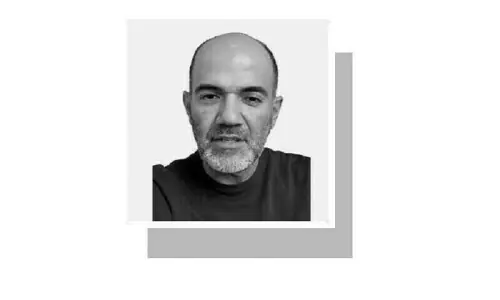
The writer is a poet. His latest publication is a collection of satirical essays titled Rindana.
Published in Dawn, August 21st, 2026