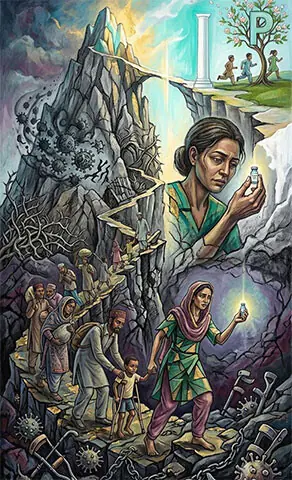
HAVING long been a part of the national immunisation machinery in Sindh, I have had the opportunity to witness both the remarkable achievements and the persistent challenges of Pakistan’s polio eradication efforts. While we have made good progress, my experience in the field has taught me that the last mile is often the most difficult.
The challenge is no longer scientific. We have an effective vaccine, a strong surveillance system, and experienced public health professionals. The remaining obstacles are largely operational, social and systemic.
One of the most significant challenges is ensuring that every child receives the vaccine. In rural Sindh, many families are fishermen, seasonal labourers or migrants. Reaching scattered populations across difficult terrains requires careful planning, persistence and repeated visits. Missing even a handful of children can allow the poliovirus to continue circulating.
Another challenge that deserves greater attention is the issue of community refusals. Public discussion often attributes refusals solely to misinformation or misconceptions about the vaccine. While such misconceptions certainly exist, field experience suggests that many refusals in rural areas are actually ‘demand-based refusals’.
Families sometimes refuse vaccination not because they oppose immunisation, but they do because they want to draw the government’s attention to long-standing issues in their areas, such as lack of clean drinking water, damaged roads, electricity shortages, pathetic schools or inadequate healthcare facilities.
In many villages, the polio team is the only government service that reaches every household several times a year. As a result, community grievances are often directed at vaccinators who have neither the authority nor the resources to resolve these broader issues.
Another grave issue that receives far less attention is the welfare of frontline workers who travel long distances to reach isolated settlements. They work under intense heat, face difficult geographical conditions, spend long hours away from their families, and frequently encounter transportation challenges. Despite these demanding responsibilities, the operational incentives remain modest. Delays in payments further affect morale. Investing in frontline workers is an investment in programme quality.
Maintaining vaccine potency is another critical aspect. The Oral Polio Vaccine (OPV) is highly temperature-sensitive and requires uninterrupted cold chain management. In remote areas, where electricity outages, long travel distances and harsh weather conditions are common, maintaining the recommended tempera- ture across the supply chain is a serious operational challenge.
Environmental factors also continue to influence transmission. Poor sanitation, unsafe drinking water and inadequate waste disposal create conditions in which the poliovirus can survive and spread. Polio eradication, therefore, cannot rely solely on vaccination; it must also be supported by improvements in water, sanitation, hygiene and community health.
Successful public health programmes are built on trust. Communities cooperate when they believe that the health system genuinely cares about their overall wellbeing. Integrating polio activities with routine healthcare, maternal and child health services, nutrition programmes and health education can strengthen that trust and improve acceptance.
Pakistan has all the technical expertise necessary to eradicate polio. With collective commitment, honest reflection and continued investment in communities and frontline workforce, we can ensure that no child ever suffers from poliomyelitis again.
Dr Sajid Shaikh
Thatta
Published in Dawn, August 17th, 2026