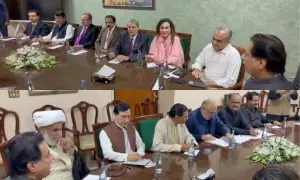
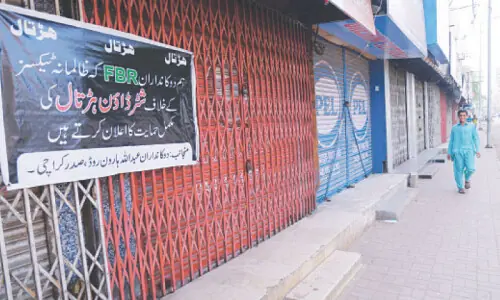
THE Hyderabad SITE Association of Trade and Industry has formally endorsed new measures introduced to ease regularisation of businesses, and urged local shopkeepers and traders to register with the FBR. It is not often that the private sector takes initiative in this regard. Registration will allow eligible retailers to avail themselves of FBR’s new Fixed Tax Asaan Scheme, introduced a few months ago to encourage unregistered businesses to enter the formal tax system. Under the scheme, eligible retailers with an annual turnover of up to Rs200m will pay a fixed tax of 1pc of gross turnover, subject to a minimum annual payment of Rs25,000. The scheme, introduced after the failure of the Tajir Dost Scheme, has been tailored to recommendations laid down after extensive consultations between the government and traders. It is, therefore, incumbent on the latter to use the opportunity to improve compliance.
Attempt after attempt to get retailers to register with the tax authorities has failed to deliver the desired results. Meanwhile, the taxman has placed a disproportionate burden on the documented economy, with the salaried sector alone contributing far more in income tax than the amount collected from retailers through relevant withholding taxes. According to provisional FBR tax figures for the last fiscal, income tax deducted from salaried individuals was Rs633bn, compared to about Rs70bn collected from retailers under two relevant withholding tax provisions. That imbalance has placed an unfair burden on those already within the documented economy, while allowing significant economic activity outside the tax net to remain undertaxed. This fiscal year, the government must enforce compliance consistently and fairly. The fiscal space it has available has been restricted for far too long because of lobbyists and pressure groups. It is commendable that trade leaders are now championing the Fixed Tax Scheme themselves, but if compliance remains low, the government must act. The new arrangement must not become another means of protecting one politically influential constituency from scrutiny while those already within the documented economy continue to shoulder a disproportionate share of the tax burden. The government has offered traders an easier route into the tax system; they must now reciprocate by registering and declaring their actual turnover, while the state must ensure that the rules are applied to everyone.
Published in Dawn, August 16th, 2026