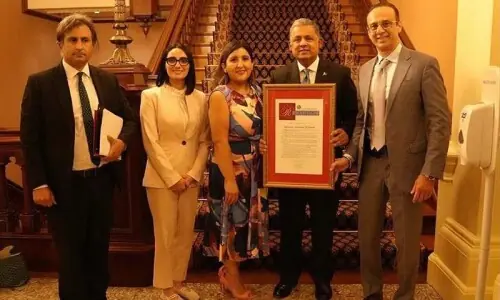
LAHORE: The Punjab government and the United Nations’ Food and Agriculture Organization (FAO) has formalised the launch of Agriculture, Climate and Water (ACWA) Punjab Consortium, creating a single platform to track data on climate, water and crops.
The move aims to shield south Punjab’s agriculture from climate shocks and water shortages.
A Memorandum of Understanding (MoU) was signed during the maiden meeting of the Punjab ACWA Consortium, held under the Green Climate Fund (GCF) supported project “Transforming the Indus Basin with Climate Resilient Agriculture and Water Management,” co-financed by the provincial governments of Punjab and Sindh.
The MoU creates a permanent institutional platform to coordinate data and decision-making across the Planning and Development Board (P&DB), Punjab Information Technology Board (PITB), Agriculture, Irrigation and Environment departments, with FAO providing technical support.
The platform aims to safeguard agriculture in south Punjab against climate shocks, water scarcity
This institutional framework has been built on long-standing cooperation between the FAO and Punjab government as a Letter of Intent was signed between FAO and the P&D Board, Punjab, in May 2024.
Following review by relevant stakeholders and vetting by the Punjab law department, the MoU had received formal approval from the 36th Standing Committee of the Cabinet on Legislative Business & Privatisation on June 9, this year.
The FAO’s climate-resilient agriculture project, across the Indus Basin, has installed several field-based systems, including 24 Automatic Weather Stations (15 in Punjab and nine in Sindh), Eddy Covariance towers, canal flow sensors and groundwater monitoring sensors across target districts. Agro-climatic, hydrological and related data generated from these systems will be fed into the ACWA portal.
The project operates in five districts of south Punjab -- Multan, Khanewal, Lodhran, Muzaffargarh and DG Khan --- as well as three districts in Sindh.
The meeting was told that the ACWA Portal would make information, generated through these climate, agricultural and water monitoring systems, more accessible for decision-makers for the planning, policy development, advisories and resource management.
Officials said the initiative would address a critical gap in Pakistan’s food security by replacing fragmented data with a single, government-owned system, to help farmers and planners adapt to increasingly erratic climate and shrinking water resources.
During the first consortium meeting, participating institutions discussed arrangements for regular meetings, departmental responsibilities for data contribution, data backup and secure storage, data licencing and confidentiality, as well as options for maintaining and hosting the ACWA Portal after completion of the project.
The meeting was also told that the consortium would also create an institutional mechanism for data governance, coordination, operational oversight and long-term sustainability, besides supporting farming communities to adapt to increasing climate risks.
P&D Board Secretary Rafaqat Ali said Punjab’s development planning increasingly required reliable and timely information on climate, agriculture and water resources. He said the establishment of the consortium provided an important institutional platform to bring this information to a single portal to facilitate decision-making and strengthen coordination among provincial departments.
By promoting evidence-based planning and shared ownership of data, the secretary said the initiative would serve as a direct response to climate shocks and water stress threatening Punjab’s agriculture-led economy through better investment decisions, more efficient management of natural resources and stronger resilience of Punjab’s agricultural economy to climate change.
FAO Pakistan representative James Okoth said his organisation was committed to support the Punjab government in building resilient and sustainable agri-food systems. He said the consortium reflected the value of strong national and provincial ownership, institutional coordination and evidence-based decision-making.
By bringing climate, agriculture and water information into a coordinated framework, Mr Okoth acknowledged that Punjab is strengthening its foundation for more informed policies and services that respond to the realities faced by farmers and communities.
“The FAO will continue to provide technical support and facilitate knowledge and innovation in line with Pakistan’s development priorities,” he assured.
The meeting included a demonstration and technical orientation on the ACWA Portal, covering its background, status, key features and operational capabilities.
Published in Dawn, August 13th, 2026