Farmers to get crop-specific climate advisories under FAO plan
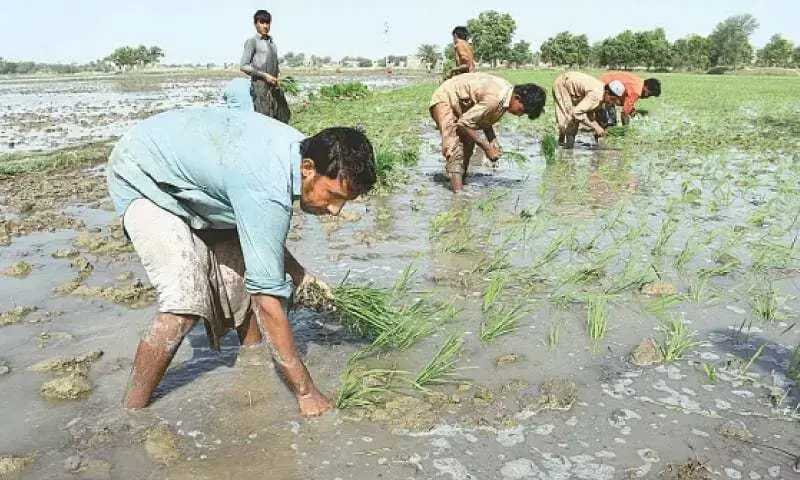
LAHORE: The Food and Agriculture Organisation (FAO) is implementing a project “Transforming the Indus basin with climate resilient agriculture and water management” in five districts of Punjab and three districts of Sindh, with south Punjab serving as a critical geographic focus for building climate resilience in agriculture.
This project is funded by Green Climate Fund (GCF) and co-financed by the Punjab and Sindh governments.
The project aims to transform agriculture in the Indus basin by increasing resilience among vulnerable farmers and strengthening institutional capacity to support climate adaptation.
According to the GCF, the project is expected to benefit 1.3 million people directly and 16m indirectly.
Project launched in five Punjab and three Sindh districts
Under the project, FAO in collaboration with Pakistan Meteorological Department (PMD) has installed 24 automatic weather stations (15 in Punjab and nine in Sindh). To maximise the benefits of extended network in the project districts, FAO is working closely with meteorological department in generation of impact based weather forecasting (IBF) for Rabi and Kharif crops. It is worth mentioning that the IBF was designed, launched and disseminated for the Rabi 2025-26 wheat crop.
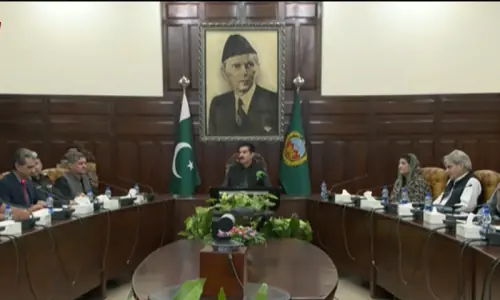
In order to design and launch the IBF for the Kharif 2026 cotton and rice, an adaptation workshop was convened on June 17–18 in Multan. The workshop brought together key stakeholders like FAO, the PMD, the Department of On-Farm Water Management (OFWM), Agriculture Extension and Agriculture Research departments, civil society organisations, Farms and Training Department, academia and representatives of farming community from five project districts of Punjab.
The aim of the workshop was to strengthen a shared approach to translating weather and climate information into practical, crop-specific advice for farmers.
The agenda focused on recapping the principles of IBF, appraising finalised impact tables for cotton and rice, identifying critical thresholds and right times for decision-making, testing pilot products through scenarios, and agreeing on mechanisms for forecast verification and dissemination.
Through group exercises and technical sessions, the participants worked on crop-stage-specific adaptation strategies for cotton and rice under three major climate risks that are extreme rainfall, low rainfall/water stress, and extreme temperature.
Most importantly, the workshop also focused on the indigenous knowledge and lived experience of farmers and local stakeholders, to ensure that the resulting advisories are not only technically sound, but also practical and locally relevant for south Punjab’s farming communities.
In her remarks, FAO Punjab head, Emelda Berejena, says, “This workshop is an important step in translating climate information into practical action for farmers. FAO is working with provincial institutions and technical partners to ensure that weather and climate information reaches communities in a form that they can use, at the right time, for the right crop, and with guidance that supports climate-resilient agriculture and better water management. For cotton and rice farmers in south Punjab, this means stronger preparedness, better decisions and greater resilience in the face of climate variability”.
PMD Chief Meteorologist Dr Zaheeruddin Baber, shared, “The impact-based forecasting is about moving beyond the question of what the weather will be, to what the weather will do. Through this collaboration, PMD is helping to tailor forecasts and advisories around the actual risks faced by cotton and rice farmers at different crop stages.”
Director, Crop Reporting Service, Agriculture Department, Dr Muhammad Muneer said, “The adoption of climate-resilient agricultural practices being trialed under FAO’s initiative are producing remarkable results, increasing yield of crops using less resources.”
Published in Dawn, June 19th, 2026