‘FIFA’s flawed funding system behind silence of smaller nations’
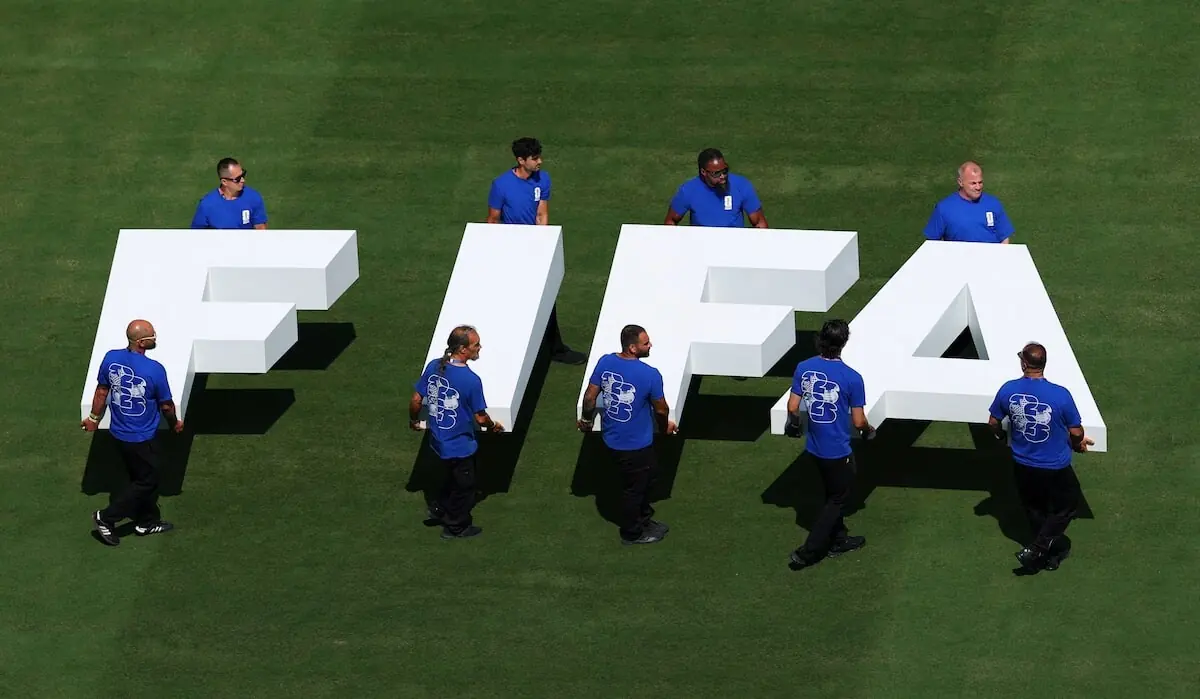


SYDNEY: Former Papua New Guinea international Alex Davani says some of the smaller football federations have kept quiet during FIFA’s civil war because they fear losing the funding that is vital to their operations.
Davani, a former deputy general secretary of Football Australia, believes global football’s development funding system is flawed and hopes the discussions prompted by Gianni Infantino’s abandoned FIFA Forward Enterprise proposal might create the environment for reform.
The 11-member Oceania federation was scheduled to meet on Wednesday to discuss the row that has split world football asunder and Davani thinks they are in a tough spot.
“I don’t think the sort of institutional silence or the quiet coming out of the region is complicity or apathy or anything like that,” the lawyer and sports administrator told Reuters in an interview from Brisbane.
“I actually think it’s almost a predictable response in an environment where the FIFA … development funding is often at times the entire operational budget for a member association from Oceania. So in that context, I think they’ve been placed in a tricky position.
“On the one hand, you have some of the big confederations coming out being very vocal about the proposal. And on the other hand, you have a situation where, not right or wrong, and maybe not intentionally, I think it’s just a situation where speaking or forming a view may perhaps risk that funding.
“You don’t want to put that at risk because it’s your livelihood.”
The flaw in the system, Davani believes, is that FIFA’s funding is discretionary, not an entitlement.
“Whilst the FIFA statutes quite frequently talk about development funding and development programs, nowhere in there is it enshrined the sort of principle that development money is an entitlement versus discretionary money,” he said.
“We all believe that the World Cup and the Women’s World Cup, they belong to us (and) the development funding derives from those major assets. So I do think that if we have the sense of belonging to it, member associations can certainly decide where it should go.”
NATIONAL FOOTBALL CENTRES
Davani said that smaller federations, like most of those in Oceania, have done well out of Infantino’s decade in charge of FIFA with funding increasing from $2 million-$3 million over a four-year cycle to $8 million in the last round.
Infantino inaugurated a new national football centre in PNG funded by FIFA Forward money in 2023, and another has opened in the Solomon Islands. Vanuatu has a new stadium.
While the prospect of the $40 million that Infantino promised if the 211 full member associations had opted for his controversial plan would have been tempting, Davani believes that is missing the point about what kind of FIFA president Oceania needs.
“For a region like Oceania, we need our leaders to have a real understanding of some of the things that impact the growth and development of professional football,” he said.
“It’s really expensive to move around the islands, for example, climate change means we’re losing islands and places to play, and the advancement of indigenous peoples’ rights are important to the region.
“I think that’s the standard of leader that Oceania has every right to expect.”
Citing Tim Cahill, who played for Samoa before switching to Australia, and French World Cup winner Christian Karembeu, who was born in New Caledonia, Davani said there was plenty of talent in Oceania if it could be developed properly.
“I think the disappointing thing for me about this entire (FIFA schism) is we stop talking about football, especially in a region where it needs to be played more often,” he said.
“I don’t think talent has been the issue. I think it’s been the systems around that talent, which is why I’m really keen for us to get back to the football discussion.”
Published in Dawn, August 12th, 2026