End to religion-based discrimination, protection to minorities sought in Karachi
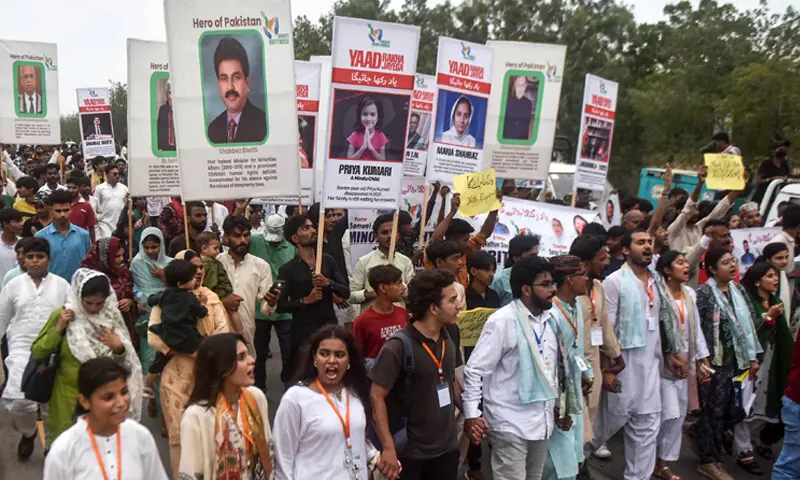
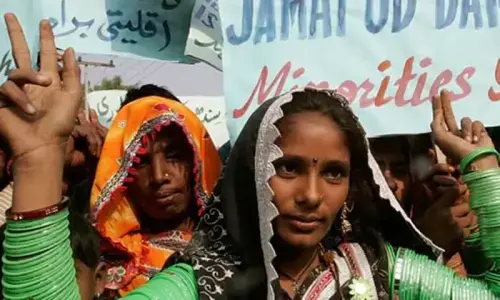
KARACHI: Even though the Bab-i-Tanzeem to the Quaid-i-Azam’s mausoleum remained shut, the stories of plight of the minority groups were told to those gathered there on Tuesday for the Minority Rights March-2026.
The day is celebrated by minorities on Aug 11 to remind the people about Quaid-i-Azam Mohammad Ali Jinnah’s vision for the then new state that he had presented in his speech to the Constituent Assembly of Pakistan on Aug 11, 1947.
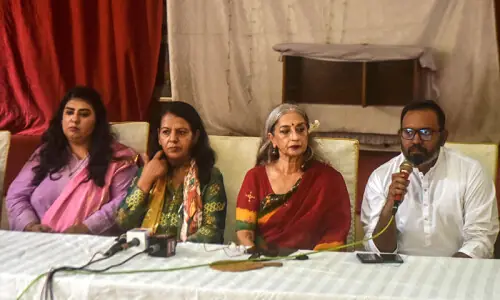
While reading out the Quaid-i-Azam’s famous speech, emphasising religious freedom, equality for all citizens and the separation of religion from state business, humanitarian and classical dancer Sheema Kermani said that the religious minorities of this country are still asking for what he had promised them 79 years ago.
Minority rights activist, Luke Victor, reminded the gathering about the increase in persecution and violence against religious minorities, targeted attacks, desecration and seizure of their worship places, discrimination in education and employment, abduction, forced conversions, forced marriages and rape of minor girls and misuse of blasphemy laws to settle personal vendettas.
Quaid’s Aug 11 speech guarantees peaceful coexistence, minority rights rally told
“We are not gathered here to beg but to demand our rights. We demand what the Quaid-i-Azam had wanted for us,” said Victor.
Nathan Danyal of Religions for Peace asked that if minorities are Pakistanis then where do they figure in Pakistan’s decisions. “We have reserved seats in the assemblies but who votes for the leaders on those seats? Our so-called representatives in the assemblies have not come through our votes,” he said.
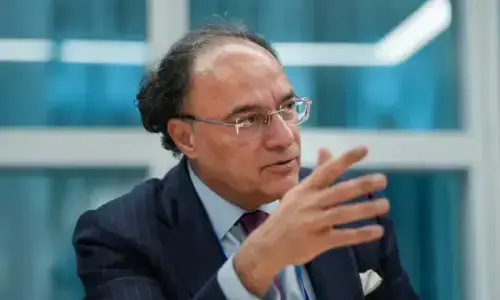
The Deputy Speaker of the Provincial Assembly of Sindh, Anthony Naveed, said that the Quaid-i-Azam’s speech was a guideline, guarantee and commitment on how to coexist peacefully.
“The commitment and guarantee promised to us by Jinnah are there in the 1973 Constitution. “But you yourself should also come forward and be a part of the political process instead of protesting about your rights being violated,” he said.
“If I as a non-Muslim can become a deputy speaker of an assembly, so can you. Use your vote wisely instead of hiding in the shadows,” he added.
Safina Gill spoke about Chief Justice Tassaduq Hussain Jillani’s historic ruling in 2014 that significantly advanced the protection and promotion of the rights of religious minorities in the country. “The judgement stemmed from a suo motu notice taken by the Supreme Court following the Peshawar church bombing in September 2013, which resulted in the tragic loss of over 80 lives. The incident underscored the vulnerability of religious minorities and the need for the state to ensure their protection,” she said.
Pandit Rajesh Kalyan pointed out that if one looked back in history, religious minorities also sacrificed like Muslims for the creation of Pakistan. “It is also a fact that a Christian’s vote gave Punjab to Pakistan” he said.
Feminist leader from Lyari’s Hindu community, Najma Maheshwari, said that they don’t feel safe in Pakistan. “How can we feel safe in a country where our little girls are kidnapped? It has been five years since seven-year-old Priya Kumari of Sukkur was abducted. She must be 12 now,” she said. “The Joint Investigation Teams to trace her whereabouts have failed as we hear that PPP influentials are involved in the child’s disappearance. How can we feel safe when our provincial government itself is against us?” she said.
Sardar Ram Singh from Shikarpur spoke about the significance of Pakistan for the Sikh community. “Guru Nanak was born in the area which falls in Pakistan, which is also the birthplace of so many other Sikh gurus,” he said. “We may be in the minority here today but it was like that before Partition. The state should protect and take care of our properties,” he said, adding that the minorities should be treated as equal citizens.
Pastor Ghazala Shafique also spoke about the importance of protecting the properties of religious minorities in light of the devastating mob violence sparked by false allegations of blasphemy in Jaranwala in 2023.
The demands read out on the occasion included reforms in the curriculum and textbooks of both public and private sector education to eliminate discriminatory content or hate speech, amend the Constitution and all other relevant laws to delete the word ‘non-Muslim’ and replace it with language acknowledging respective religious identities, criminalise forced conversions of faith, ensure protection of minority communal property, worship places from illegal seizure or occupation and return and restore all the seized desecrated property and implement the 2014 judgement by the Supreme Court of Pakistan to establish independent, autonomous and empowered national and provincial commissions for minority rights.
Published in Dawn, August 12th, 2026