Minority rights march to be held outside Quaid’s mausoleum in Karachi on 11th


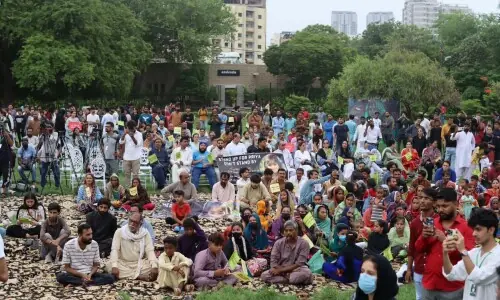
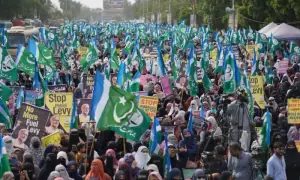
KARACHI: Minority rights activists have called for an end to discrimination against religious minorities and demanded equal political, economic and social rights, as they prepare to hold a march outside Mazar-i-Quaid on Aug 11 to mark National Minority Rights Day and recall Quaid-i-Azam Mohammad Ali Jinnah’s vision of an equal and democratic Pakistan.
The Minority Rights March (MRM), along with affiliated civil society groups and activists, will highlight 11 demands concerning education, political representation, forced conversions, blasphemy laws, employment and the protection of minority properties and places of worship.
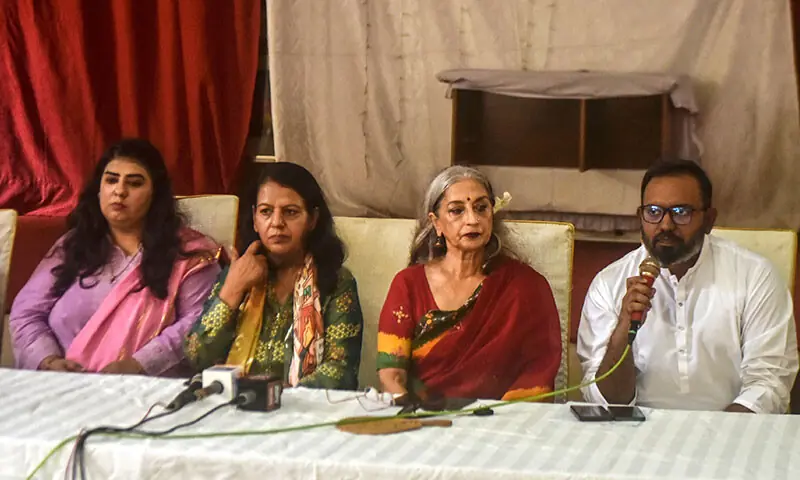
Speaking at a press conference on Saturday, activist Sheema Kermani said Aug 11 was an important reminder of Jinnah’s vision for the country. In his speech on Aug 11, 1947, Jinnah had said religion would not be the business of the state and that citizens would be free to practise their faith, she said.
However, she added, religious minorities continued to face attacks and discrimination. Their places of worship were targeted and they were not treated as equal citizens, she said.
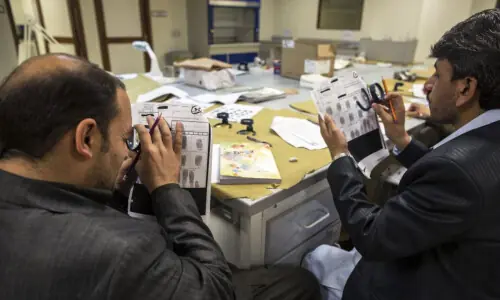
Organisers say the annual event planned to mark National Minority Rights Day
Dr Sijal Shafique said most Hindus and Christians in Pakistan lived below the poverty line and faced discrimination in several areas. The march would also highlight their economic and social problems, she said.
She called for amendments to remove discriminatory provisions in the Constitution and said that members of religious minorities should also be eligible for the highest constitutional offices on merit.
Pastor Ghazala Shafique said Christians were often falsely implicated in blasphemy cases and that accused people and their families faced serious consequences. Their education, employment and social lives were affected, she said.
Pastor Luke Victor said official events often created the impression that everything was well with religious minorities. The situation on the ground was very different, he said. He called for amendments to Articles 41 and 91 of the Constitution, saying they discriminated against minorities by excluding them from eligibility for the offices of president and prime minister.
He also questioned the Sindh government over the delay in issuing a written no-objection certificate (NOC) for the march.
He said organisers had approached several officials, including the commissioner, deputy commissioner and SSP concerned, but had only received verbal assurances. “We are demanding our rights. We are not asking for a favour and we are not begging for something,” he said.
The organisers’ 11 demands include “denationalisation of educational institutions established by the religious minorities”, and a 10 per cent quota for religious minorities in public and private educational institutions and jobs. They have also called for discriminatory content to be removed from textbooks and for greater minority representation in legislatures and political parties.
They have demanded criminalisation of forced conversion and measures to protect minority women and families. They have also called for an independent judicial commission to investigate the misuse of blasphemy laws and for protection of those accused in such cases from violence and mob attacks.
The organisers invited people of all faiths, genders, classes and professions to join the Aug 11 march and collectively demand equality and justice for all.
Published in Dawn, August 9th, 2026