OIC welcomes Pak-Saudi-Turkiye joint defence pact, calls it 'important strategic step'


The Organisation of Islamic Cooperation (OIC) has welcomed the signing of the Makkah Joint Defence Agreement between Pakistan, Saudi Arabia and Türkiye, terming it an “important strategic step”.
The pact aims to strengthen collective deterrence and empowers the three states to treat an attack against one of them as an attack against all of them.
In a statement posted on X, OIC Secretary General Hissein Brahim Taha expressed his “strong appreciation and support” for the agreement, describing it as an “important strategic step” that reflected the three countries’ commitment to strengthening regional and international cooperation.
Taha said the agreement constitutes “a fundamental pillar for supporting security and stability in the region and across the Muslim world”.
He added that it embodies a “shared resolve to address growing security challenges and strengthen solidarity and constructive partnerships” among the OIC member states.
The OIC is the second largest organisation after the United Nations, with Pakistan, Saudi Arabia and Turkiye among its 57 members.
The OIC chief also praised the “tireless efforts and wise leadership” of the three countries that culminated in the signing of the “historic agreement”.
He expressed hope that the pact would contribute to achieving peace and prosperity in the region and the wider international community.
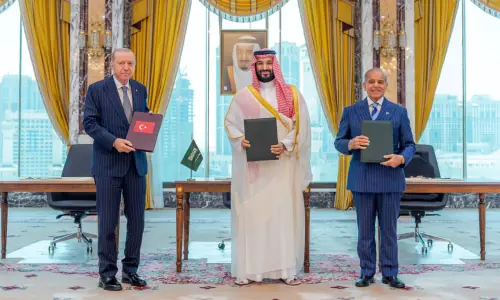
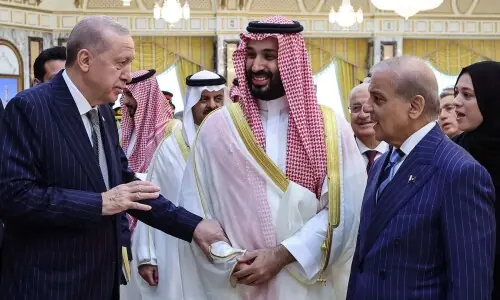
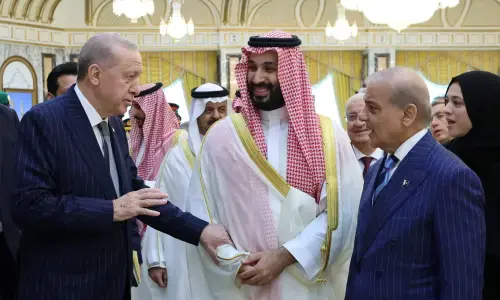
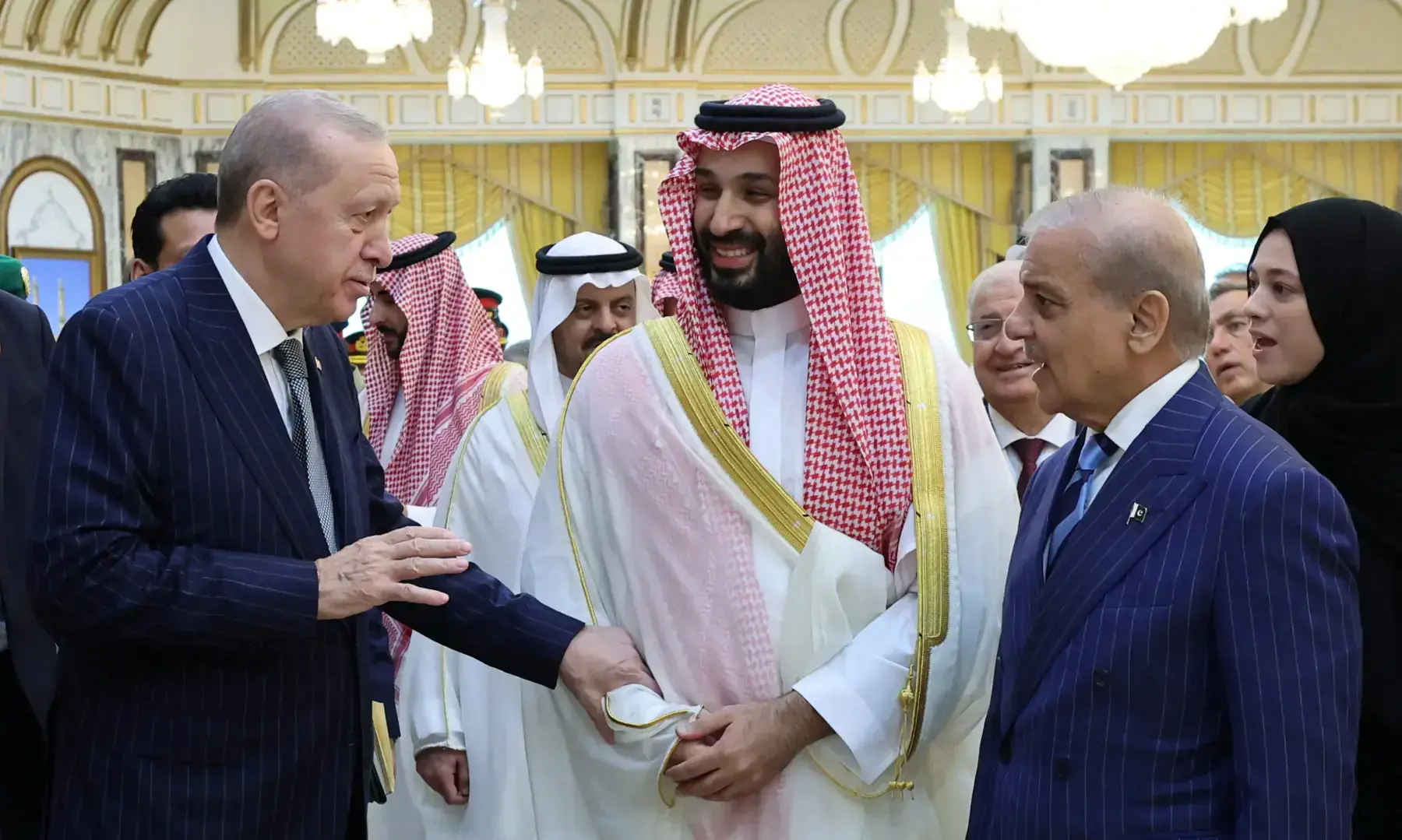
The Makkah Joint Defence Agreement was signed on Friday at a trilateral summit in Makkah, pledging to strengthen collective security, deepen defence cooperation and promote peace and stability in the region and beyond.
Prime Minister Shehbaz Sharif, Saudi Crown Prince Mohammed bin Salman and Turkish President Recep Tayyip Erdogan signed the pact during the “Makkah Al-Mukarramah Summit for Joint Defence”.
Chief of Defence Forces (CDF) and Chief of the Army Staff Field Marshal Asim Munir, Deputy PM and Foreign Minister Ishaq Dar, and Defence Minister Khawaja Asif were also present at the signing ceremony.
Pakistan and Saudi Arabia had already signed the “Strategic Mutual Defence Agreement” in Riyadh last September, pledging that any attack on either nation would be treated as an act of aggression against both.
Saudi Arabia’s Deputy Minister for Public Diplomacy Rayed Krimly has said the new tripartite agreement “does not supersede or replace any existing bilateral or multilateral agreements between these countries”.
Meanwhile, the Turkish president said the pact targets no country and remains open to participation of other friendly nations seeking peace.
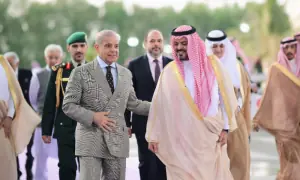
PM Shehbaz undertook a three-day visit to Saudi Arabia from August 6 to 8, while Erdogan made a one-day trip to attend the summit.
On Saturday morning, the prime minister paid a visit to Masjid-i-Nabvi in Madina.
He then departed for Pakistan from the Madina airport, where he was seen off by Madina Governor Prince Salman bin Sultan Al Saud.
PPP Chairperson Bilawal Bhutto-Zardari, also a former foreign minister, hailed the agreement as a “significant milestone” in the country’s history.
In a post on X, he noted that the pact was a “historic development that will further strengthen our defence capabilities”.
“This agreement is not only a guarantee of a stable and secure future for Saudi Arabia, Pakistan and Turkiye, but also a historic document for regional and global peace,” he emphasised.
The PPP chairman also praised the roles of PM Shehbaz and CDF Munir “in making the agreement possible”.
Bahrain, Somalia welcome pact
In a statement issued by its foreign ministry, Bahrain welcomed the agreement as a “key addition to the broader regional defence architecture”.
Bahrain said it viewed the pact as a “strategic partnership between equal partners, driven by a shared commitment to safeguard regional and global stability while bolstering credible deterrence”.
The foreign ministry “highlighted the formidable defence capabilities and military expertise of the three nations, noting their proven track record in serving regional security, stability, and honouring international commitments”.
The pact “complements and enhances the collective defence systems of the Gulf Cooperation Council (GCC) through solidarity and strategic integration”, Bahrain noted.
“Reaffirming that Saudi Arabia’s security is integral to its own, Bahrain expressed full support for all initiatives that protect national sovereignty, safeguard territorial integrity, and advance political solutions to regional issues,” the statement read.
Somalia, whose defence minister paid a visit to Pakistan earlier this week, also congratulated the three signatories.
In a statement, Somalia’s defence ministry termed the signing “a historic milestone in strengthening collective security, advancing defence cooperation, and building a strategic partnership capable of addressing shared security challenges”.
The ministry expressed confidence that the agreement “will make a significant contribution to enhancing regional peace and stability”.
While the signing of the agreement comes in the backdrop of heightened tensions in the Middle East arising from the US-Israel war on Iran, the pact was under deliberation months before the conflict began.
The three countries, along with Egypt, have been closely involved in efforts to promote regional stability and contain the regional upheaval sparked by the US-Iran war.