'Historic day': Experts, politicos weigh in on Makkah defence pact
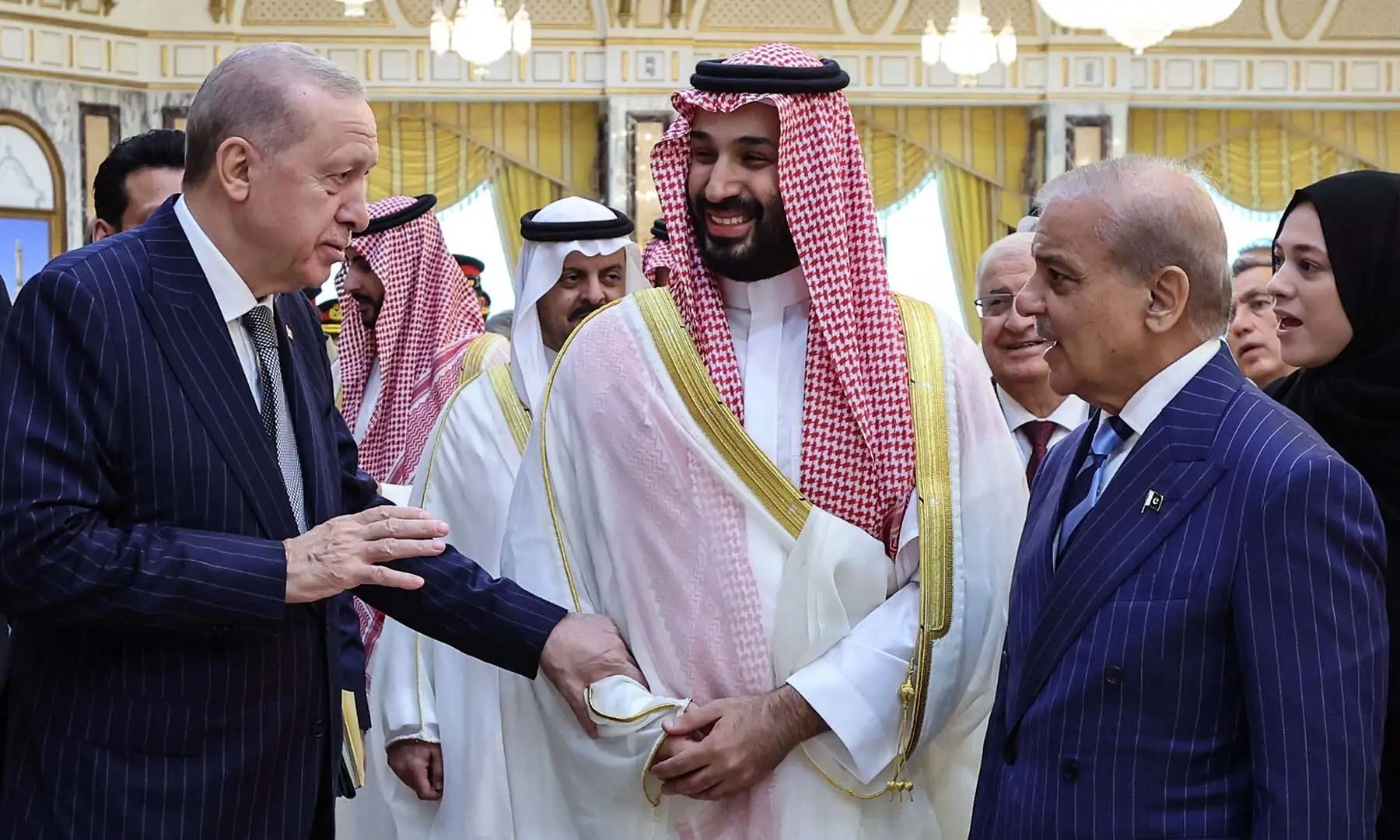
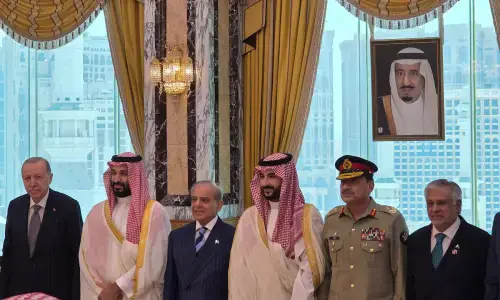
Pakistan, Saudi Arabia and Turkiye on Friday signed a joint defence pact in Makkah that empowers member states to treat an attack against one of them as an attack against all of them.
The Makkah Joint Defence Agreement, which seeks to strengthen the collective security of the three states, was signed by Prime Minister Shehbaz Sharif, Saudi Crown Prince and PM Mohammad bin Salman, and Turkiye’s President Recep Tayyip Erdogan at the “Makkah Al-Mukarramah Summit for Joint Defence” held at Al-Safa Palace.
Since the signing, experts, political figures and commentators have offered their views on the agreement, with many describing it as a significant regional development and a historic moment for the three countries.
‘Historic day’: Attaullah Tarar
Information Minister Attaullah Tarar, while talking to a private TV channel, described the signing of the joint defence agreement between the three states as a “historic day” for Pakistan, saying the pact reflected growing recognition of the country’s defence capabilities and strengthened ties among the three nations.
Speaking about the agreement, Tarar said the defence cooperation framework would take relations between Pakistan, Saudi Arabia and Turkiye to a new level. He credited Prime Minister Shehbaz Sharif and Field Marshal Asim Munir with bringing the three countries together, saying they had an “ideal working relationship” and that their teamwork had contributed to recent successes.
An important milestone in defence cooperation: Saudi FM
Saudi Foreign Minister Prince Faisal bin Farhan said the pact underscored the depth of the fraternal and strategic relations between the three countries.
He said the agreement marked an important milestone in their defence cooperation and embodied the three countries’ shared political will to safeguard security, support a more secure regional environment and pave the way for greater development and prosperity.
‘A good omen for the Muslim Ummah’: ex-minister
Former federal minister Khawaja Saad Rafique took to X and hailed the agreement as “a historic development and a good omen for the Muslim Ummah”.
“This agreement will prove to be a fundamental pillar for the stability, security and promotion of mutual brotherhood of the Ummah,” he wrote, praising the foresight of the three nations.
‘Welcome and timely development’
Former federal minister Mushahid Hussain called the agreement a “welcome and timely development at a crucial moment of turbulence and transformation”.
In a post on X, he noted that the Makkah Agreement came soon after Pakistan’s pivotal role in brokering the Islamabad Memorandum of Understanding between Iran and the US, as well as the launch of the Regional 4 Diplomatic Coordination Mechanism comprising Pakistan, Turkiye, Saudi Arabia and Egypt.
“Today’s pact has a three-fold significance. This is the first Pan-Islamic military institutional initiative among three key Muslim countries, independent of the West,” he wrote.
“Second, this Muslim Defence Pact is [a] big blow to Israel and [the] ‘Abraham Accords’, as it would be an effective counter to Israeli expansionism,” Hussain added. “Third, it’s good for Pakistan’s security, given the emerging India-Israeli Axis, which has [the] backing of some regional regimes as well.”
A shift beyond the US
Andreas Krieg of King’s College London said the deal showed a clear desire to diversify alliances beyond the United States.
“Saudi Arabia, Turkiye and Pakistan are not trying to replace the United States. They are building the capacity to protect their interests when Washington cannot or will not do so.”
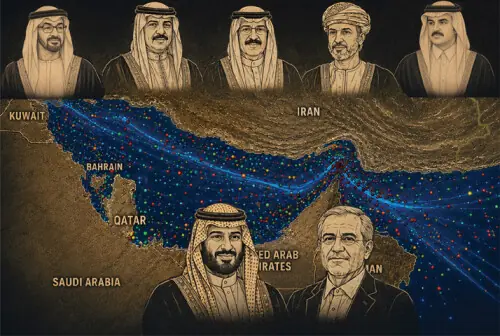
Riyadh, in particular, he said, “wants several layers of security rather than one American umbrella”, after the shock of the Iran war.
The deal will support Saudi Arabia’s ambitions to become an organiser of regional security and diversify its defence umbrella, while Turkey and Pakistan gain political clout and access to potential Saudi investments, he said.
Step towards regional security architecture
Ilhan Naz, the author of Old World Empires, took to X and called the agreement, “A positive development & another step towards a regionally owned and operated security architecture.”
Culmination of regional efforts already underway
Burcu Ozcelik, a Senior Fellow at the Royal United Services Institute (Rusi), called the pact the product of ongoing regional efforts and cautioned against reading into it as “evidence of a post-American Middle East”.
“If anything, it fits the broader US preference for greater regional burden-sharing, regional powers assuming more responsibility for deterrence and security while remaining embedded, to different degrees, within a US-centred security architecture,” she wrote on X.
“This is the culmination of regional efforts already underway. Saudi Arabia and Pakistan already have a mutual defence agreement, while Ankara, Riyadh and Islamabad have spent months discussing a trilateral framework,” Ozcelik added.
She noted that the signatories have their own sets of interests, priorities and existing commitments and that the agreement demonstrates a common direction. Still, the deal does not mean “unanimous consensus on all regional challenges or how to resolve them”.