Bank of Punjab chief seeks ‘Welfare GDP’
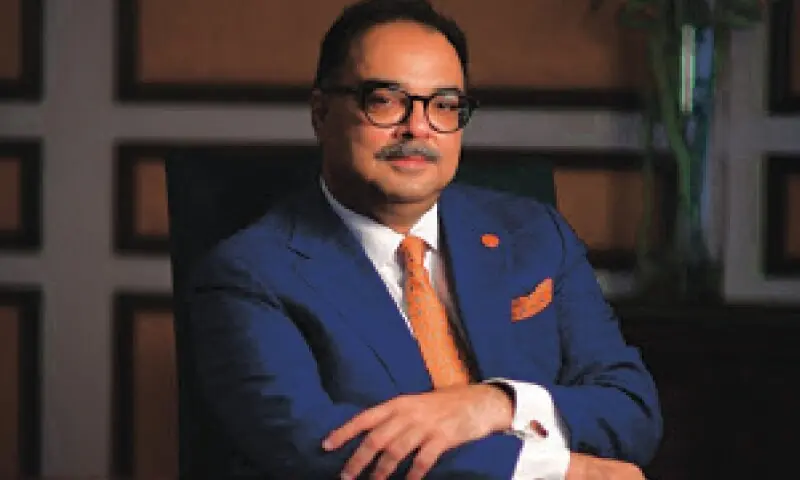


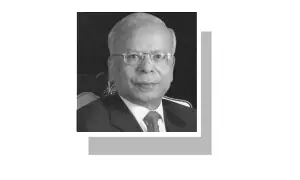
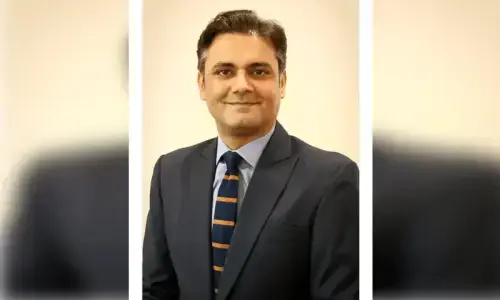
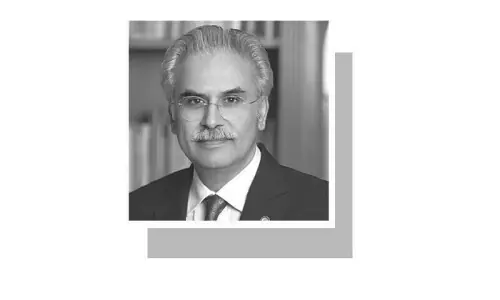
ISLAMABAD: Bank of Punjab President and Chief Executive Zafar Masud has argued that the country’s GDP growth figures failed to capture how ordinary citizens are coping with current economic issues.
He suggested a roadmap calling for working towards a ‘Welfare GDP’ measure, saying it does require a smarter pooling of existing indicators, including Gross National Disposable Income (GNDI), per capita growth, the relationship between income and production, and distribution-weighted growth.
Zafar Masud delivered a lecture at Islamabad Policy Research Institute (IPRI) on Thursday, titled ‘Measuring Welfare-GDP Beyond Arithmetic’.
In his articulate discourse, he posed a question: “If Pakistan’s economy is growing at 3.7 per cent, why does that growth not register at the household level?”
Says rich gain 9.9pc, poor lose ground; slams IMF reforms
He laid out his case using five years of data, spanning FY21 to FY25. He showed that over the five years, headline GDP grew by 18.8pc.
However, once population growth was factored in, the GDP growth fell to 9.6pc, and once he adjusted for how income is actually distributed and what price the poor pay for food and fuel, the bottom 40pc of households, the poor decile, were found to be 3.0pc worse off overall, he explained.
Mr Masud also said that the wealthiest segment of the population captured cumulative welfare gains of 9.9pc.
Even remittances, which add roughly $42 billion a year that headline GDP does not count, only pushed growth up to 13.1pc, still leaving Pakistan’s poorest no better off than they were five years ago. He also cited labour market strains, including a dependency ratio of four people relying on a single income earner, and a labour force participation rate of only 45pc.
Drawing comparisons with Argentina, Greece and Sri Lanka, which faced steeper crises than Pakistan’s but succeeded in steadily bringing down inflation, he argued that there is reason for cautious optimism.
He cited the UK, the US, and Sweden as examples of nations whose prosperity was not built overnight but through what he termed an “anchored compact”: credible rules that lower the cost of capital and, over time, lift living standards broadly.
His most telling point was, “Stability is visible, and welfare is not.” He said he is not opposed to macroeconomic stability, but is critical of the way successive governments have blindly followed lenders’ prescriptions.
He was critical of the IMF’s continued emphasis on stability over growth, suggesting that as long as Pakistan operates within that framework alone, sustainable economic transformation will remain out of reach.
He outlined five reforms that he believes can reset the trajectory. They are: moving out of the stabilisation trap through honest fiscal accounting, redirecting capital toward high-return sectors such as agriculture, SMEs and capital markets, competing globally on productivity, and ensuring long-term policy predictability for investors and citizens alike.
Published in Dawn, August 8th, 2026