The economy Pakistan forgot to measure


Pakistan’s economic discussion centres around what is measured. However, one of the nation’s most significant productive sectors remains mostly unnoticed, not due to a lack of importance, but rather because it is unpaid.
Every morning, well before the offices open and the markets buzz with activity, countless individuals in Pakistan are already engaged in their work. Some dairy animals are milked before dawn. Some individuals contribute to the operation of family farms, shops, workshops, and small businesses without earning a wage.
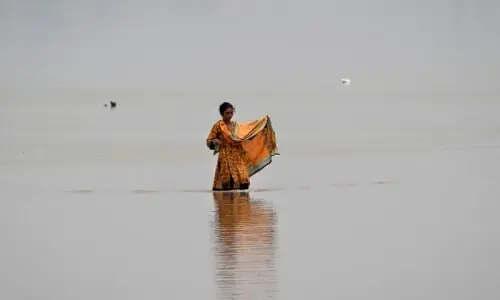
Simultaneously, countless individuals engage in meal preparation, home cleaning, childcare, elder care, water collection, animal husbandry, and a myriad of other responsibilities that ensure the smooth operation of households. Before the official start of the formal economy, a significant amount of productive work has already taken place. However, a significant portion of this effort is not reflected in Pakistan’s economic data.
GDP growth, exports, investment, and employment are the main topics of discussion in Pakistan’s economy. These signs are definitely important, but they only provide a portion of the picture. They mostly record work that is officially recognised and paid for. They fail to consider a much more important issue: what happens to productive work when no wage changes hands?
If unpaid market and domestic work are considered together, nearly 78pc of women are engaged in productive activity
The answer reveals an economy that is both vast and remarkably diverse. Two different types of unpaid labour make up Pakistan’s hidden economy.
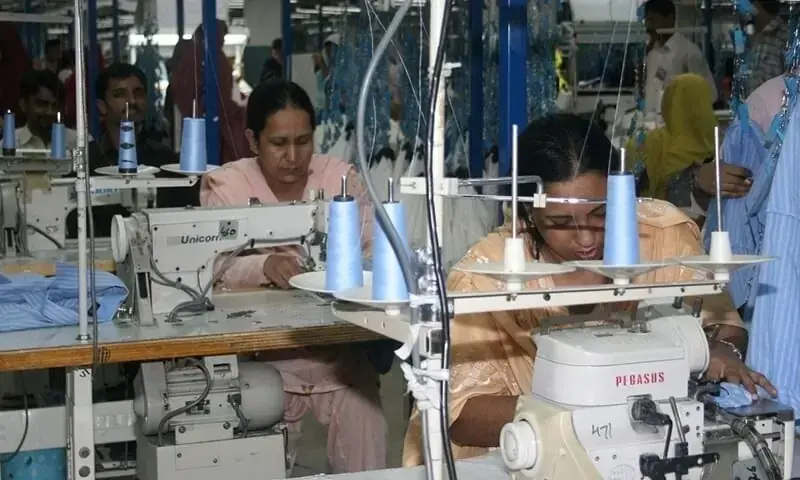
Unpaid market labour is the first. This includes those who labour in household businesses, retail stores, livestock operations, family farms, and workshops without getting paid directly. Because they are unpaid family workers who contribute to the production of goods and services, their contributions are sometimes overlooked in economic debate.
According to the 2024 Labour Force Survey (LFS), 5.9 million men and almost 8.8m women work in the unpaid market. In actuality, nearly half of working women support their families without being paid. Despite not being listed on a payroll, these workers are unquestionably a part of Pakistan’s productive economy.
The second component is unpaid non-market work. Unlike unpaid market work, these activities are performed within households for the direct benefit of family members rather than for sale in the market. The Labour Force Survey recognises 14 categories of such activities, including cooking, cleaning, childcare, caring for elderly family members, collecting water, livestock care, and other household responsibilities.
These services are indispensable to family well-being and labour productivity. If households did not provide them, someone would have to be hired to perform the same tasks. Yet because they take place within the home, they are rarely viewed as part of the economy.
The study by the Pakistan Institute of Development Economics (Pide) reveals that although three-fourths of working-age women are outside formal economic activities, 76 per cent continue to perform non-market domestic work every week. They are at work but not counted. Women in Pakistan spend two to 10 times as many hours as men on various non-market domestic activities, specifically 2.1 times more on care work and nine times more on cooking, cleaning, and household management.
Together, these two forms of unpaid work challenge one of the most common assumptions about Pakistan’s labour market that women do not work. The evidence tells a different story: once unpaid market work and unpaid domestic work are considered together, nearly 78pc of women are engaged in productive activity. Women are not absent from work; rather, much of their work falls outside conventional definitions of employment.
This also sheds light on one of Pakistan’s enduring policy enigmas. If women are becoming more educated, why is women’s participation in the workforce still among the lowest in the area? The response is not merely a matter of unwillingness to engage in work. For many women, the burden of unpaid duties in the home and family businesses often leaves little time or flexibility to engage in paid work.
Marriage and raising children significantly increase the burden of unpaid caregiving duties, especially during the peak years of one’s career. The issue at hand is not women’s participation in the workforce, but rather that a significant portion of their contributions goes unpaid, unacknowledged, and consequently overlooked in economic policy discussions.
There are costs associated with ignoring this hidden economy. When unpaid labour is excluded from economic assessments, its significance is overlooked in policy considerations. Family businesses that depend on unpaid work continue to be neglected in productivity initiatives.
The significant weight of unpaid care work is regarded as a personal household issue rather than an economic constraint. As a result, funding for childcare, rural support services, reliable public transport, water supply, and efficient infrastructure is frequently seen as merely social welfare initiatives rather than strategies that can enhance labour productivity and contribute to economic growth.
Recognising this hidden economy does not mean redefining economics; rather, it means enhancing the methods of economic measurement. Pakistan should start by consistently integrating the significance of unpaid work into satellite national accounts, allowing policymakers to grasp the complete extent of productive activity.
Labour statistics need to more clearly differentiate unpaid market workers, making sure that contributing family workers are recognised in employment, agricultural, and enterprise policies. Simultaneously, alleviating the strain of unpaid caregiving through accessible childcare, enhanced rural infrastructure, dependable water access, and adaptable work options would empower more women to engage in the workforce, while also recognising the economic significance of their existing contributions.
Economic policy relies heavily on the quality of the evidence that supports it. When millions of people contribute to production without receiving a wage, their work does not become economically irrelevant; it simply becomes statistically invisible. Pakistan cannot hope to formulate effective labour, productivity and growth policies while ignoring a sector worth one-third of its economy. The economy Pakistan forgot to measure has always existed. The challenge now is to ensure that it is finally recognised, valued and reflected in the country’s economic decisions.
The writer is a research economist at Pide.
Email: biya@pide.org.pk
Published in Dawn, The Business and Finance Weekly, August 3rd, 2026