Pakistan working with partners to defuse Hormuz stand-off: FO


• Says Oman, other ‘brotherly states’ leading different aspects of diplomacy
• Insists Islamabad is focused on settlement rather than ‘individual symptoms of crisis’
• Pakistan examining TORs, operational modalities of Saudi-led maritime coalition
• Govt will decide on Gaza stabilisation force after formal proposal
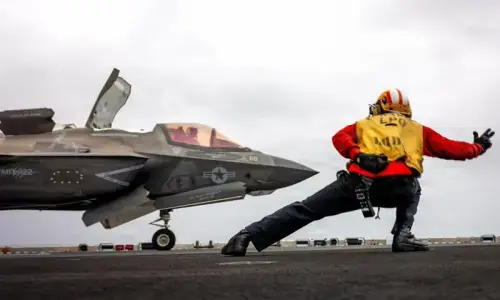
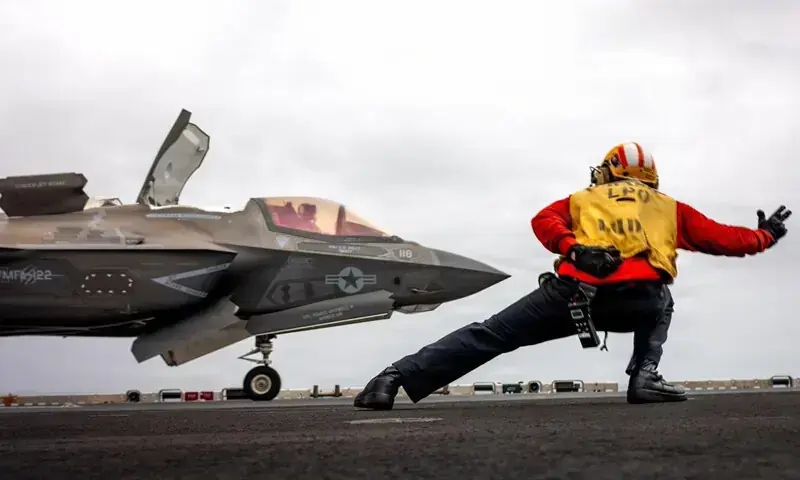
ISLAMABAD: The Foreign Office on Thursday insisted that Pakistan remained actively engaged in efforts to defuse the Strait of Hormuz stand-off, while also examining the terms of reference and operational modalities of a newly announced Saudi-led multinational maritime coalition aimed at protecting shipping routes in the Bab al-Mandeb Strait, the Red Sea and the Gulf of Aden.
The Foreign Office acknowledged that different regional partners, particularly Oman, were taking the lead on different aspects of the diplomatic process. It portrayed Islamabad’s role as part of a coordinated effort by “brotherly states” to steer the crisis back towards the framework established under the Islamabad Memorandum of Understanding (MoU).
“Pakistan remains engaged alongside other brotherly states in sincere efforts to resolve the crisis in the Gulf and the Middle East, especially with respect to the stand-off in the Strait of Hormuz,” Foreign Office spokesperson Tahir Andrabi said at the weekly media briefing.
He explained that the current phase of diplomacy involved a division of responsibilities among regional actors.
“Pakistan is playing the role. We remain engaged with the parties. Obviously, on certain issues, there are countries that take the lead, and on certain other issues, there are other countries that take the lead,” he said.
The remarks came as Oman assumed the lead role in negotiations with Iran over the future management of navigation through the Strait of Hormuz, a process mandated under Article 5 of the Islamabad MoU signed between Tehran and Washington in June.
That provision required Iran to ensure temporary toll-free passage for commercial shipping before entering into negotiations with Oman and other Gulf littoral states on the future administration of navigation, maritime services and related arrangements.
High-level Iranian-Omani talks began days after the MoU was signed and have since evolved into a series of technical and political consultations on shipping routes, maritime services, cost-sharing and other operational issues.
Iranian officials this week said substantial progress had been achieved, including agreement on the geographical coordinates of a proposed shipping route, although differences over operational control, service charges and related matters continued to be discussed.
Seeking to place Pakistan’s role within that broader diplomatic effort, Mr Andrabi said: “Overall — if you look at the comprehensive efforts undertaken by Pakistan, Qatar and other brotherly countries, you will see a very coordinated and concerted facilitation process. This was particularly on the Strait of Hormuz.”
He drew a distinction between Pakistan’s role during periods of acute crisis and its longer-term engagement in the overall diplomatic process.
“You need to understand that the Strait of Hormuz was a stand-off, and in such a stand-off, dialogue was essentially the paradigm of facilitating a settlement,” he said.
“Mediation is a more long-term process. The question of mediation comes when you are addressing issues that require persistent deliberations over a period of time, as, for example, the events leading up to the Islamabad MoU, the Pakistan-Qatar Joint Statement and the technical-level talks that it envisages,” he added.
The explanation appeared aimed at underscoring that while Oman, as one of the two littoral states bordering the strait, now occupies the central role in negotiating its future management, Pakistan continues to view itself as an integral participant in the diplomatic effort that produced the Islamabad MoU and the subsequent implementation framework agreed with Qatar.
Reaffirming Islamabad’s continued engagement, Mr Andrabi said: “Pakistan remains engaged, and, as I said, this is a concerted teamwork and coordinated effort from the brotherly countries, including Pakistan. We value the partnership of our brotherly countries in this regard.”
“We will continue these peace efforts in concert with our brotherly countries and partner countries,” he added.
The spokesperson also suggested that Pakistan’s immediate focus remained on securing implementation of a political understanding rather than becoming involved in negotiations over specific manifestations of the crisis, including the blockade and attacks on commercial shipping.
On a question about the Strait of Hormuz blockade, he said, “We are more engaged with the settlement and less so with terms of the crises. The blockade is one facet or symptom of the crisis. Once the agreement is reached and implemented, these symptoms of the crisis, either blockade or accidental/voluntary attacks on maritime traffic, will obviously take care of themselves. So, therefore, the agreement is important, and this is where our focus is.”
Saudi-led maritime coalition
Mr Andrabi told the weekly media briefing that the Saudi-led multinational maritime coalition remained at an evolving stage and the government was consulting military authorities before taking any decision.
“Regarding this maritime security arrangement (announced by Saudi Arabia), the process is evolving. We are seeing what the terms of reference will be and how this security arrangement will function,” he said.
“We are in touch with our Naval Headquarters and the military authorities on this issue, and on how these modalities will work out,” he maintained, adding that the coalition’s eventual composition also remained uncertain.
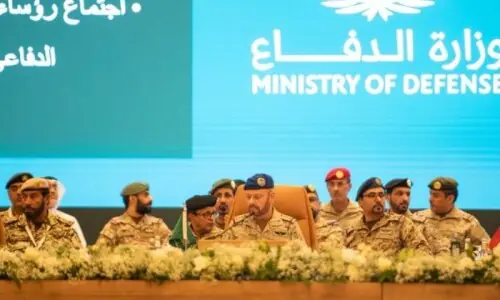
Saudi Arabia announced the coalition on July 30 following a meeting in Riyadh attended by military representatives from 43 countries.
Conceived as a collective maritime security framework for the Bab al-Mandeb Strait, the Red Sea and the Gulf of Aden, the alliance seeks to safeguard commercial shipping and energy routes against escalating threats, particularly after Yemen’s Houthi rebels declared a maritime blockade against Saudi shipping and subsequently claimed attacks on commercial vessels.
Pakistan was among the founding endorsers of the initiative, reflecting its long-standing strategic partnership with Riyadh, although the Foreign Office comments indicated that Islamabad was still assessing the alliance’s practical framework before determining the extent of its participation.
Saudi authorities maintain that the arrangement is purely defensive, operates in accordance with international law and leaves participation in operational activities to the sovereign discretion of member states.
Its activities are expected to include intelligence sharing, joint exercises, capacity building and coordinated maritime security operations.
The spokesperson’s remarks came as Prime Minister Shehbaz Sharif departed for Saudi Arabia on a three-day official visit. Chief of Army Staff and Chief of Defence Forces Field Marshal Asim Munir is also expected to join him.
Saudi Arabia on Thursday also appointed Rear Admiral Abdullah bin Salem Al-Shehri as the first commander of the coalition, completing its initial leadership structure ahead of a planners’ meeting scheduled for Aug 12 and 13 that is expected to finalise operational arrangements and facilitate additional accessions.
Islamabad also indicated that it would decide on joining the proposed International Stabilisation Force for Gaza only after receiving a formal proposal, suggesting that discussions on Pakistan’s possible contribution remained at a preliminary stage.
Responding to a question, the spokesperson said: “As regards future peacekeeping, peace-enforcement or peace-making forces in Gaza, I think that question is a bit premature. When a proposal or a proposition to that effect is presented before us, a decision will be taken accordingly.”
Published in Dawn, August 7th, 2026