Iran expresses interest in expanding economic cooperation with Pakistan through Karachi, Gwadar ports
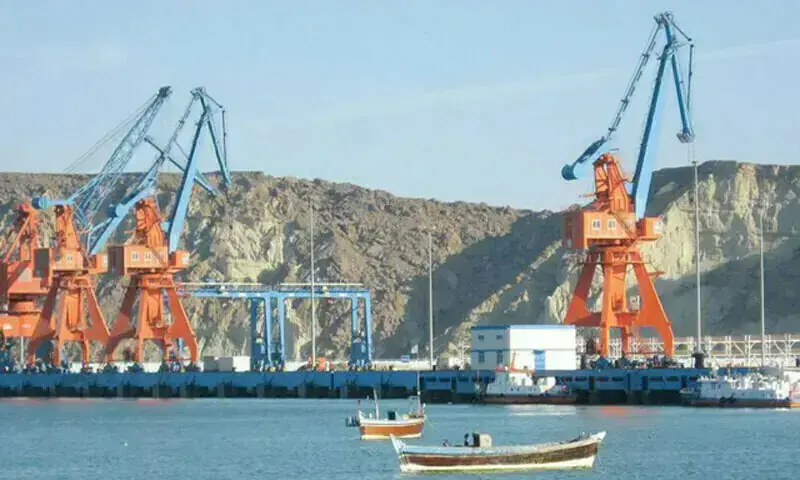


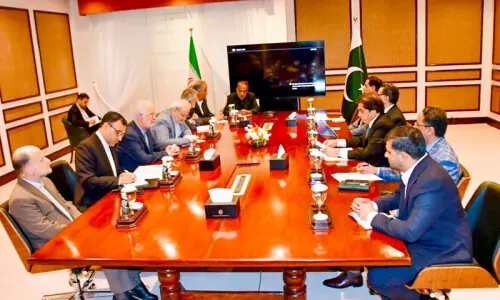
Iran expressed interest in expanding trade and economic cooperation with Pakistan through the ports of Karachi and Gwadar on Tuesday, as a delegation from Tehran held a meeting with a business team from Pakistan in Islamabad, state broadcaster Radio Pakistan reported.
The Radio Pakistan report said Iranian Industry, Mine and Trade Minister Mohammad Atabak led the delegation from Tehran and co-chaired the 10th session of the Pakistan-Iran Joint Trade Committee with Pakistan’s Commerce Minister Jam Kamal Khan in Islamabad.
At the meeting, he expressed interest in widening economic cooperation between the two countries.
“Iran places the highest priority on expanding comprehensive cooperation, particularly with the brotherly nation of Pakistan,” the report quoted him as saying.
He further said that negotiations on the Iran-Pakistan free trade agreement were progressing well, expressing the confidence that it would conclude successfully in the near future, according to the report.
For his part, Jam Kamal Khan said operationalising joint border markets was vital for improving livelihoods and noted that the private sector in both Pakistan and Iran “trust each other and stand ready to trade”.
“It is our duty to provide them with a seamless, structured and predictable environment,” he added.
He emphasised the need for finalising such roadmaps that would take the economic partnership between Pakistan and Iran to new heights, the report said.
Tuesday’s meeting takes place around two weeks after Iranian Interior Minister Eskandar Momeni’s visit to Islamabad, where he also held a meeting with Railways Minister Hanif Abbasi. During that meeting, the two sides agreed to expand railway cooperation and strengthen cross-border connectivity.
They also discussed the revival of the Islamabad-Tehran-Istanbul (ITI) freight train service and measures to enhance regional connectivity, the statement said.
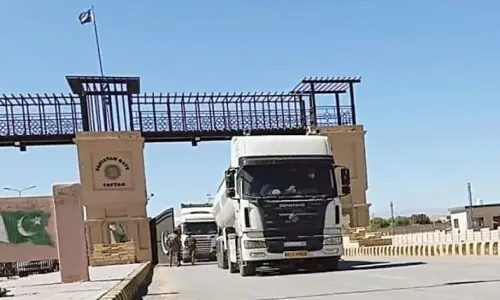
Earlier in April, Pakistan had also notified six routes for the transportation of goods to Iran against an encashable bank guarantee. For the arrangement to come into force, the Ministry of Commerce had issued a statutory regulatory order, the Transit of Goods through the Territory of Pakistan Order 2026.
Last year, the two countries had signed a series of crucial protocols aimed at dismantling tariff and non-tariff barriers, expanding electricity exchanges, and strengthening communication channels to increase bilateral trade volume significantly.
The protocols were signed at the conclusion of the Pakistan-Iran Joint Economic Commission (JEC) held in Tehran, regarding which an official announcement by the commerce ministry released said that the signing of the protocols would help achieve a $10 billion trade target between the two countries.