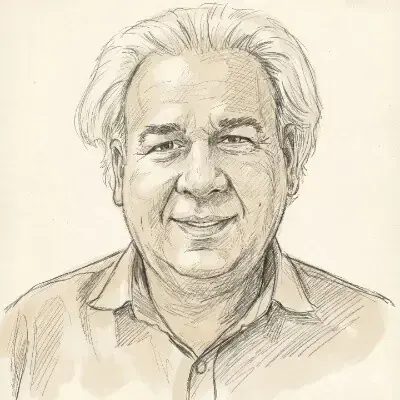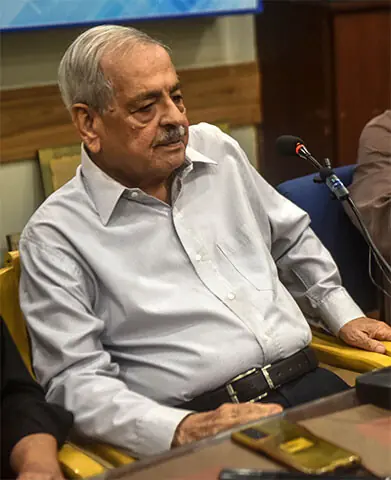
KARACHI: Eminent writer, editor and publisher Shakeel Adilzada recalled interesting episodes from his personal and professional journeys on Monday evening at an event organised at the Karachi Press Club (KPC) by the club’s literary committee.
He said according to one account given by his father, he was born in Muradabad in 1938, but in school record the year mentioned is 1940. His father was also a writer and a friend of poet Rais Amrohvi. He said he went to a college in India where a majority of the students belonged to the Hindu community. Later, he decided to migrate to Pakistan and reached Karachi in 1957.
In Karachi, he joined the magazine Shiraz edited by Rais Amrohvi. At the time, Rais sahib and his older brother Syed Muhammad Taqi used to live in Kharadar in a small apartment. Their two younger brothers, Syed Muhammad Abbas and Jaun Elia, were also there, and the three of them started staying in the Shiraz office.
Mr Adilzada said Taqi sahib and Rais sahib wanted Jaun Elia to get busy with some job. They got him the declaration for the magazine called Insha. Altaf Gohar was the commissioner in those days. He did not delay the matter and issued the declaration then and there. In Feb 1957, the first edition of Insha came out. “Within a year, I developed some differences with Rais sahib over the advertisements for Shiraz. He had agreed that I’d get 50 per cent of the amount if I got the adverts. When the adverts came, Rais sahib denied that he had made such a promise. I decided to leave Shiraz. When that happened, Jaun sahib invited me to work for Insha. I agreed.”
Mr Adilzada said for Insha, his primary duty was to get advertisements. At the time, Urdu Digest was very popular and used to sell well. So Insha’s name was changed to Insha Alami Digest and then Alami Digest. When the name was changed, Jaun sahib’s name started appearing as the ‘nigran’ (supervisor or overseer) in the magazine.
“Behzad Lucknavi started writing mystery stories for the magazine. He wrote good prose. It boosted the sales of Alami Digest from 4,000 copies to 20,000. This meant we were doing fine [financially]. It had been decided that the magazine was run by Jaun sahib, Syed Muhammad Abbas and myself. But when the sales reached 20,000, this impression began to fade,” he said, adding: “Renowned critic Muhammad Ali Siddiqui spoke to Rais and Taqi sahib about my position in the magazine. They said I was like their brother. I said no, I wanted a document about my position. They replied it couldn’t happen because the magazine belonged to their whole family, including Rais sahib’s daughter. By that time, I had already filed a declaration’s request for a new magazine. After two years, on Nov 5, 1969, I got the declaration, and I separated myself from them.”
He said in January (1970), the first edition of Sabrang came out. “We printed 5,000 copies, but only 3,500 were sold. The second edition also sold 3,500. But I had gained a good reputation (saakh) so a certain Manzoor sahib said for three months he was going to bear the publishing expenses for my magazine. That’s how Sabrang came into being.”
Mr Adilzada said after the second edition, a lot of changes were made to Sabrang. The third edition sold all 5,000 copies, fourth 6,000, and in one year, the number reached 20,000. “In the second year, it was 42,000, the third year 62,000 and in the fifth year, 1,00,000 copies were sold,” he said.
Published in Dawn, August 4th, 2026