LAHORE: Throwing its weight behind Interior Minister Mohsin Naqvi’s call for creating new provinces, the National Dialogue Committee (NDC) on Monday argued that Pakistan’s deepening governance and economic crises could only be addressed through a comprehensive restructuring of the country’s administrative framework.
Calling for an immediate political reset, NDC leader and former federal minister Fawad Chaudhry urged the dismissal of the PML-N-led federal government and the formation of a national unity government to steer the country towards constitutional and administrative reforms. “Send the incumbent PML-N government home and establish a national unity government forthwith,” Mr Chaudhry demanded while addressing a joint press conference at the Lahore Press Club, alongside former Sindh governor Imran Ismail, former federal minister Muhammad Ali Durrani, former Karachi mayor Waseem Akhtar and committee leader Moulvi Mahmood.
The committee endorsed Mr Naqvi’s recent remarks, saying the existing political and administrative structure had “completely failed” and had become captive to bureaucratic and the ruling elite.
It maintained that political deadlock and economic instability could only be overcome by creating new administrative provinces through broad-based political consensus.
Calls for ‘national unity government’, inclusion of PTI in structural reforms
The NDC demanded the dissolution of what it described as the “Form-47 government” and called for immediate establishment of a ‘national unity government’ that would facilitate the creation of new provinces through constitutional means and with the participation of all political parties.
Referring to Mr Naqvi’s comments, Mr Chaudhry said the interior minister had himself acknowledged the “failure” of the present system.”On the one hand, the rulers are purchasing an Rs11 billion aircraft, while on the other, a major city like Quetta does not even have a single MRI machine,” he said.
He argued that provincial authority had become excessively concentrated in the hands of chief ministers, leaving even cabinet ministers with little meaningful role. He added that provincial-level governance would remain ineffective even after local government elections unless new administrative units are created.
Mr Chaudhry also maintained that no meaningful political or constitutional reforms could succeed without the participation of the Pakistan Tehreek-i-Insaf (PTI) and its jailed founder, former prime minister Imran Khan.
Imran Ismail described Mr Khan as the country’s most popular political leader and said any dialogue on creating new provinces would remain incomplete without his involvement. He announced that the committee would file a petition in the Islamabad High Court this week seeking permission to meet Mr Khan and his wife so they could be consulted on what he described as a critical national issue.
Clarifying the committee’s position, Moulvi Mahmood said the proposal was not aimed at politically or geographically dividing Sindh, but at establishing four administrative units to improve governance and accelerate development in neglected districts such as Ghotki. He argued that sustainable investment would remain elusive unless Pakistan first achieved political and economic stability.
Muhammad Ali Durrani accused both the PML-N and the PPP of blocking the creation of Bahawalpur, Hazara and South Punjab provinces despite earlier political commitments, saying the two parties had misled the public by introducing but failing to implement a resolution in the Punjab Assembly.
The committee reiterated its demand for dismantling the existing political setup and replacing it with a government that would immediately initiate the constitutional process for creating new provinces.
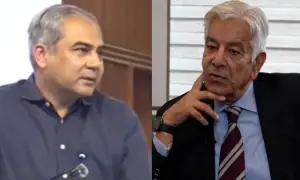
Mr Naqvi, who also serves as chairman of the Pakistan Cricket Board and is considered close to the military establishment, reignited the debate last week by arguing that Pakistan’s existing administrative structure had failed to deliver. He said the question of creating new provinces or administrative units should ultimately be decided by the people, stressing that any such reform must rest on political consensus rather than partisan interests.
Published in Dawn, August 4th, 2026