In modern history, Pakistan became one of the earliest laboratories for global refugee externalisation, serving as a major destination for the West to “hide away” the human cost of its armed interventions — the millions of people displaced by war.
While the United States and Soviet Union fought over territories thousands of miles from their own capitals during the Cold War, Pakistan, which has never had any constitutional refugee framework nor held the administrative capacity to manage its own population, hosted millions of Afghans fleeing destruction.
Who gained the most from the millions who entered Pakistan? As interests in Islamabad and Washington aligned, both the Pakistani state and its non-governmental organisations (NGOs) — which mushroomed overnight — benefitted tremendously from the unchecked aid that flowed to the country.
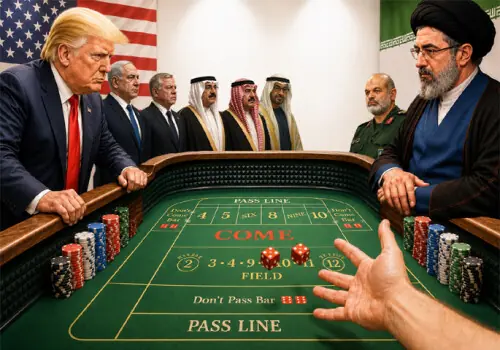
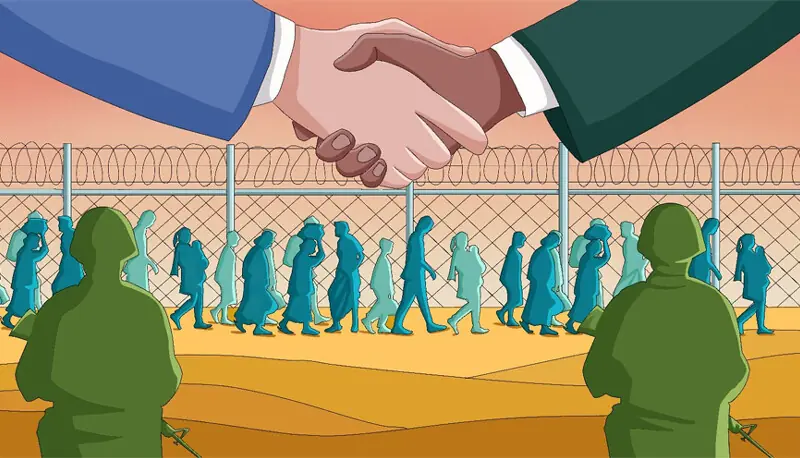
This is the global refugee market: a political economy in which wealthy states transfer the costs of refugee protection to poorer countries through aid, trade concessions, security partnerships and diplomatic favours. Refugee hosting has now become a global export industry.
From Pakistan during the Cold War to present-day Rwanda and Türkiye, refugee hosting has evolved into a global political economy driven by foreign aid and strategic interests
THE COLD WAR PROTOTYPE
Pakistan’s historically aid-dependent economy was so strong in the 1980s that, within three weeks of the Soviet Union entering Afghanistan, President Gen Ziaul Haq refused $400 million (today $1.2 billion) in January 1980 from the US, calling it “peanuts”. Gen Zia would then go on to receive billions of dollars, both in military assistance and those meant to go to those affected by war.
This aid inflow did two things. The first was bringing in cash to prop up Pakistan’s economy, and the second was that, in order to keep aid flowing, Pakistan had strong incentives to maintain an open refugee policy.
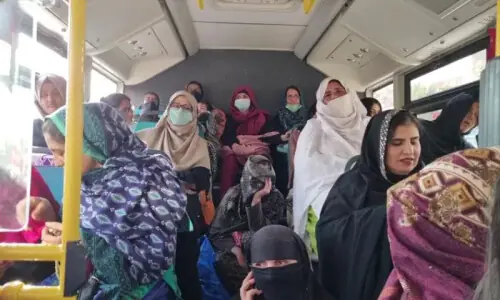
At its peak in 1999, there were four million Afghans in Pakistan which, at that time, was 2.5 percent of the country’s population. Despite the aid being earmarked for Afghans fleeing destruction, barely any reached the communities that needed it the most.
Despite the social and demographic changes that Pakistani communities were facing locally, and with little assistance in both funds and planning from the government itself, Pakistan’s commitment to Afghans was tied to monetary terms with the West. Today, the US and European nations increasingly outsource refugee protection and migration control to third countries, under similar economic conditions.
BUYING DISTANCE
As unstable economies and wars have continued to displace people in the Middle East, South Asia, Africa and South America, many have sought asylum in the countries that helped shape these conditions. Rather than absorb them, Western governments have increasingly paid other countries to keep refugees at a distance from their own borders.
In July 2025, the US Department of Homeland Security (DHS) posted on X (formerly Twitter) that a deportee plane had landed in the landlocked African nation of Eswatini, carrying five individuals convicted of violent crimes. Until then, news of the deportation planes had not been widespread.
A Freedom of Information Act (FOIA) request later revealed that the US had agreed to pay $5.1 million (Rs1.4 billion) to Eswatini for accepting 160 deportees, nearly $32,000 (Rs8.9 million) per person. As of July 2026, 30 deportees had arrived in Eswatini.
Ultimately, US President Donald Trump signed 27 bilateral agreements with “third countries” to house deportees, all currently at various levels of fulfilment. In February 2026, the US Committee on Foreign Relations (CFR) released a report discussing the cost of these deportations to the five countries that had taken in deportees so far.
One of the biggest beneficiaries of these agreements has been Rwanda, which received $7.5 million (Rs2.1 billion) for a quota of 250 people from the US. So far, seven deportees have arrived in Rwanda, which means the country received $1.1 million (Rs306 million) per deportee.
Rwanda, however, had already shown its willingness to be a part of the global refugee market.
The United Kingdom faced sharp criticism when it announced that they were going to fly those seeking asylum to Rwanda. In June 2022, a dramatic last-minute ruling by the European Court of Human Rights (ECHR) meant that a plane on the tarmac, ready to take-off for Kigali, remained grounded at London Heathrow.
Then there was the cost of those flights as well. Quoting a UK government source, The Guardian reported that the single chartered flight stopped in June 2022, which had seven asylum seekers on it, had cost half a million pounds (Rs185 million).
For its services, Rwanda received GBP290 million (Rs107 billion) in a plan that saw four people sent there, and when the plan was scrapped by former Prime Minister Keir Starmer in 2024, the country sued the British government for GBP100 million (Rs37 billion) in The Hague’s Permanent Court of Arbitration, citing a breach of the contract they had signed with former Prime Minister Boris Johnson.
THE BUSINESS OF CONTAINMENT
While deporting is one method the West has used to keep refugees at a distance from itself, there has also been a flow of cash to keep refugees from entering in the first place.
One of the beneficiaries of this has been Türkiye. Türkiye became a state party to the 1951 Refugee Convention in 1961, and introduced its own legislation for asylum seekers in 2014. Two years later, the European Union (EU) signed a deal with Türkiye, which meant that any asylum-seeker who reached the Greek islands just off the coast of Türkiye, could be sent back.
Since 2016, under this deal, Türkiye has received €12 billion (Rs3.9 trillion) from the EU in various tranches. In the short-term, this has decreased the number of migrants crossing over into Europe from the islands
However, as Swedish anthropologist Ruben Andersson, author of Illegality Inc.: Clandestine Migration and the Business of Bordering Europe, has explained: when one route closes, migrants who are desperate to escape poor conditions back home find other ways to reach Europe.
Closing one route simply redirected migrants into more dangerous corridors, where outsourced security apparatuses have led to harrowing examples. A 2023 Al Jazeera investigation found that Frontex, the EU’s border control agency, was sharing migrant boat GPS coordinates with the Libyan militia known as the Tareq Bin Zeyad (TBZ) Brigade. The TBZ Brigade then pulled migrants from European waters and tortured them in Libyan jails, with Pakistanis and Bangladeshis facing the worst abuse.
THE COST OF THE MARKET
The global refugee market today not only operates solely through aid and has also been tied into trade agreements. Pakistan tenuously enjoys the Generalised Scheme of Preferences Plus (GSP+) status with the EU, which gives it preferential access. However, the GSP+ status is contingent on compliance with human rights and, in the 2026 EU assessment of Pakistan’s human rights compliance, the country’s lack of protection safeguards for vulnerable Afghan refugee populations was directly reported.
The mechanism for outsourcing the human cost has changed, but the idea has remained principally consistent. For comparison, Gen Zia accepted refugees for Cold War aid, Türkiye for both EU financing and goodwill, and Rwanda and Eswatini for direct payments and diplomatic ties with the US. All of these methods have been costly, both financially and in terms of social upheaval.
Refugee outsourcing is today an enduring feature of global politics. Pakistan continues to regulate refugees under the colonial-era Foreigners Act of 1946. A Refugee Bill, introduced by North Waziristan’s representative Mohsin Dawar in 2023, was never debated in parliament. This decision has been detrimental not only to the refugees but also the communities hosting them.
Facing economic stress fuelled by wars and climate change, humans will continue to be on the move. The question is whether Pakistan and similar economies will continue to be part of a marketplace where powerful countries purchase distance from displacement, or become a country with a refugee policy grounded not by geopolitics, but by its own laws.
The writer is Managing Editor, Folio Books
Published in Dawn, EOS, August 2nd, 2026