Pakistan recovers 904 smuggled antiquities from US, France and Italy
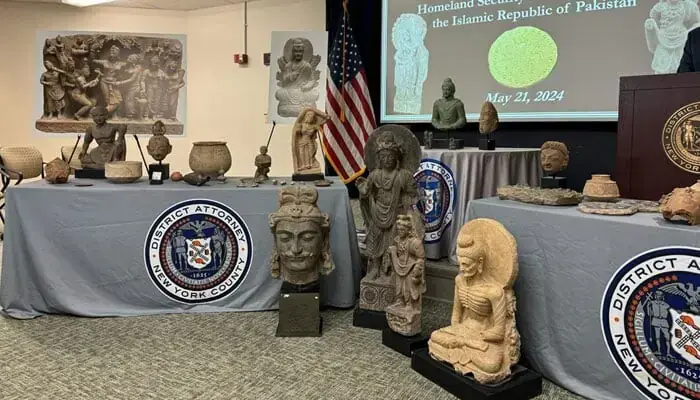
ISLAMABAD: Pakistan has achieved a major milestone in protecting its cultural heritage with the recovery and repatriation of 904 smuggled antiquities from the United States, France and Italy, the Ministry of National Heritage and Culture Division said on Wednesday.
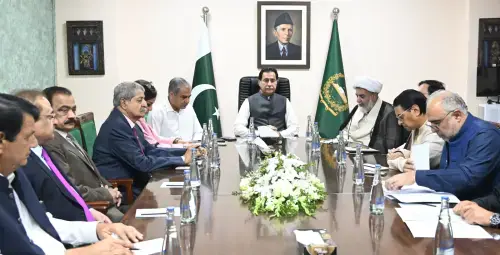
According to a statement issued by the ministry, the effort, led by Federal Minister for National Heritage and Culture Aurangzeb Khan Khichi, marked one of the largest returns of stolen artifacts in the country’s history.
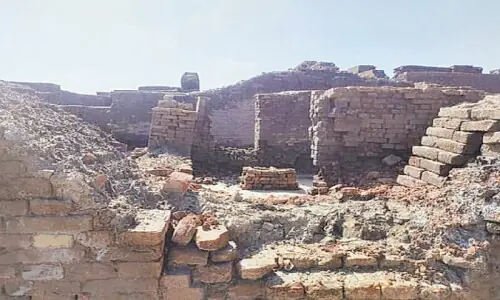
Officials said the recovered items included rare pottery, terracotta figurines, stone sculptures and other archaeological objects dating back thousands of years.
Many of the artifacts belonged to the ancient Mehrgarh Civilization (3500-2200 BC) and the Gandhara Civilization (2nd-5th Century CE), reflecting the region’s rich and diverse historical legacy.
The repatriation was carried out by the Department of Archaeology and Museums (DOAM) under the National Heritage and Culture Division in line with the 1970 Unesco Convention against the illicit trafficking of cultural property.
Authorities credited enhanced diplomatic engagement and coordination with foreign governments, law enforcement agencies and Pakistani missions abroad for overcoming legal and administrative barriers that had delayed the return of these objects for years.
According to official figures, 324 artifacts were brought back from the United States, 490 from France and 90 from Italy. The United States returned two consignments through coordinated efforts involving Pakistan’s Consulate General in New York and the New York District Attorney’s Office.
France facilitated the handover of a large collection following archaeological verification, while 22 objects identified as belonging to Iran were returned to the Iranian authorities in accordance with international law. Italy also handed over 90 artifacts, resolving a long-standing restitution case.
To ensure safe transportation, the Department of Archaeology and Museums established a transparent mechanism under public procurement rules. A specialised logistics system, designed for museum-grade handling, was used to securely transport the artifacts from multiple countries to Pakistan.
Officials described the development as a significant step forward in cultural diplomacy and heritage protection. The recovered antiquities are expected to be preserved and displayed for public education and research, allowing future generations to reconnect with the country’s ancient past.
The ministry said the government had reiterated its commitment to combating the illegal trafficking of cultural property and strengthening international cooperation to recover stolen heritage.
Published in Dawn, July 30th, 2026