Mangroves shield shores from climate impacts: minister
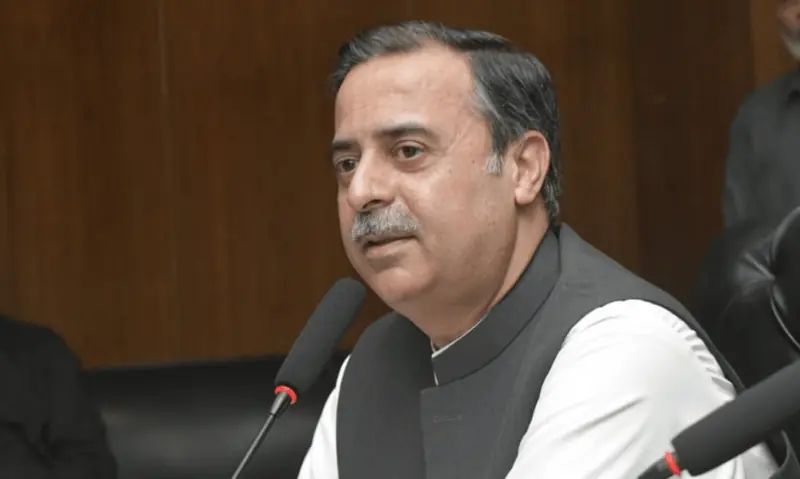

ISLAMABAD: Federal Minister for Maritime Affairs Muhammad Junaid Anwar Chaudhry on Sunday emphasised that mangroves served as a natural shield against erosion along the Arabian Sea coast, climate impacts and declining fish stocks.
In a statement issued on the eve of World Mangrove Day, he called for concerted efforts to protect and restore the country’s mangrove ecosystems and unlock their potential for the blue economy.
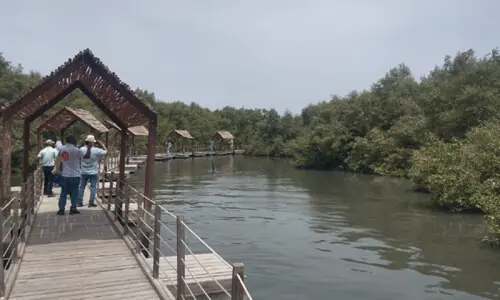
The minister noted that Pakistan was home to the world’s largest arid-climate mangrove forest, concentrated in the Indus Delta in Sindh, with smaller patches in Balochistan.
He said Pakistan currently ranked around seventh globally in terms of mangrove forest area and could move to fourth or fifth place through sustained restoration efforts.
To unlock blue economy potential, stronger conservation efforts urged
Chaudhry said mangroves acted as a natural shield against shoreline erosion, flooding and storm surges while protecting coastal communities, ports and marine biodiversity.
He warned that the degradation of these ecosystems threatened food security and the livelihoods of fishing communities, as mangroves served as breeding and nursery grounds for fish, shrimp, crabs and other species that support fisheries and emerging aquaculture.
Carbon market
He estimated that Pakistan’s mangrove carbon market could generate $20-50 million annually, depending on carbon credit prices and trading volumes.
The minister said Balochistan’s roughly 4,058 hectares of mangroves could also contribute to national carbon market initiatives.
Acknowledging past degradation caused by encroachments, pollution and reduced Indus flows, Mr Chaudhry outlined rehabilitation efforts undertaken by the Karachi Port Trust (KPT) and the provincial authorities.
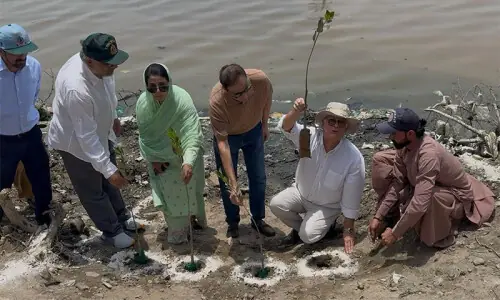
He said the KPT had recovered mangrove areas from squatters, launched afforestation drives along Mai Kolachi Road and in nearby coastal areas, and organised weekly clean-up campaigns.
Chaudhry added that the KPT had appointed environmental activist Almas Kasmani as its ambassador for coastal mangrove restoration. He said she had already restored 4,000 mangrove plants and had set a target of planting another 100,000.
The minister called for greater public awareness, stricter enforcement against encroachment and increased public-private investment in blue economy initiatives, urging stakeholders to turn commitments into action.
Published in Dawn, July 27th, 2026