0
0

The world is entering a period of rapid geopolitical realignment. The conflicts unfolding in the Middle East and along Russia’s borders with the West are not merely regional disputes; they are symptomatic of a deeper contest between two poles of global power — China and the United States — over the shape of the emerging world order.
In this environment, smaller and middle powers risk being viewed simply as territory to be absorbed into one bloc or another.
Russia and Iran are two states that deserve closer attention in this context. It would be a mistake to assume that their geopolitical weight can simply be written out of a new order defined by US-China rivalry. The outcome of that rivalry will, in fact, help shape the strategic and economic options available to other countries in the years ahead — Pakistan and Russia among them. Both nations share a concern for economic and technological sovereignty, and both have an interest in building new channels of cooperation.
Before any deeper technological partnership can take root, however, Pakistan and Russia need to make progress on three more immediate fronts: trade, education and energy.
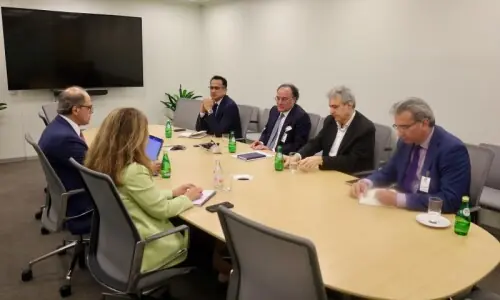
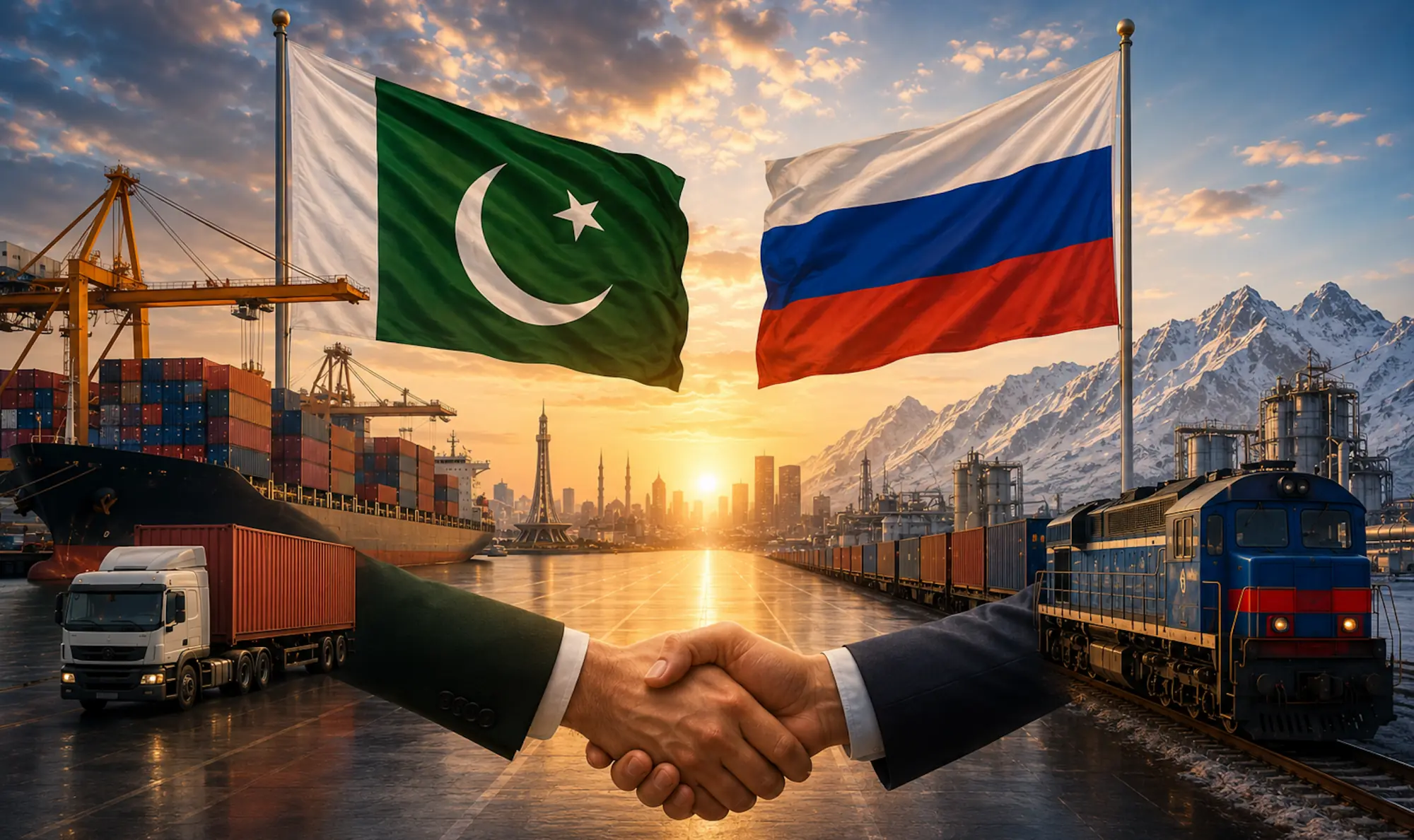
This was the animating idea behind a high-level webinar, Pakistan-Russia: Strengthening Trade, Energy & Education Collaboration, held on July 9, 2026. The webinar was jointly organised by the Institute of Regional Studies (IRS), Islamabad, and the University of World Civilizations, Moscow. The session brought together political leaders, diplomats, academics, business leaders and policy experts from both countries to discuss how an improving political relationship could be converted into practical cooperation across trade, energy, education, logistics, technology and regional connectivity.
A consistent message ran through the discussion: sanctions, supply-chain disruption, and the growing importance of Eurasian connectivity have created a window of opportunity for Pakistan and Russia to deepen ties — but only if institutional mechanisms move beyond symbolic engagement and start delivering commercially viable projects.
The webinar produced the following recommendations, grouped here by theme for clarity.
Institutional mechanisms
- Institutionalise implementation through an Intergovernmental Commission — Create sector-wise working groups for energy, trade, transport, education, agriculture, digital economy and finance, each with annual targets and quarterly reviews.
- Develop a Pakistan-Russia Comprehensive Economic Roadmap — Replace one-off initiatives with a five or 10-year plan covering trade, industrial cooperation, investment, connectivity and technology transfer.
- Build business-ready institutional architecture — Convert existing memoranda of understanding into actual project pipelines, complete with focal persons, timelines, sectoral company lists and investment proposals.
Trade and payments
- Accelerate work on Pakistan-EAEU economic integration — Prepare Pakistan’s negotiating position, conduct sectoral impact studies, and identify products suited to preferential market access under a future arrangement with the Eurasian Economic Union.
- Revive barter trade mechanisms — Structured barter and bilateral clearing arrangements for select commodities, drawing on the precedent of Pakistan-USSR trade, could reduce dependence on hard currency, building on approvals that already exist in both countries.
- Establish dedicated payment and settlement channels — Explore local currency settlement, banking channels, supplier credit and trade finance solutions to keep bilateral commerce running smoothly.
- Improve the investment climate — Address the certification, customs, documentation, insurance and dispute-resolution barriers that currently discourage private-sector participation.
Connectivity and logistics
- Launch a Pakistan-Russia Trade Corridor initiative — Evaluate the proposed MIR Trade Route through Pakistan-Wakhan-Tajikistan as part of a wider Eurasian logistics strategy linking Pakistan to Central Asia and Russia.
- Prioritise railway connectivity — Commission feasibility studies for rail links integrated with highways, dry ports and multimodal logistics.
- Develop integrated logistics infrastructure — Invest in cold chains, grain terminals, container services, bonded warehousing, flexitank facilities, customs digitisation and cargo tracking.
- Position Pakistan as Eurasia’s southern logistics hub — Leverage the ports of Gwadar and Karachi to serve Central Asia and Russia through reliable multimodal corridors.
Energy and agriculture
- Expand energy cooperation beyond hydrocarbons — Explore joint work on LNG, oil, refining, electricity infrastructure, transmission systems, energy efficiency, renewables and engineering services.
- Strengthen agricultural and food security cooperation — Promote trade in grain, edible oils, fertilisers, veterinary products, irrigation systems, agricultural machinery and food processing, while harmonising sanitary and halal standards.
- Promote industrial cooperation — Encourage joint ventures in railway engineering, mining, steel, heavy machinery, packaging, refrigeration and agro-processing.
Education and people-to-people ties
- Invest in human capital — Introduce Russian-language training for diplomats, engineers, customs officials, energy professionals and trade negotiators, treating it as a professional skill rather than purely an academic pursuit.
- Scale educational cooperation — Expand scholarships, reciprocal student exchanges, TORFL certification, joint research centres and dual-degree programmes, and facilitate the establishment of Russian university campuses in Pakistan.
- Institutionalise people-to-people links — Develop alumni networks, think-tank dialogue, university consortia and sustained cultural exchanges in a way that the cooperation does not depend on individual office holders.
- Promote province-to-province cooperation — Strengthen partnerships between regional chambers, provincial governments and industrial clusters to broaden commercial engagement.
Regional platforms and stability
- Use Pakistan’s 2027 SCO Business Council chairmanship strategically — Advance practical agendas on agro-logistics, digital documentation, standards, food security, investment and connectivity instead of ceremonial activities.
- Expand digital economy cooperation — Develop partnerships in e-government, digital public infrastructure, AI, cybersecurity and ICT services.
- Support long-term regional stability — Recognise that improved conditions in Afghanistan and greater Eurasian stability would directly benefit connectivity, energy security and trade.
The way forward
The consensus at the webinar was that Pakistan and Russia should now move from statements of intent to implementation through dedicated strategic think-tank groups and sector-wise working bodies operating under the Intergovernmental Commission. This, participants argued, is the necessary groundwork for building the trust that sustained cooperation requires.
With national security concerns increasingly overshadowing trade and connectivity efforts in conflict-affected regions, aligning the strategic thinking of Pakistan and Russia is becoming a precondition for successful collaboration between the two countries in the years ahead.