From Red Fury to a symphony in red: How Spain made themselves perennial World Cup favourites


 0
0
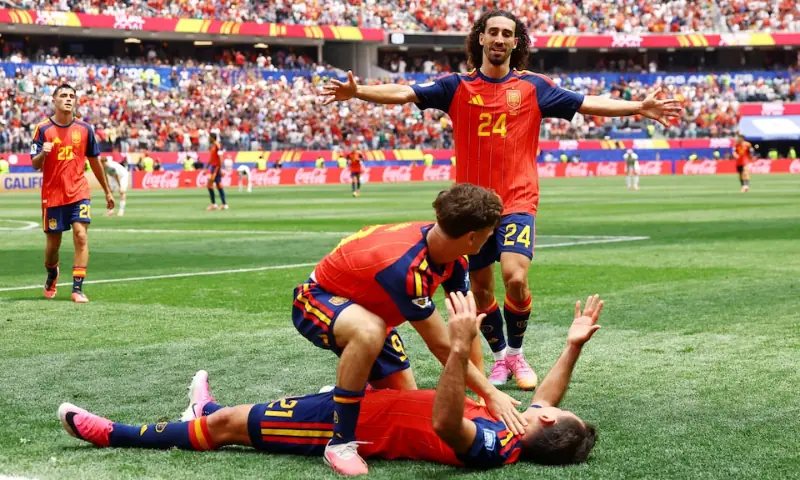

There was a time when Spain’s football was defined by fury. Today, it is defined by control.
The old La Furia Roja (The Red Fury) was built on passion, aggression and flashes of individual brilliance.
The Spain of today is something more complete: technically immaculate, tactically sophisticated and capable of turning possession into sudden, devastating attacks.
As Spain prepare to face Argentina in the FIFA World Cup final at MetLife Stadium tonight, they do so unbeaten in 37 matches and as reigning European champions.
Their remarkable resurgence is not the product of one golden generation or one exceptional manager — it is the result of a footballing system developed over decades, refined through success and failure, and constantly adapted to the demands of the modern game.
For much of its history, Spain failed to translate the strength of its domestic football into international success. The 1964 European Championship remained its only major title for decades. The transformation began not in the national team dressing room, but on the training pitches of Barcelona’s La Masia academy.
When Johan Cruyff returned to Barcelona as coach in 1988, he brought with him a philosophy rooted in the principles of Total Football. Possession, intelligence, spatial awareness and technical ability were placed above physical strength. The 4-3-3 system became more than a formation; it became a way of understanding the game.
At La Masia, players were taught to read the pitch as much as to play on it. Short passing, positional rotations, movement without the ball and the creation of passing angles became fundamental.
The influence eventually extended beyond Barcelona. The Spanish football federation adopted many of those principles across its youth structures, helping create a common footballing language that transcended club rivalries.
The grassroots blueprint
Spain’s success has been built from the bottom up.
Young players move through carefully structured age groups, where training focuses heavily on decision-making, technical ability and football intelligence.
Small-sided games and exercises that demand quick decisions are prioritised over simply developing physical strength.
The country’s youth football is also intensely competitive. Promotion and relegation structures expose young players to pressure from an early age, while regional federations and the Spanish Football Federation work together to identify and develop talent.
The country’s leading clubs provide another important bridge to senior football. Reserve sides such as Barcelona B and Real Madrid Castilla compete in the professional league system, allowing teenagers to experience the physical and tactical demands of adult football before making the jump to the highest level.
That structure helps explain why players such as Lamine Yamal can enter elite football at an extraordinarily young age without appearing overwhelmed.
They are products not only of exceptional talent but of an environment designed to prepare them for the demands of the game.
The golden age of tiki-taka
The fruits of that system became visible between 2008 and 2012.
Under Luis Aragonés and Vicente del Bosque, Spain produced one of the greatest international teams in football history.
Xavi, Andrés Iniesta, Sergio Busquets, David Villa and their teammates perfected a style that came to be known around the world as tiki-taka.
Spain won Euro 2008, the 2010 World Cup in South Africa — the country’s first — and Euro 2012. In the process, they became the first team to win three consecutive major international tournaments.
Their football was built around the ball. Possession was both an attacking weapon and a defensive strategy. By keeping the ball, Spain denied opponents the opportunity to attack. By moving it quickly and intelligently, they created openings that often appeared impossible to defend.
The team represented the meeting of two traditions in Spanish football: the passion and directness of the old Furia Roja and the technical, possession-based football shaped by Cruyff’s influence.
When possession became predictable
But success eventually created its own problems.
By the middle of the 2010s, Spain’s football had begun to lose its element of surprise. Possession remained abundant, but it increasingly became sterile. The ball moved sideways and backwards without enough penetration or depth.
Opponents adapted. High pressing, compact defensive blocks and a willingness to concede possession in selected areas exposed the limitations of a system that had become predictable.
Spain exited the 2014 World Cup at the group stage. They were eliminated in the round of 16 at the 2018 World Cup and again in 2022, when Morocco knocked them out on penalties.
The old formula was no longer enough. Spain had to evolve without abandoning the principles that had made it successful.
A modern rebirth
Luis de la Fuente, appointed national team coach in 2022, understood that balance.
Having worked extensively within Spain’s youth system, he was familiar with the foundations of the country’s football. His task was not to destroy them but to modernise them.
Spain retained their ability to dominate possession but added greater verticality and unpredictability. Wingers such as Lamine Yamal and Nico Williams gave the team the ability to attack space, beat defenders one-on-one and stretch opponents in ways the old tiki-taka teams often struggled to do.
Spain can now overload one side of the pitch, draw opponents towards the ball and then quickly switch play to create isolated situations on the opposite flank. Possession is no longer an end in itself. It is used to create openings.
Euro 2024 offered the clearest evidence of the transformation.
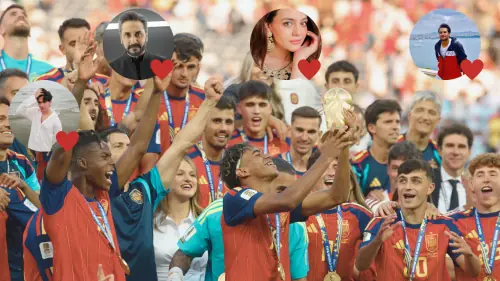
Spain won all seven matches on their way to a record fourth European Championship title, defeating England 2-1 in the final. They combined technical control with greater speed and directness, while the emergence of Yamal symbolised the fearlessness of a new generation.
The teenager was not merely a talented addition to an established team. He represented the evolution of Spanish football itself.
Spain have carried that momentum into the World Cup.
Their unbeaten run and progress to the final have underlined the depth of their squad and the maturity of their football.
Rodri provides control in midfield, while the attack offers a mixture of possession, movement and explosive pace.
The result is a team that can dominate a match patiently but is also capable of changing its rhythm in an instant.
A model beyond football
Spain’s rise offers a lesson that extends beyond the football pitch.
Its success was not built through a single generation, a quick tactical fix or the discovery of one extraordinary player. It was the result of a long-term commitment to a particular footballing philosophy.
The influence of Cruyff, Barcelona’s academy and the structures developed by the Spanish federation created a technical and tactical foundation.
But the system survived because it was not treated as sacred.
When possession became predictable, Spain adapted. When the old generation faded, a new one was allowed to play with greater freedom. The principles remained, but the interpretation changed.
That may be the most important part of Spain’s story.
The country’s football has evolved from the passion of La Furia Roja into something more controlled without losing its intensity.
The fury has evolved into a refined version of itself.
Today, Spain can suffocate opponents with the ball, break them with speed and defend with the same collective understanding that has defined their football for decades.
Their final against Argentina will bring together two of the most powerful footballing traditions of the modern era.
But whatever happens at MetLife Stadium, Spain’s journey from international underachievers to one of the world’s most consistent footballing powers remains one of the great examples of what long-term planning can achieve.
The Red Fury has become a symphony in red. The anger remains. The difference is that now every movement has a purpose.