Recruiting for peace
CRITICAL aspects of the militancy challenge — recruiting professional talent and addressing training gaps — are often overlooked. Militants keep pace with technological changes, but LEAs, rooted in histories where colonial powers established police forces to enforce compliance rather than serve the public, are reluctant to accept change. Recruitment standards should align with security, sociopolitical and cultural dynamics. Police departments adhere to a numerical model, when they need both numerical and technology-driven models.
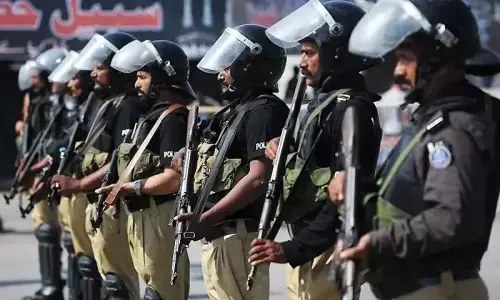
Constables make up a significant part of the police force. Before Police Order 2002, recruitment focused mainly on physical fitness, allowing illiterate candidates to join. But the demand for educated constables has increased. Each province has its own hiring criteria. Earlier at the district SP’s discretion, post-PO 2002, constables’ recruitment was assigned to senior officers’ teams. To ensure transparency, KP outsourced entry test to NTS but could not attract the needed talent. Pakistan’s police forces recruit mainly at the constable, ASI and ASP level; provinces rarely recruit DSPs and inspectors directly. Focusing on physical tests, hiring may overlook intelligence, ethics, judgement and psychological testing.
PO 2002 mentions ‘recruitment’ seven times; the KP Police Act 14 times. Article 27 outlines the IGP’s recruitment-related powers. Article 160 details the National Police Management Board’s authority to recommend recruitment standards to the government. A provincial subject, recruitment is done as per local needs. Federal-provincial collaboration can leverage federal and international help. Many potential constables live in rural areas, with little access to information on recruitment processes; thus, hiring drives must maximise outreach through mass and social media. Globally, assessments are shifting towards computer-based testing that may improve transparency, with candidates identified through biometrics. CBT can save travel costs.
Recruitment delays cause vacancy shortfalls, driven by bureaucratic red tape and coordination gaps between recruiting units and training academies. Sometimes diversity quotas for women and minorities aren’t met, especially in Balochistan, KP and other provincial rural areas. Transparency can limit political meddling, corruption and nepotism. Standardised recruitment needs online registration, biometrics, facial recognition, electronic height measurement, CBT, medical examinations by an independent board, psychological evaluations, standardised aptitude and personality tests and ethics training in selection processes.
Impartial recruitment in police is essential.
Independent observers on police recruitment boards is recommended. Third-party oversight will boost credibility; targeted drives will encourage women, minorities and educated youth, bringing diversity in police ranks. Implementing anonymous answer-sheet coding, putting merit lists online and instituting grievance redressal mechanisms will improve the police image. Hiring ASPs via the combined FPSC-conducted CSS exam needs review.
Recruitment criteria must require no criminal record, strong character references, physical fitness, background vetting, written tests and interviews. In professional forces, officers have at least one to three years of academic and practical training in police academies and are on probation before full appointment. The average training duration of six months for constables in Pakistan isn’t enough to ensure effective training in human rights and community policing. The focus remains on arms and obedience. The focus on physical standards risks overlooking intellectual and psychological aspects; cognitive dimensions such as deduction, reasoning, written comprehension, emotional stability, socialisation, safety orientation, teamwork, etc are important.
Finland hires officers through a competitive exam requiring a police degree. Norway requires a three-year police university education, and passing psychological and physical tests. Germany requires academic qualifications, success in aptitude tests, and physical and psychological screening. Japanese recruitment exams focus on merit, character assessment and community engagement. Singapore focuses on integrity screening, fitness and leadership assessment. The UK prioritises education, vetting, medical, fitness and competence assessments. A specialised police recruitment unit must handle hiring. Before recruitment, it must work with educational institutions to attract the top talent with a passion for public service.
A professional police service starts with an impartial recruitment process, making reform essential not only for an effective criminal justice system but also to uphold order and security.
The writer is a security analyst and author of Pakistan: In Between Extremism and Peace.
X: @alibabakhel
Published in Dawn, July 16th, 2026