0
0


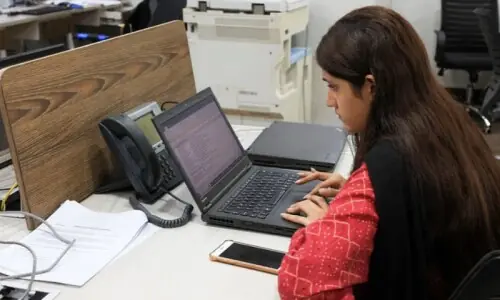
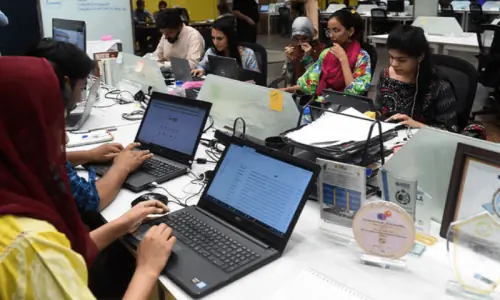
In the eleven months to May 2026, Pakistan’s freelance workforce, nearly three million people, earned $1.6 billion in verified export remittances, up 80 per cent year-on-year; May alone brought in $169 million, up 87pc.
The Pakistan Software Houses Association (P@SHA) had asked the Federal Budget 2026–27 to tax a large share of these earners more heavily. The government said no. Budget 2026–27 extended the 0.25pc Final Tax Regime on IT and IT-enabled export receipts uniformly through June 2029, rather than adopting P@SHA’s proposed split between “genuine” freelancers and “remote employees.” It was the right call, and the reasoning is worth setting out clearly before the same proposal resurfaces in a future budget cycle.
P@SHA’s proposal would have divided Section 154A of the Income Tax Ordinance into two tiers. “Independent freelancers” clearing a multi-client test would keep the 0.25pc rate; anyone drawing 80pc or more of their income from a single foreign employer would be reclassified as a “remote employee” and pushed onto graduated slabs of 5pc to 20pc.
The justification was a claimed 22–44pc take-home gap that, the association argued, was letting foreign firms poach talent from local software houses. The association cited the UK’s IR35 and the US W-2/1099 rules as precedent; however, both exist to stop a domestic employer from dodging domestic payroll tax. No such evasion is happening here, because the employer sits entirely outside Pakistan’s jurisdiction and was never on the hook for Pakistani payroll tax to begin with.
Taxing freelancers at a higher rate would not have raised additional tax revenue; it would have relocated earnings
The deeper problem is the comparison itself. A domestic employee earns and spends in rupees, contributing nothing directly to national reserves. A remote worker, whether serving one client or ten, earns dollars abroad and brings them home. That is not the behaviour of a disguised local employee; it is the behaviour of a diaspora worker. And Pakistan already has a settled answer for diaspora dollars.
Under Section 111(4) of the Income Tax Ordinance, 2001, remittances received through normal banking channels are exempt from tax altogether, with no inquiry permitted into source. Over the same eleven months, during which freelancers sent $1.6bn home, the diaspora sent $38.1bn. Even at today’s 0.25pc, a freelancer’s dollar is already taxed more than an overseas Pakistani’s identical dollar. P@SHA’s slabs would have widened that gap to 20pc.
That is before counting what freelancers already lose to the platforms themselves. On a $1,000 invoice, Upwork’s up to 15pc service fee, a roughly 4pc sub-market exchange rate and a flat $0.99 withdrawal fee leave an effective loss of about 18.5pc. Fiverr, paid via Payoneer’s 20pc platform fee, $3 transfer charge and roughly 2pc exchange-rate spread, costs closer to 22pc, all before a single rupee of Pakistani tax. Rising sender identity-verification requirements on channels like Western Union add further friction, with some foreign clients going silent after the work is delivered rather than share personal ID.
Higher slabs would not have raised more revenue from this segment. They would have relocated it. The UAE charges zero personal income tax on foreign-source earnings; a Pakistani freelancer can secure a freelance visa, route invoices into an Emirati account and never touch Pakistan’s banking system again.
Pakistan has already lived through a version of this mistake. For years, cryptocurrency remained in a genuine grey zone, and trading activity simply migrated to offshore exchanges. It took until March 2026, with the Virtual Assets Act and the new Pakistan Virtual Assets Regulatory Authority, for the country to begin building that framework, and even now the capital-gains rate for crypto is still being settled, years after an estimated 20 million-plus Pakistanis had already moved their activity beyond the country’s reach. A freelance dollar is easier to lose the same way: unlike a crypto wallet, a UAE bank account is one visa application away.
A second pressure is bearing down from a different direction. Coding assistants and chatbots such as Claude, ChatGPT, Gemini, DeepSeek are absorbing exactly the routine coding, logo design and templated writing that built much of this freelance income in the first place.
Research across global platforms found that postings for automation-prone work fell about 21 percentage points more than manual-intensive postings within eight months of ChatGPT’s release: writing gigs down nearly a third, graphic-design listings down 17pc once image-generating tools landed. The work most Pakistani freelancers started with is the work most exposed.
The government’s decision to extend the 0.25pc rate without adopting P@SHA’s bifurcation removes that risk for now. A freelancer in Karachi and an uncle driving a cab in Dubai are both turning labour into foreign exchange the country needs. Taxing one of them harder than the other was never going to make that dollar more likely to come home.
The writer is the head of research at Policy Research & Advisory Council
Published in Dawn, The Business and Finance Weekly, July 6th, 2026