INTERVIEW: Pakistan’s teenage hero Umar on the goal, the trophy and the dream


 0
0
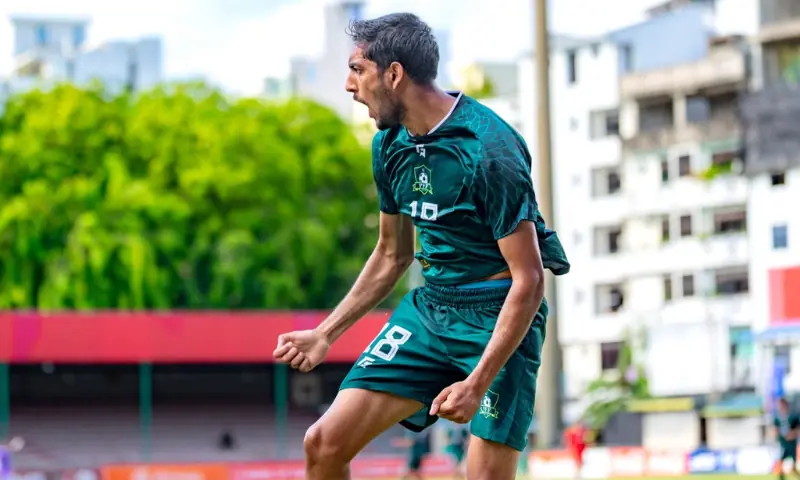

KARACHI: It all happened so quickly. One moment, Yousuf Butt launched the ball forward. The next, Otis Khan flicked it on. Then Shayek Dost was sprinting down the line. And Umar Nawaz was running.
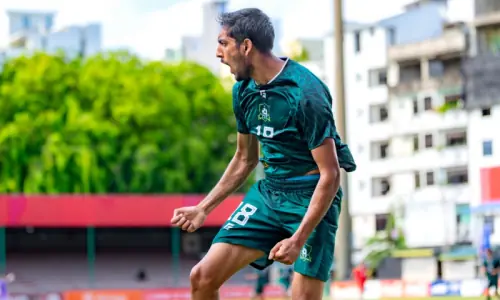
“I was confused myself. I was like, what just happened?” Umar told Dawn in an exclusive interview, reminiscing about the goal that helped end a 74-year wait for a trophy for Pakistan.
Umar, 18, was sprinting towards goal. He had one thought: “I need to sprint for my life.” He reached it, he finished it, and Afghanistan’s defence was broken.
Pakistan were on their way.
That goal — in the fifth minute of the group-stage match against Afghanistan — helped Pakistan reach the final of the Diamond Jubilee International Football Tournament in the Maldives. It was a moment Umar still hasn’t fully processed.
“I couldn’t believe it. I was dreaming.”
From Peshawar to the pitch
Born on 27 September 2007 in Peshawar, Umar was seven years old when the 2014 Army Public School attack shook the nation. He was not at the school that day, but his family was directly affected.
His brother Haris was martyred. His other brother Ahmad was shot in the arm, requiring emergency surgery. The family moved to the UK shortly for Ahmad’s treatment.
Umar wasn’t interested in football back then. In England, he started playing futsal at a local park, practicing with cones, kick-ups and dribbling.
His performances caught the eye of a team-mate’s father, Scott Hamilton, a coach at Bournville Academy. Umar joined and spent nearly six years there, developing his game.
His progress earned him trials at Birmingham City, Coventry City and Hull City.
He chose Coventry City first. It was during a match with Coventry that Wolverhampton Wanderers’ scouting team spotted him and offered a two-year contract. He later moved to Wrexham’s U-18 side in July 2024.
Then came the call from Pakistan.
“As soon as I got the call-up, I had no second thoughts. It’s always an honour to play for your country. It’s the biggest thing,” Umar, who made his Pakistan debut against Syria in November 2024, said.
“There are millions of people in Pakistan and when you are chosen to represent your country, there’s no better feeling than this.”
The silence that sparked a response
Pakistan’s tournament began with a 0-0 draw against Bangladesh. Umar didn’t play. The dressing room was silent.
“Everyone was really down. No one spoke. We felt we weren’t clinical in the final third. We had loads of chances but we weren’t clinical enough.”
Then came the Maldives. Umar was given his chance.
“I was like, I need to make the most of this opportunity. I need to do anything I can. To score a goal or to contribute in any way for the team. Do something for the team so we can get some sort of result. And to give something back to the supporters.”
He did. The Maldives goalkeeper spilled a shot, and Umar was there to bundle it home.
“Going in after the half-time I was like: this is my chance now I have to score. I have no choice. In the second half I was like, let’s go. I was hyped up.”
Pakistan won 3-0. The winless drought that had stretched 962 days was over. Umar had scored his first goal for his country.
The 74-year wait is over
Then came Afghanistan. Then came the sprint. Then came the goal.
“I still think about that goal,” Umar told Dawn.
Pakistan won 2-0. They were in the final. Against Afghanistan again. In the final, Shayek scored a goal Umar will never forget.
“As soon as he scored, I was like, there’s no way. He tried that before in the Maldives game but it didn’t work. He tried it again and I was like ‘WOW’,” Umar recalled. “I started chasing him all the way to halfway. And I started hyping him up and I was like you finally got your goal. You deserved it.”
Pakistan won the final 2-0. A 74-year wait for a tournament title was over. Umar, the youngest player in the squad at 18, had scored two goals during the campaign.
“It was a really proud moment for me and my family,” he said.
One big family
Behind the goals, behind the trophy, there’s a team Umar describes as a family.
“The relationship is like, we’re one big family. Even though it was my first time being with players like Easah Suliman and Yousuf Butt. When I first came, I was like what they are gonna think of me,” the striker said. “But they are amazing people, really good people. It was like I have known them for years.”
The connection wasn’t just built on the pitch. It was built at the dinner table.
“It starts from like the dinner table. Having dinner together. Spending our free time during the tournament all together. It starts from there and then it goes in the dressing room and to the game. Everyone has dinner at the same time. We always talk with each other there,” he noted.
The Solano effect
The man leading this family is Nolberto Solano, a Premier League legend with Newcastle United.
“Nolberto Solano is a Premier League legend. If you have a Premier League legend as a national team coach, you have someone to look up to,” he said. “Cause you know you have been taught by someone who knows what he’s doing. Someone who’s been there. Who is experienced. And who can help us a lot in our game.”
When Pakistan drew with Bangladesh in the opener, Solano didn’t shout. He stayed calm.
“We could’ve done this better, we could’ve done that better. But he said it in a calm way,” Umar revealed. “And we all respected that as players. And we were like we need to do something for our country.”
After training, Umar would approach him for extra shooting practice. Solano never said no.
“He would just say ‘Yes’ all the time. It shows how bad he wants us to win and improve.”
Football as a lifeline
There is a reason this story has weight beyond football.
Amid the grief and upheaval after the APS attack and the family’s move to the UK, football became Umar’s escape.
“I used football to take my mind away from what happened. Whenever I played football it made me forget about it. It takes my mind away. I think football played a massive part in keeping my mind healthy.”
When he returned to Pakistan for his debut against Syria in November 2024, it was bittersweet. But he was determined not to let the tragedy define him.
“I was going to go in. It’s my country. It’s a big moment,” he told the BBC in 2025. “My brother who passed away was probably really proud of me, I wish he was there to see me play for Pakistan.”
His surviving brother Ahmad has also inspired him. Ahmad later became president of Oxford University’s Union.
The World Cup dream
Now, Umar watches the World Cup with different eyes. He sees Iraq and Jordan competing on the biggest stage. And he believes.
“While looking at the World Cup, you see teams like Iraq and Jordan and I was like, if they can do it then we can do it as well,” Umar said. “It just makes me feel like, we need to somehow get Pakistan to the World Cup. Imagine playing in a World Cup for your country. It would be an unbelievable feeling.”
He knows what Pakistan needs — more games, a league for local players and the continued integration of the diaspora players who have proven their value.
“To be fair, we won the tournament with all the diaspora players,” Umar noted. “That shows the power of using diaspora players. But I do think we need a league in Pakistan and help the local players and kids that dreams of playing for the national team.”
Umar’s football education is reflected in the players he studies. His inspirations are Erling Haaland and Hugo Ekitike — not the usual names, but strikers whose attributes he believes mirror his own: similar build, similar position and a playing style he tries to emulate.
A message to the fans
And he has a message for the fans.
“Keep believing in us. As you see we won a tournament. So good things are coming. We just need your prayers,” he said. “We need your support at all times and we wouldn’t disappoint you, InshaAllah. With this group, there’s a lot to come,” the teenager added.
Umar was not born into football. He did not know the game as a child in Peshawar. He discovered it in England, developed it at Bournville, honed it at Wolves and Wrexham. And now, at 18, he has scored two goals for his country, won a historic tournament and played his part in ending a 74-year wait.
He is still dreaming. Of Manchester City. Of Haaland and Ekitike. Of Pakistan at a World Cup.
“One day anything can happen. We might even win it. Football is a crazy game.”
Published in Dawn, July 5th, 2026