THE recent appeal endorsed by civil society members from Pakistan and India, urging the prime ministers of both states to take “meaningful and sustained” steps for peace is well-intentioned.
No rational mind will disagree with the need for peace in the subcontinent, and an end to the toxicity that has marked bilateral ties for nearly eight decades. Yet it takes two to tango, and while Pakistan has on numerous occasions tried to restart the dialogue process in the last few years, India has shown little enthusiasm for talks.
Over 100 individuals have now signed the appeal, coordinated by a New Delhi think tank. It includes former diplomats, academics, politicians and peaceniks from both states. The signatories have called for taking CBMs, and restoring full diplomatic relations. Ties were first downgraded by Pakistan after India’s 2019 revocation of occupied Kashmir’s special constitutional status, while diplomatic relations went further south after India blamed Pakistan for last year’s Pahalgam episode — without any evidence. Last May’s brief armed conflict, initiated by India, further added to frigid bilateral ties.
While some well-meaning quarters in India appear genuine in their desire for peace, the BJP-led government seems intent on rejecting all dialogue that may lead to normalisation with Pakistan. In such a scenario, peace will remain a distant dream. After all, India has shown stubbornness where the unilateral suspension of the Indus Waters Treaty is concerned.
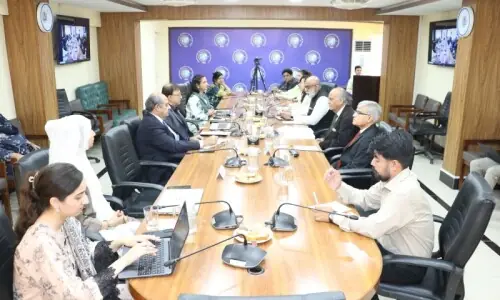
As Pakistan’s Indus commissioner told a seminar in Islamabad the other day, his communications with officials in India have not received a response. At the same event, the deputy PM said India was “sowing the seeds of war”. Indian ministers have on record said their intention is to stop all water to Pakistan. And as the Foreign Office said yesterday, India is “actively aiding” terrorist groups “operating from Afghan soil against Pakistan”. These are certainly not the actions of a regime that wants to see peace flourish in South Asia.
Apart from the belligerence of the Indian state, significant sections of the Indian population have also been radicalised against Pakistan and Muslims. The shrill jingoism of Indian media’s leading lights has contributed significantly to this. Therefore, the question is: is the Indian body politic ready for peace with Pakistan?
At one time the hard right in Pakistan was dead against all normalisation with India. Today, radical elements, fed on the Hindutva ideology, within the Indian system are opposed to friendship with Pakistan. Unless this situation changes, chances of peace appear dim. The single biggest CBM India can take is to restore the IWT, and assure Pakistan it will abide by its commitments. Without solid diplomatic and political moves by both governments, particularly New Delhi, to support normalisation, calls for peace by idealists will remain unrealisable.
Published in Dawn, July 2nd, 2026