Indian opposition demands defence minister's resignation for 'lying' about soldiers' deaths in 2025 conflict with Pakistan
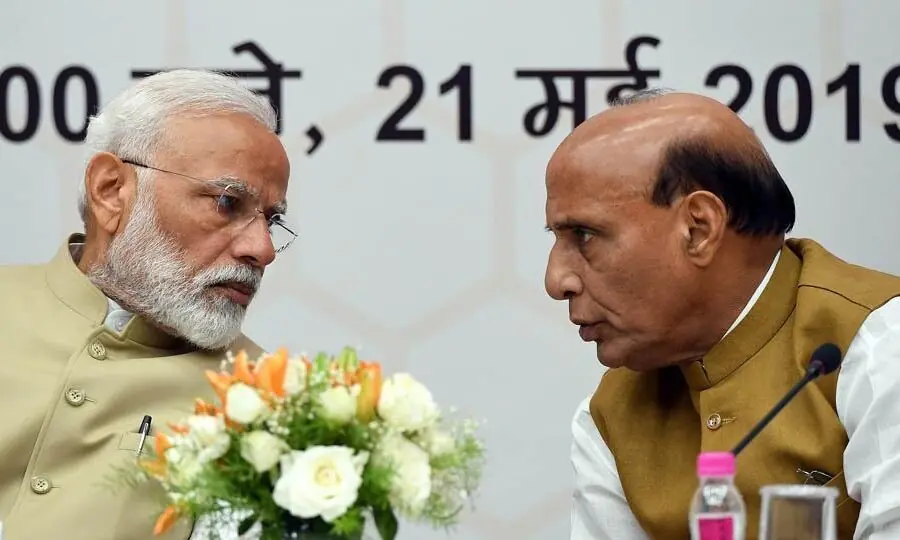

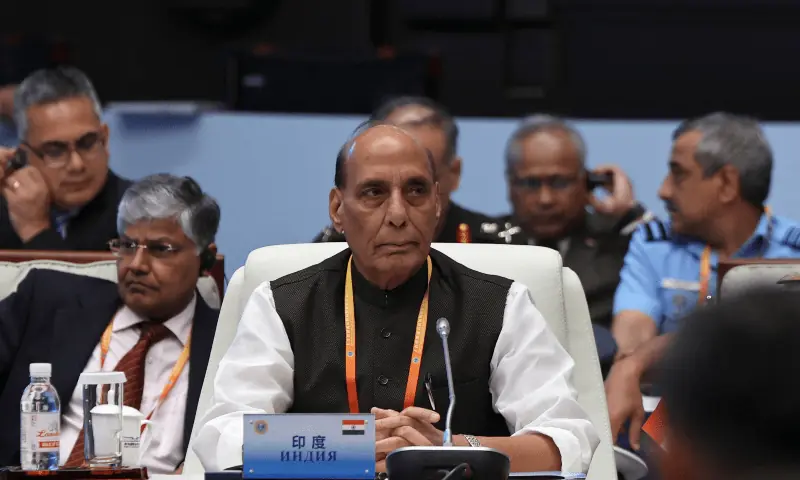
India’s opposition party Congress has demanded the resignation of Defence Minister Rajnath Singh and stepped up criticism against him for “lying” in parliament about the deaths of Indian soldiers during the May 2025 conflict with Pakistan, according to Indian media.
The criticism comes days after the Indian government on June 26 disclosed the names of six armed forces personnel who died during the military conflict, dubbed “Operation Sindoor” by New Delhi. The names were included in the Roll of Honour on the National War Memorial website, marking the first official disclosure of military casualties from the period, The Hindu noted.
Subsequently, on Monday, chairperson of the Congress’s Ex-servicemen Department Col. (retd) Rohit Chaudhry and Wing Commander (retd) Anuma Acharya slammed Prime Minister Narendra Modi’s government for concealing the deaths of the six personnel, The Hindu reported.
In a press conference, Chaudhry demanded that Singh be removed from his position and that Modi and his party lawmakers apologise for “supporting” the minister’s lies.
Chaudhry accused Modi’s Bharatiya Janata Party (BJP) of using “soldiers as props” while seeking votes in the name of the armed forces, the outlet added.
“When Rajnath Singh was lying in Parliament that no soldier had suffered any loss, BJP MPs were clapping,” he said.
“The foundation of the Modi government is built on lies. They have no right to remain in power,” the Congress member said, questioning why it had taken the government 13 months to make their names public.
In another move against the defence minister, India Today reported that parliament member K.C. Venugopal on Tuesday sought privilege proceedings against Singh for allegedly misleading the Lok Sabha about the six Indian soldiers — five from the army and one from the air force.
The outlet noted that an Indian parliament member may seek a privilege motion when alleging that another member or a minister has breached parliamentary privilege.
“This amounts to completely misleading Parliament. That is why I have moved a privilege motion against Rajnath Singh ji before the Speaker of the House,” Congress quoted Venugopal as saying on Wednesday.
In a post on Tuesday, Venugopal said he had written to Lok Sabha Speaker Om Birla as it was a “well-established norm that if a minister misleads the House or [withholds] information, it constitutes a breach of privilege, amounting to contempt of the House”.
On its part, the Indian government has rejected the opposition’s stance, maintaining that the nation had paid tribute to the fallen personnel at the “earliest opportunity”, The Hindu said.
India Today also noted that the defence ministry rejected what it called “misleading social media claims” that Singh had said no Indian soldier was killed during the conflict.
The outlet quoted the ministry as contending that Singh’s remarks were “specifically meant to counter a widely circulated false narrative at the time that Indian Air Force pilots had been killed during Operation Sindoor”.
In late May 2025, India’s Chief of Defence Staff General Anil Chauhan had admitted that his country’s fighter jets were shot down by Pakistan during the four-day military escalation.
Modi’s government had faced scathing criticism from opposition parties for its lack of “political will to fight” during the May clashes and “failures” to prevent the Pahalgam attack.
The May conflict was sparked by New Delhi’s allegations against Islamabad about the April 22 deadly attack in occupied Kashmir’s Pahalgam, which claimed the lives of 26 people, mostly tourists. The allegations were without evidence and were strongly refuted by Pakistan.
Just two days later, India took a series of aggressive measures against Pakistan, including unilaterally suspending the critical Indus Waters Treaty (IWT). Islamabad retaliated by suspending all kinds of trade, closing its airspace for Indian flights and shutting down the Wagah border.
On the night of May 6, New Delhi launched deadly overnight air strikes on Pakistan. In retaliation, Pakistan Air Force downed five Indian jets, later raising the tally to seven.
After tit-for-tat strikes on each other’s airbases, it took American intervention on May 10 for both sides to finally reach a ceasefire.