A LEGACY LESS TOLD
Sir David Attenborough, naturalist and broadcaster, celebrated his 100th birthday last month and tributes poured in from around the world. Few individuals have done more to shape public understanding of the natural world and the need for its conservation. For decades, Attenborough brought distant landscapes, such as rainforests and savannahs, into our living rooms, inspiring millions to care about life on Earth.
Pakistan may not have produced a natural historian in the mould of Attenborough, but it has produced its own towering figure in conservation in Syed Babar Ali.
As Ali turns 100, the nation’s tributes will naturally celebrate his achievements and contributions to the country’s business landscape, education and philanthropy — all of which are significant and rightfully earned. It is also equally important, however, that we celebrate his relatively less publicly recognised contributions — though equally significant — in shaping environmental conservation in Pakistan.
Unlike Attenborough, Ali was never a naturalist, nor did he spend decades documenting wildlife on screen or narrating the beauty of the natural world to mass audiences. His contributions were primarily through institution-building, philanthropy and a commitment to public service. In many ways, his contributions to conservation in Pakistan have been foundational.
Syed Babar Ali’s achievements and contributions to the country’s business landscape, education and philanthropy notwithstanding, equally important is his role in shaping environmental conservation in Pakistan
Public discourse on environmental conservation in Pakistan has come a long way since the 1970s, when the landscape was very different. Still a relatively young country at the time, Pakistan was focused on nation building, industrialisation and economic growth then. Environmental issues had not yet assumed the prominence they enjoy today, and wildlife conservation remained the concern of a relatively small community of practitioners and enthusiasts.
Against this backdrop, Ali emerged as one of the country’s earliest champions of conservation. As one of Pakistan’s leading businessmen, he understood that economic development could not be pursued indefinitely at the expense of the natural systems upon which it ultimately depends. He recognised the importance of conserving Pakistan’s wildlife, forests, freshwater resources and natural heritage for future generations.
His involvement in conservation began when a small group of naturalists sought to establish a platform for wildlife conservation in Pakistan. While others expressed interest in the idea, it was Ali who ultimately took responsibility for carrying the initiative forward.
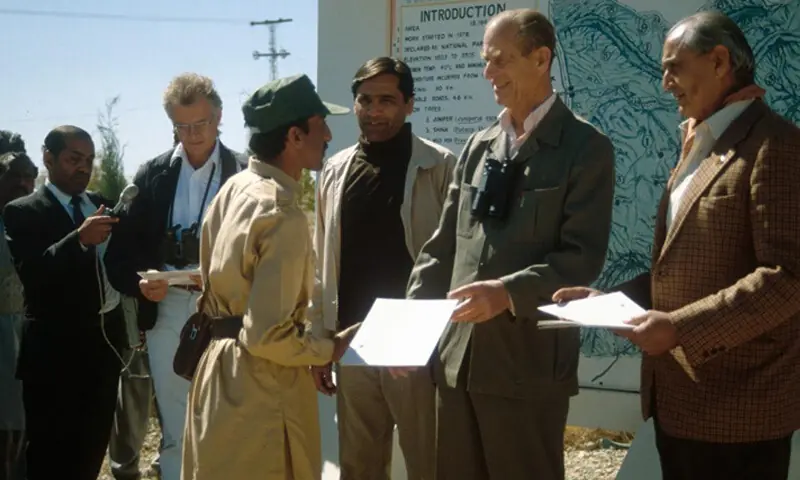
The decision would shape not only his own legacy, but also the trajectory of conservation in Pakistan for decades to come. His leadership would later earn him a place on the World Wide Fund for Nature’s (WWF) international board, where he worked alongside figures such as Prince Philip and helped strengthen Pakistan’s profile within the global conservation movement.
This understanding informed his association with WWF-Pakistan, which he founded in 1970, and for which he continues to serve as President Emeritus. By laying the foundation for a conservation organisation, Ali helped institutionalise environmental conservation and, more importantly, he leant his legitimacy and credibility to the cause. Since its inception, the organisation has evolved, expanding its focus from protecting wildlife to leading initiatives that support the country’s adaptation to climate change.
His contribution, however, extends beyond organisational leadership. More crucial was his understanding of conservation. For many, conservation begins and ends with wildlife. Ali recognised that protecting wildlife required protecting habitats, protecting habitats required engaging communities, and sustaining both required education and public awareness. It is a way of thinking that seems obvious today, but was far less common when conservation efforts in Pakistan first began.
This broader understanding is reflected in some of Pakistan’s conservation successes. Community-based conservation initiatives in the country’s northern areas demonstrated that local people are often the most effective custodians of nature when they have a stake in protecting it. The populations of species such as the markhor and ibex have rebounded in recent decades because of stronger protections, but also because local communities became active partners in conservation efforts.
Reflecting on conservation and sustainability in an interview for WWF-Pakistan a few years ago, Ali remarked, “We are all mortals, so we have to think beyond our lives.”
This statement captures not only his approach to conservation, but much of his life’s work. Whether in education, philanthropy, business or environmental stewardship, his focus has consistently been on building institutions that outlast individuals. Conservation, after all, is an inherently long-term endeavour. The forests we restore, the rivers we protect and the species we conserve are investments in generations we may never meet.
His reflections on environmental issues today are also remarkable because many of the concerns he highlighted decades ago now sit at the centre of national debate. He has raised concerns regarding the disappearance of trees from Pakistan’s cities, the need for responsible urban planning, sustainable consumption, recycling, water conservation and the pressures that rapid population growth places on natural ecosystems. Today, these are among Pakistan’s most pressing environmental challenges and, in many ways, Ali anticipated them long before they became headline issues.
Ali, the conservationist, helped ensure that conservation found a home in Pakistan. Through institutions, ideas and decades of stewardship, he helped lay the foundations of a conservation movement that continues to shape the country’s environmental future.
Combined with a century of service to Pakistan, it is a legacy well worth celebrating.
The writer focuses on environmental issues and is currently associated with WWF-Pakistan. He can be reached at sheheryarkhan95@gmail.com
Published in Dawn, EOS, June 28th, 2026