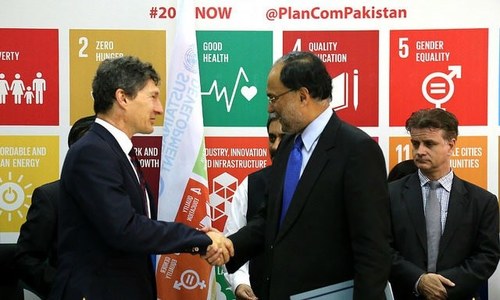
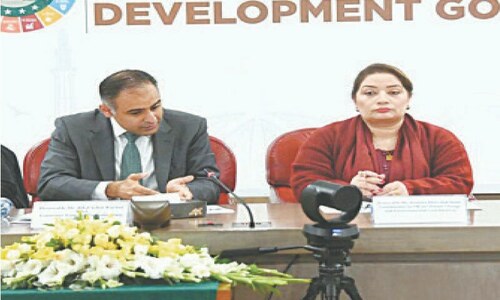
PAKISTAN’S commitment to the SDGs is routinely reaffirmed, but the gap between promises and progress continues to widen. A meeting between First Lady Aseefa Bhutto-Zardari and the UN country team highlighted priorities such as public health, nutrition, education, climate resilience and women’s empowerment — areas where progress is urgently needed.
Yet, with fewer than four years remaining until the 2030 deadline, Pakistan is off-track on many of the goals it pledged to achieve. Cooperation with the UN is valuable, but Pakistan cannot rely on international partners to compensate for weak governance and inconsistent implementation at home. The SDGs are benchmarks for improving lives, not just global commitments.
Polio is the clearest example. Despite decades of vaccination campaigns, billions of rupees in spending and sustained foreign aid, we remain one of only two countries where the disease is still endemic. The UN has warned that the coming year will be decisive, but technology alone will not suffice. AI may improve outreach, but it cannot replace routine immunisation, effective local administration, community trust or political resolve.
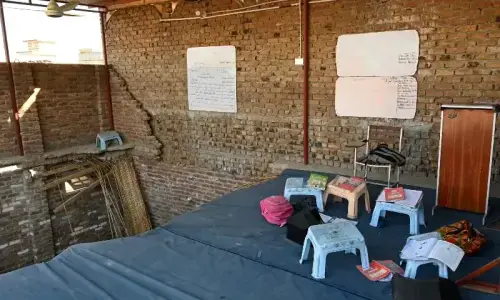
Similar shortcomings persist elsewhere. Around 41pc of Pakistani children suffer from stunting, maternal anaemia remains widespread, adolescent pregnancies continue to endanger mothers and infants, and millions still lack access to quality education and healthcare.
These failures reflect a broader inability to translate policy into results. Climate change is placing pressure on strained public services, while poverty, gender inequality and poor sanitation continue to undermine development. Pakistan should therefore treat the SDGs as the foundation of national policymaking rather than as commitments revisited during high-level meetings. Federal and provincial governments must coordinate more effectively, strengthen local institutions and ensure that development spending produces measurable outcomes instead of political dividends. Reliable data, monitoring and sustained investment in health, education and nutrition are essential.
International agencies can provide expertise and support, but they cannot substitute for domestic leadership. Missing the SDG targets would mean condemning another generation of Pakistanis to preventable disease, chronic malnutrition and persistent inequality. Can the state deliver the essentials? Pakistan still has time to answer that question in the affirmative, but only if urgency replaces complacency.
Published in Dawn, June 26th, 2026