PM Shehbaz ‘optimistic’ as US, Iran hash out differences


 0
0

• Premier speaks to Qatari ruler, Tabuk governor; stresses need to protect talks from ‘spoilers’; insists momentum must continue for ‘successful outcome’
• Qatari PM in Oman to discuss Hormuz status; Trump insists it will remain toll-free
• Another summit on the cards to mend ties between Iran, Gulf states; Ghalibaf calls for ‘coexistence’
• IAEA to carry out inspections of nuclear sites as Tehran links access to final accord, sanctions relief
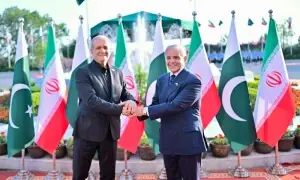
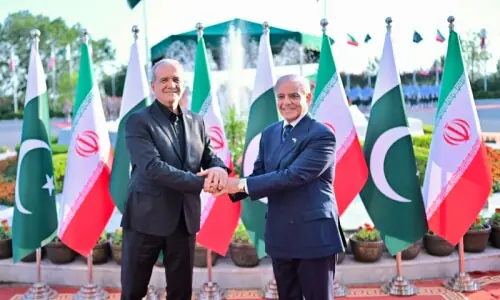
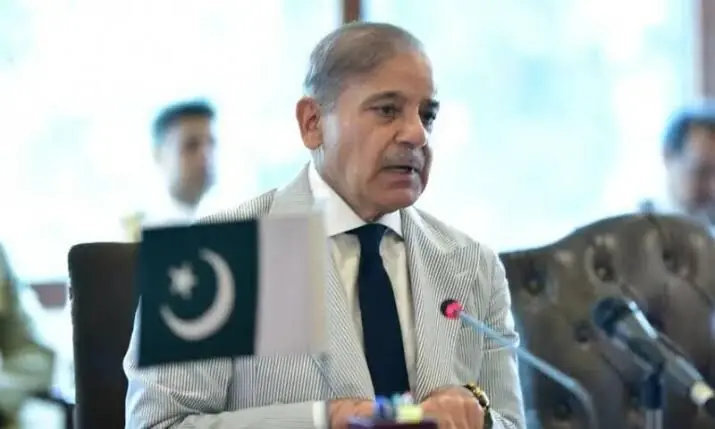
ISLAMABAD: Prime Minister Shehbaz Sharif on Wednesday hoped for a successful conclusion of the peace process between the US and Iran amid efforts by the negotiators to secure a lasting end to the war that engulfed the Gulf region following the Feb 28 US-Israeli strikes on Iran.
In separate phone calls, the premier spoke to Qatari ruler Sheikh Tamim bin Hamad Al Thani and Saudi Arabia’s provincial governor Prince Fahd Bin Sultan Bin Abdulaziz Al Saud, with the US-Iran dialogue featuring prominently in the conversations.
According to the PM’s Office, PM Shehbaz received a telephone call from Qatar’s royal, in which Doha appreciated Pakistan’s diplomatic efforts that led to the signing of the Islamabad Memorandum of Understanding (MoU) between the US and Iran. He expressed Qatar’s full support for Pakistan’s peace efforts.
Both leaders expressed satisfaction with the first round of technical-level talks held in Burgenstock, Switzerland, and stated that positive momentum must continue so that negotiations can be successful.
The two leaders also agreed that it would be important to safeguard the talks from detractors, the statement added. A day earlier, Foreign Minister Ishaq Dar said Israel “nearly derailed” the talks with its strikes in Lebanon.
The PM reiterated his invitation to the Qatari ruler to visit Pakistan. In response, Mr Al Thani expressed his willingness to visit Pakistan later this year to discuss bilateral cooperation and regional developments.
Separately, the PM also received a phone call from Tabuk Governor Prince Fahd, in which the Saudi official lauded Pakistan’s remarkable diplomatic efforts to secure an understanding between the US and Iran. The PM said that Pakistan’s peace efforts were aimed at ensuring regional peace and stability, with the support of friendly countries, including Saudi Arabia.
The talks between the US and Iran are expected to resume next week, but the date and venue for these talks have not been confirmed. Both sides, however, continue to make contrasting statements on multiple issues.
According to US President Donald Trump, Iran had assured him that no fees would be collected from ships in the Strait of Hormuz. He did not specify whether those assurances would remain in place after the 60-day negotiating period.
In comments to the media after a lunch with Republican senators, Trump said, “Iran is agreeing to everything I want, and they have to. Otherwise, we just go back and do what we have to do.”
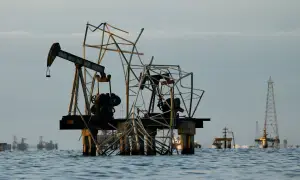
Just a day earlier, Iran and Oman had discussed charging fees in the vital strait. The Strait of Hormuz, through which roughly 20 per cent of the world’s crude oil and liquefied natural gas normally transits, was closed by Iran after it was attacked by the US and Israel. Iran lifted its blockade as part of an accord signed with the US last week which extended an ongoing ceasefire by 60 days and set in place a memorandum of understanding aimed at permanently ending the war.
Gulf talks on Hormuz
Qatar’s PM Sheikh Mohammed bin Abdulrahman Al Thani travelled to Oman on Wednesday to initiate talks between the Gulf states, Iraq and Iran on the Strait of Hormuz, AFP reported citing an unnamed diplomat.
“The Qatari prime minister travelled to Muscat in preparation for talks between Iran, the Gulf nations and Iraq on the operation of the Strait of Hormuz,” the diplomat told AFP, saying the discussions were separate from US-Iran negotiations.
The diplomat explained Gulf countries would push for freedom of navigation through the strait and no imposition of fees for transit while Iran was expected to ask for an environmental and security service fee for crossing the vital waterway. Pakistan, which has mediated US-Iran talks alongside Qatar, was also expected to be involved in the regional Hormuz discussions.
A separate summit was also expected between the Gulf countries and potentially with other regional neighbours with Iran to mend ties in Saudi Arabia. The separate talks on reconciliation between Gulf countries and Iran expected in Riyadh could also include other regional neighbours, the diplomat said, without specifying a date for the summit.
Nuclear disagreement
Besides Hormuz, another key sticking point has been Iran’s nuclear programme. US President Donald Trump on Tuesday said that Tehran had “fully and completely agreed” to allow UN inspectors to return to the country, but Iran said it had no intention of doing so.
The controversy deepened on Wednesday after UN nuclear watchdog head Rafael Grossi said the UN watchdog will carry out inspections in Iran soon following an interim peace accord. “The inspections will indeed take place,” International Atomic Energy Agency (IAEA) chief Grossi told a press conference in Japan, an audio recording of which the IAEA posted online. “We will be working on the modalities — dates, procedures, places — very soon,” he said of discussions with Tehran.
Iran’s Deputy Foreign Minister Kazem Gharibabadi responded that there were currently no plans to grant access to attacked nuclear facilities or nuclear material. He said such issues would only be addressed within the framework of a final agreement with Washington and after “practical steps” to lift US sanctions on Iran.
“Paragraph 8 of this memorandum of understanding states explicitly that nuclear activities that are going to be carried out with regards to nuclear material, facilities, will be supervised by the IAEA, in bold letters,” Mr Grossi said. “Obviously, to do that, we will have to inspect… So this is going to happen. Of course, if they (Iran) want to comply with the agreement. If they don’t want (to), it’s another matter.”
Tehran appeared to push back on Grossi’s comments. “Media noise cannot be used to impose facts on the ground,” Mr Gharibabadi wrote on X, indicating that inspection arrangements remained contingent on progress in negotiations over sanctions lifting.
‘Declaration of defeat’
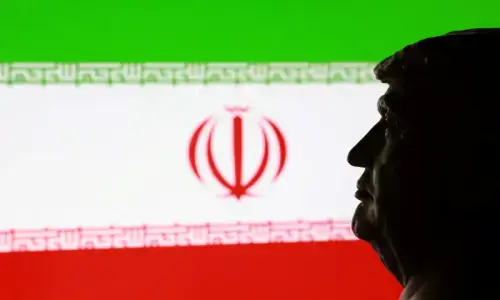
Meanwhile, Iran called the deal to end the Middle East war “a declaration of America’s defeat” with its top negotiator Bagher Ghalibaf saying that security in the Middle East must be ensured by the countries of the reigon. “We see the future of the region not in confrontation but in interaction and not in elimination but in coexistence,” Mr Ghalibaf said.
“The Islamabad understanding was not the result of pressure and coercion, but rather the result of the resistance and authority of the brave Iranian nation,” he said.
However, Trump told reporters at the Capitol that the United Stated is winning in the Iran war. He said, “The war is going very well. As you know, we’re winning by a lot. Iran is making very big concessions. We’ll see what happens — but it has been very, very, very powerful.”
Despite these claims, the US president during a meeting with Nato chief Mark Rutte in the Oval Office told him he was “let down” by members of the transatlantic alliance who did not back his war against Iran. “We were let down. We didn’t need help on this at all. We demolished (Iran) literally in the first week but it would have been nice if they would have said, ‘We’d like to help,’” he added.
Published in Dawn, June 25th, 2026