MOSCOW: Nuclear weapons are the “only” bulwark preventing the world from slipping into a global war, the Kremlin said on Wednesday amid fears of a fresh multi-country arms race.
The last nuclear arms control treaty between Russia and the United States, New START, expired in February, releasing restrictions on the world’s two largest nuclear powers.
There have been no signs so far of either side moving to renew or replace the accord, even though both parties agreed to reestablish high-level military talks. Speaking at a foreign policy forum in Moscow, the Kremlin’s spokesman Dmitry Peskov said that the global security system was “eroding.” “In fact, we have nothing left in this world apart from nuclear deterrence.
It’s the only thing that protects the world from a global war,” he said. “As technology is developing, it is already clear that new types of non-nuclear weapons will emerge, but they may eventually match nuclear weapons in destructive power,” he added.
Russian President Vladimir Putin has repeatedly invoked nuclear rhetoric throughout his four-year offensive on Ukraine, triggering charges of reckless sabre-rattling from Europe and the United States.
Fuel shortages bite in Moscow as Ukraine targets oil facilities
US President Donald Trump has pressed for a new treaty to include China, whose nuclear arsenal is growing but still far smaller than that of Russia or the United States. Beijing has publicly rejected the pressure.
Moscow says if China is brought into a new deal, then so too should Washington’s nuclear allies, Britain and France.
The expiration of New START marked the first time in decades that there has not been a treaty in force to curtail the deployment of nuclear weapons.
Signed in 2010, it was the last in a series of Cold War-era arms control agreements, restricting Moscow and Washington to 1,550 deployed nuclear warheads each. Before it lapsed, both countries repeatedly accused each other of failing to adhere to the deal.
Fuel shortages
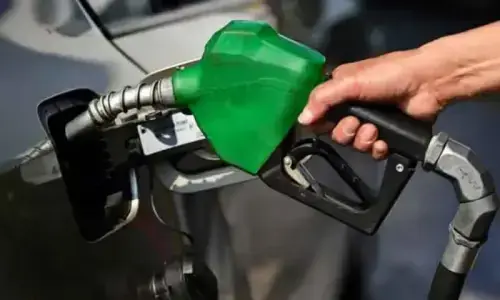
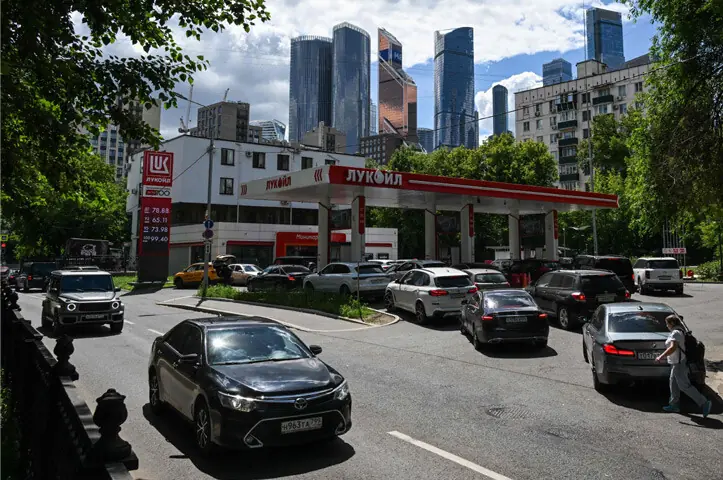
Russia — one of the world’s largest oil producers — has introduced a swath of restrictions on petrol sales across the country, as Ukrainian strikes on its refineries, depots and logistics crimp domestic supply. Several regions have introduced rationing, while some gas stations and chains have sold out or closed due to a lack of supplies.
“It’s really, really tight,” Nazarov, 55, said at a Lukoil petrol station near Moscow’s business district. “We stand in line for an hour, hour and a half … it’s time to quit this job and leave.” There were around 15 vehicles waiting for their turn at the pump.
Petrol shortages in Moscow are highly unusual. Outside the capital, the situation is worse, Nazarov said.
“You drive 200 kilometres away from Moscow and they don’t give you more than 10 litres. In some places they don’t give any at all.”
‘Under control’
Ukraine has in recent months intensified a campaign of long-range drone strikes against Russia’s energy facilities — an attempt to cut off a vital source of revenue for the Kremlin. Last week a major oil refinery on the outskirts of Moscow was hit — pouring thick black smoke over the capital in dramatic scenes.
Ukrainian President Volodymyr Zelensky calls the strikes fair retaliation for Moscow’s nightly missile and drone barrages of its cities.
Published in Dawn, June 25th, 2026