

THE new telecom bill has caused a storm in a teacup. These days it seems it’s being discussed more than the budget, though far less than Iran, the US and the blessed talks. But a local scandal will always trump foreign policy for hacks in the country. Many of us are just thrilled that like many other stories this has also not been declared a red line — in other words an issue better left unaddressed. TV these days has more no-go areas than the Karachi of yesteryears.
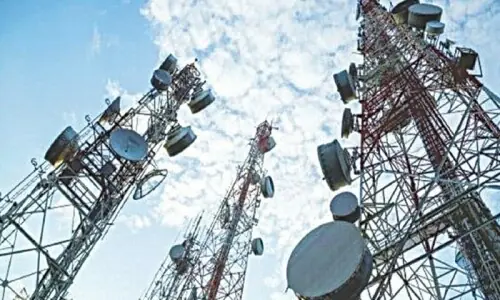
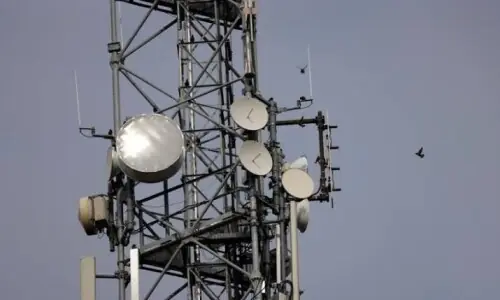
So for those who may have not paid attention, the government has put together a bill, which if passed, would have allowed telecom companies to lay fibre cable and put up towers wherever they wanted. Citizens, property owners and housing societies would have had little option of saying no. It is a power similar to the ones usually enjoyed by governments to acquire land.
The draft gave the companies the right to access public and private properties to install towers and lay fibre cables. The owner cannot refuse to provide access; and owners can even be fined for obstruction or delay.
According to the bill, “the licensee shall seek the approval of the owner, lessee, or tenant of the relevant property, land, or premises for the proposed mode of execution through registered mail and courier service”.
Once the telecom bill caught the media’s attention, everyone started evading responsibility.
The licensee can send a reminder in 15 days if there’s no reply, and a month after the first letter, the request will be assumed to have been approved. In the case of public land and housing societies and in the case of individuals, it will be referred to the ‘appropriate’ government, rather than a court. Though why anyone needs to be worried about the courts these days is intriguing.
Equally serious are the fines involved. The government has the power to fine anyone for obstructing or delaying telecom access. But, there is no definition of what comprises obstruction or delay.
The bill has also given the power to appoint the chairman of the authority to the prime minister, while originally this rested with the ministry.
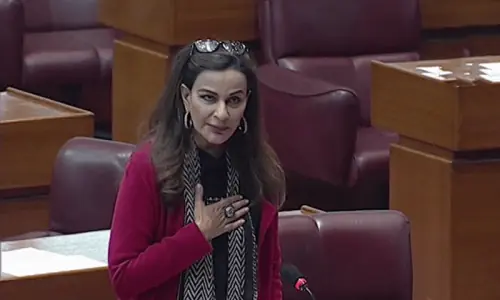
The government has explained this bill by arguing that it wants to encourage the expansion of internet infrastructure throughout the country. There is not enough internet coverage in the country, according to IT Minister Shaza Fatima herself, who said on television that only two per cent of households enjoy internet which is not phone dependent. And this needs to be addressed, she explained.
It is worth asking here if internet penetration is even a concern for a country where internet and cellular services are periodically switched off to deal with political and other situations, and where social media platforms have been slowed down or blocked to deal with dissenting opinions. But let’s leave these silly issues aside, for who wants the young people in parts of Balochistan or Azad Kashmir to have such services till they learn to behave themselves? Instead, let’s focus on the draft law and the well-behaved government officials and parliamentarians for the time being.
But now that I have diverged, it can also be pointed out that those so concerned about the quality of coverage don’t seem to ask any questions about the progress on the provision of 5G services. Or does one need more towers before that can be provided?
Anyway, one day before the budget, the bill was passed by the National Assembly and sent to the Senate where objections were raised. Some media reports claim the objections were raised by some PTI senators but the heavy lifting is said to have been done by PPP’s Palwasha Khan in the Senate committee. And once the story caught the attention of the media, it seems as if everyone is trying to evade responsibility.
According to Dawn, Amin ul Haque, who was head of the National Assembly committee that approved this bill, acknowledged that the inclusion of towers in provisions for laying fibre cables had been “overlooked by the members during the final sitting”. If such phenomenal mistakes can be attributed to an oversight, one can only wonder what these parliamentarians are being paid for.
Everyone else is following the same rulebook. The IT minister who has been roundly criticised for this draft, and rightly so, appeared on Geo News in what appeared to be a bid to clarify the matter and ended up confusing it further, for she essentially accepted the clauses were problematic and needed more work. She kept pointing out the virtues of democracy and how laws would be made with consensus while conceding there were problems with the draft. But where was this democracy when the bill was passed in the National Assembly? Even Palwasha Khan who gave an interview to Neo TV was not forthcoming when asked how her party had let the law be passed in the National Assembly. She called it ‘kotaahi’ (negligence) and said the party was now fixing the problem in the Senate.
The blame, however, can be apportioned further. After all, this bill was introduced by the government so the cabinet must have given its approval. As did the law ministry. What was their role in this? Similarly, the PTI must also share some of the blame for having abandoned the committees, allowing the PPP and PML-N to dominate this process. Though at this stage it is hard to believe any of the parliamentarians have the people’s interest at heart.
In the absence of this information, the worst is being assumed that some of the members in parliament or officials were paid off to let the bill pass. Rumours to this effect are doing the rounds on social media and television. To many, the fact that some telco officials are defending this draft lends credence to these rumours.
The government has now formed a committee of the very people who caused this mess to resolve the matter behind closed doors. This may resolve the immediate issue and produce a better draft but will it ever reveal who was responsible for the scandal, and whether more than just negligence was at play?
The writer is a journalist.
Published in Dawn, June 23rd, 2026