Concerns raised as HIV cases rise in country while global rates decline
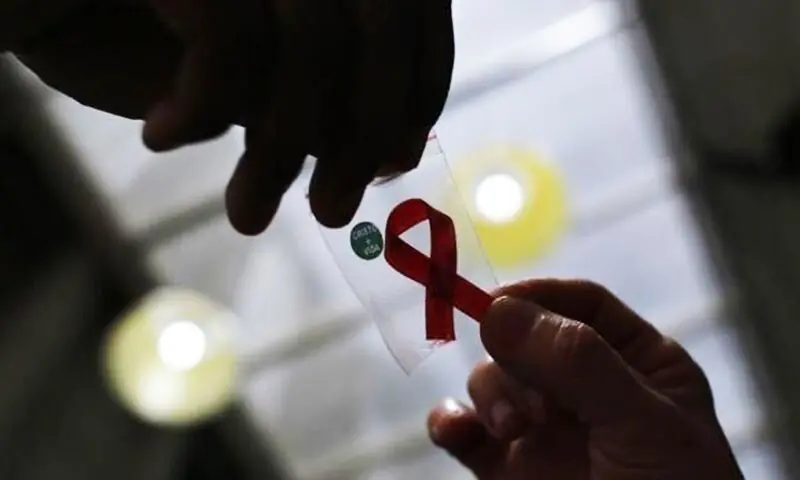

KARACHI: Sharing serious concern over the increasing number of HIV cases in the country, particularly in Sindh and Punjab, speakers at a seminar held on Saturday called upon the government to increase domestic financing for HIV prevention, testing, treatment and care services to reduce dependence on external donors and ensure sustainability of the national HIV response.
They also emphasised the need for enforcing infection control protocols in healthcare settings and scaling up HIV testing and counselling services to tackle the crisis.
The event, titled ‘Community dialogue on increasing HIV/AIDS cases in Pakistan: causes, challenges and way forward’, was organised by Bridge Consultants Foundation (BCF), a non-profit organisation working in communities in different areas of public health.
It brought together representatives from government departments, healthcare institutions, civil society organisations, development partners, academia, media, community representatives, and people living with HIV.
Experts, stakeholders call for raising domestic financing for HIV prevention, enforcing infection control protocols in hospitals
Speaking about the recent HIV outbreaks among children in Ratodero, Mirpurkhas, Nawabshah, Karachi, Hyderabad, Multan, Tunsa, D.G. Khan, and Sargodha, participants noted that these outbreaks have highlighted significant weaknesses in infection prevention and control practices and posed a major public health challenge for the country.
They also expressed concern that while many high-burden countries had successfully reduced new HIV infections through expanded prevention and treatment programmes, Pakistan continued to witness an increasing trend in HIV transmission.
“According to the WHO data, the estimated new HIV infections have risen from 16,000 in 2010 to 48,000 in 2024, making Pakistan one of the fastest-growing HIV epidemics in the WHO Eastern Mediterranean Region,” said Dr Syed Sharaf Ali Shah heading the BCF.
The estimates of UNAIDS, he said, suggested that a large proportion of people living with HIV remained undiagnosed, indicating that the actual number of new infections could be much higher.
In addition, he pointed out, a large gap existed between the estimated number of people living with HIV and those who had been diagnosed and enrolled in treatment services.
The dialogue identified several critical challenges contributing to the growing HIV epidemic in Pakistan. These included limited HIV testing and counselling services, inadequate HIV surveillance systems, poor infection prevention and control practices in public and private healthcare facilities, unsafe injection practices, stigma and discrimination against people living with HIV and key populations, limited access to quality treatment services, weak regulation of the informal healthcare sector, insufficient domestic funding, and low levels of public awareness regarding HIV prevention and treatment.
After extensive discussions, participants agreed on the immediate need for scaling up HIV testing services and promoting routine testing among individuals at risk, including key populations, spouses of people living with HIV, tuberculosis patients, pregnant women, patients with sexually transmitted infections, and other vulnerable groups.
They also recommended expanding community-based HIV testing, provider-initiated testing, voluntary counselling and testing services, and introducing wider access to HIV self-testing and integrating antiretroviral treatment (ART) services into primary healthcare facilities and strengthening public-private partnerships by involving general practitioners and private healthcare providers in HIV care and treatment.
The participants emphasised that HIV was not merely a health issue but a broader social and development challenge requiring a coordinated and multi-sectoral response. They called upon federal and provincial governments, development partners, healthcare providers, civil society organisations, media, and affected communities to work together to strengthen prevention efforts, expand access to services, and protect the rights and dignity of people living with HIV.
The government, they said, needed to implement a comprehensive action plan to promote safe injection practices, reduce the unnecessary use of injections, regulate unregistered healthcare providers, promote the use of auto-disable syringes, and ensure safe disposal of used syringes and medical waste.
They also spoke of the need to address stigma and discrimination through awareness campaigns, sensitisation of healthcare providers, community engagement, and enforcement of non-discriminatory practices in healthcare settings.
The dialogue concluded with a collective commitment to support evidence-based interventions and strengthen partnerships to curb the spread of HIV and improve the health and well-being of communities across Pakistan.
The participants included Dr Zulfiqar Ali Gorar, National CMU coordinator from Islamabad; Dr Zubair Abdullah National manager HIV Control programme; Dr Buzdar from CDC 1 HIV Sindh; Dr Ali Raza Kandhro CDC HIV Sindh; Prof Dr Sten H Vermund; Dr Rafique Khanani; Dr Fatima Mir and Dr Faisal, both representing the Aga Khan University.
Published in Dawn, June 21st, 2026