‘Islamabad MoU shows Iranian people defended their national interests’
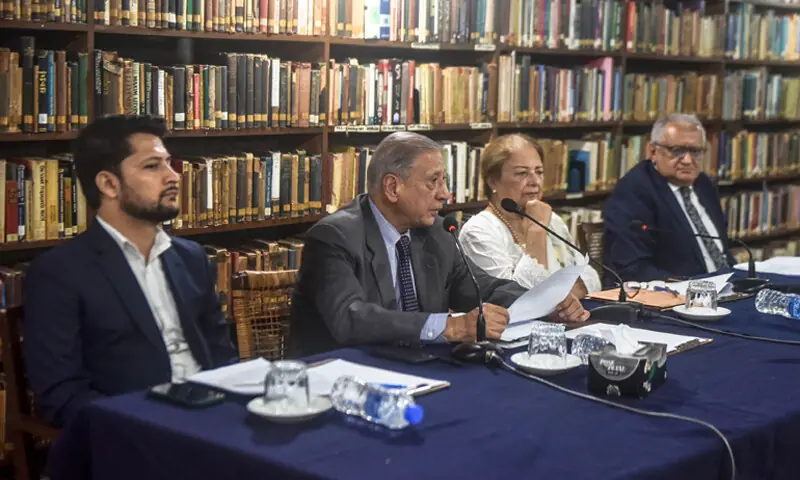
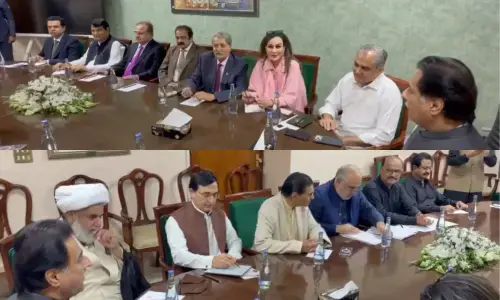
KARACHI: A seminar at the Pakistan Institute of International Affairs (PIIA) on Saturday examined the US-Iran relations and Israel’s aggression in Lebanon.
Speaking on the occasion, PIIA’s Chairperson Dr Masuma Hasan said that the Memorandum of Understanding, called the Islamabad MoU, has been signed to end hostilities and a timeline of 60 days has been fixed to work out a durable peace. “However, it is a fragile peace and a fragile MoU,” she pointed out.
“Because US President Trump has warned that ‘if Iran does not behave itself’, whatever that means, he will ‘bomb the hell out of it’. So the fate of this MoU hangs in the balance. Despite the MoU, Israel’s attacks against Lebanon continue, leading to great suffering and displacement. But Israel is not a party to the MoU,” she added.
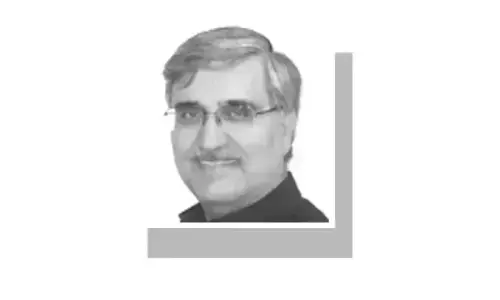
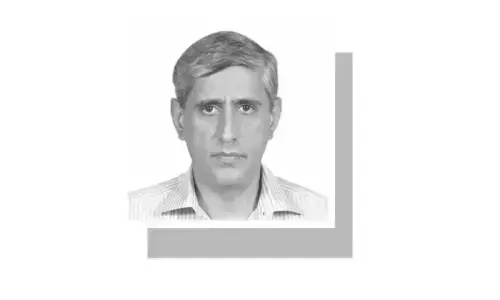
Ambassador Javid Husain said that the only plausible explanation for the sudden attacks on Iran commencing on February 28 was to bring into power a new regime there.
Experts examine US-Iran conflict at PIIA seminar
“Apparently, Israeli Prime Minister Benjamin Netanyahu was able to convince President Donald Trump that the decapitation of the top Iranian political and military leadership will enable the Iranian opposition elements to revolt against the ruling Islamic government and put in place a new regime which would be friendly towards the US and Israel. This approach was based on a misunderstanding of Iran’s history and a flawed understanding of its internal political situation,” he said.
“Needless to say that the attacks had the opposite effect. The Iranian people, despite their internal differences, united under the leadership of the present Iranian Islamic government and resolutely faced the external threat to the country’s security,” he added.
“The Islamabad MoU clearly shows that they succeeded in defending their essential national interests. The Islamabad MoU basically restores the situation as it existed on Feb 27, prior to the launching of the US-Israel attacks on Iran,” Ambassador Husain said.
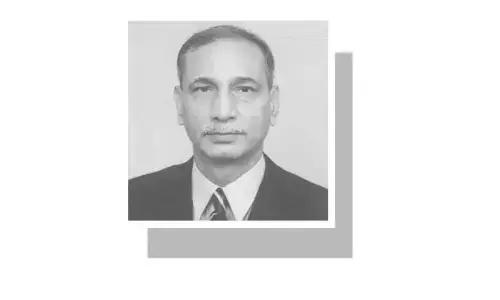
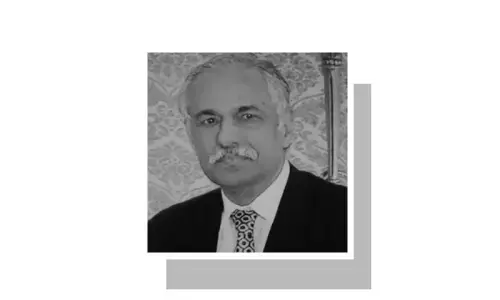
Ambassador Qazi M. Khalilullah, the executive director of the Centre for International Strategic Studies, Sindh, Karachi, said that the Islamabad MoU is good news for all countries of the world except Israel.
“Soon after the news of the deal a major shift in oil prices was witnessed and they fell to their lowest since the start of the war. The people of Pakistan have also benefited from this,” he said.
“Pakistan has earned respect globally after mediating between the US and Iran. Our diplomacy has been par excellence,” he added.
Talking about the impact of war on global economy, Ambassador Khalilullah said that according to an IMF report published in the first week of June, oil prices were 30 per cent higher than pre-war levels and the World Economic Forum reported that fertiliser price increased by up to 60pc amid the blockade.
“The closure of the Strait of Hormuz caused the largest supply disruption in the history of the global oil market. The global supply of LNG dropped to 20pc. Some 44,000 private businesses across 174 economies were affected. The war damaged as much as $58 billion of energy facilities in the Persian Gulf. Gulf oil producers had to shut down about 13 million barrels per day due to the disruption in the Strait of Hormuz,” he said.
Asif Ali, a researcher at PIIA, also had two important questions to ask about peace in the region following the signing of the Islamabad MoU. “Is this a real peace or frozen conflict? And why Iran cannot give up on Lebanon,” he asked.
“It may not even be frozen yet,” he pointed out, “as a frozen conflict at least implies both sides have stopped moving. Israel has explicitly said it has no intention of stopping.”
And answering his second question, he said that Hezbollah is still in Lebanon. Israel is still in Lebanon. “And, by Israel’s own prime ,inister’s words, it has no plans to leave. The guns are quiet for now yet the history between America and Iran has not been processed or repaired. And even Washington and Jerusalem spent the past week publicly contradicting each other about who depends on whom. We have seen versions of this before. A conflict does not end just because the fighting stops. It ends when the things that caused it are addressed,” he reminded.
“And in the Middle East today, those things have not been addressed. The question is not whether this deal holds today. The question is whether anyone is serious about doing the harder work that comes next, on enrichment, on missiles, on Lebanon, on building some kind of framework that does not depend entirely on the temperament of whoever is in the White House.
“If that work gets done, then what was signed this week could be the beginning of something real. If it does not, then what was signed this week is simply the latest chapter in a conflict that has been paused many times before ... and resumed every time,” the researcher concluded.
Published in Dawn, June 21st, 2026