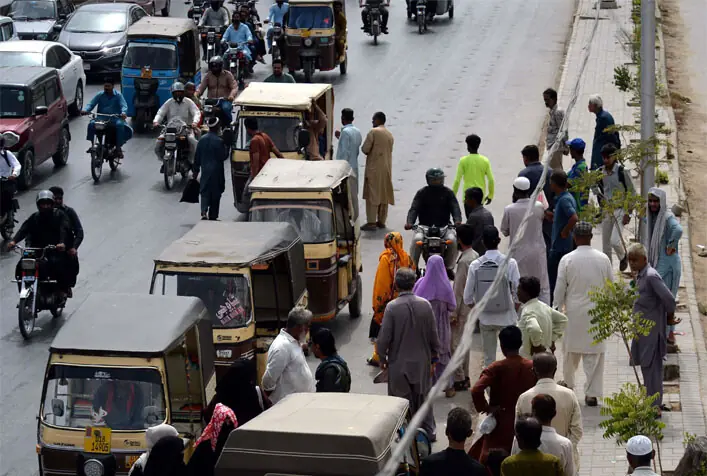
KARACHI: The strike by public transport operators continued for a second consecutive day on Friday, disrupting commutes across the metropolis as negotiations between transporters and the Sindh government remained inconclusive.
The transport leaders also warned that the shutdown could extend into Saturday if their demands were not met.
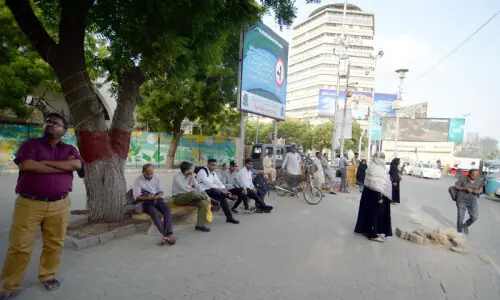
Buses, minibuses and coaches largely stayed off the roads throughout the day, forcing thousands of commuters to seek alternative means of transport to reach workplaces, educational institutions and commercial centres.
Long queues were seen at bus stops across the city as passengers struggled to find transport amid the ongoing protest against traffic enforcement measures and other regulatory requirements. Many office workers, factory employees and daily wage earners were forced to rely on rickshaws, ride-hailing services and private vehicles, significantly increasing travel costs and commuting times.
Decision to continue or call off protest will be announced after meeting with DIG Traffic today, transporters say
Muhammad Ilyas, vice president of Karachi Transport Ittehad (KTI), said that no breakthrough had been achieved on the transporters’ four key demands despite ongoing contacts with the authorities.
He said a meeting between representatives of public transport operators and the DIG Traffic was expected on Saturday, after which transport organisations would decide whether to call off the strike or continue it.
The Karachi Transport Ittehad maintained that the strike would remain in place until meaningful progress was made on their demands.
“We have objected to heavy fines imposed under the e-challan system,” said Mr Ilyas of the KTI.
“We believe that penalties generated through high-resolution cameras installed at traffic signals and body-worn cameras used by traffic police personnel have become increasingly difficult for operators to absorb. Our other concerns include the biometric verification process required for the transfer of vehicle ownership, which transporters say is cumbersome and time-consuming. We have also demanded a review of the mandatory third-party insurance requirement, under which vehicle owners are required to pay around Rs12,000.”
Meanwhile, Sindh Local Government Minister Nasir Shah told the media on the premises of the Sindh Assembly that Transport Minister Sharjeel Memon took notice of the strike He said that the issue would be resolved soon.
Published in Dawn, June 20th, 2026