How new Iran deal compares to JCPOA

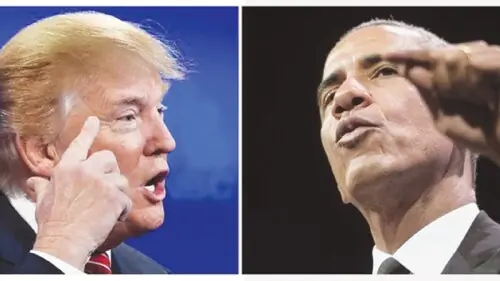
WASHINGTON: President Donald Trump has insisted that the deal he has reached with Iran is superior to the one that President Barack Obama sealed in 2015, while Trump’s critics say at this point he has gotten much less and given up much more to Tehran.
Here is how the two agreements compare:
What each deal is and isn’t
They are very different. The memorandum of understanding that Trump signed with Iran is not a final agreement but a one-and-a-half-page, 14-point framework negotiated on and off over a period of weeks.
It has launched a 60-day negotiation period to seek a full settlement of the nearly four-month war, with many hurdles yet to overcome on issues that include Iran’s nuclear programme, sanctions relief and the future of the Strait of Hormuz.
Obama’s pact was a finished, detailed document titled the Joint Comprehensive Plan of Action (JCPOA) that extended to more than 160 pages. It was narrowly focused on restricting Iran’s nuclear activities, with strict benchmarks. Trump, who condemned the Obama-era deal as horrible, scrapped it in 2018.
Trump’s approach has been bilateral, between the US and Iran. Obama brought China, France, Germany, Russia, Britain and the European Union into negotiations that lasted about two years.
N-programme
Both deals involve a written commitment by Iran never to seek a nuclear weapon. Trump, who declared the nuclear threat his main reason for going to war, has insisted, incorrectly, that Tehran had never done so before.
Obama’s deal placed tight limits on Iran’s efforts to produce weapons-grade uranium, aimed at extending the “breakout” time it would need to produce a bomb. The US government said Tehran had complied until Trump withdrew from the JCPOA.
Trump’s interim deal outlines only a general path toward curbing Iran’s nuclear activities, with no specific commitments from Tehran other than to discuss nuclear issues in the 60-day window.
It suggests Iran’s willingness to resolve a dispute over its near-bomb-grade uranium stockpile, but leaves that decision for a final deal.
Sanctions and frozen assets
Both deals involve sanctions relief and unfreezing of assets which Iran is now even more anxious to receive to boost its crippled economy – but in very different ways.
Obama eased some sanctions early on, but only after a comprehensive settlement was signed, and then phased in further relief based on verified steps by Iran.
Trump’s memorandum front-loads initial relief, including immediate U.S. waivers for Iran to export oil, while leaving a final package to be negotiated later.
It also opens the door to releasing billions of dollars in frozen funds.
Another provision calls for the U.S. and Middle East allies to set up a $300 billion fund for Iran for economic development, but is vague about the conditions and timetable.
Trump has berated Obama for years over the Democratic president’s return to Tehran of $1.7 billion in proceeds from arms sales frozen since 1981.
But Trump, who has made clear his disdain for any comparison between his deal and Obama’s, now stands to provide Iran with many times more funds.
Hormuz
The JCPOA dealt only with nuclear issues, a deliberate choice by the Obama administration, which calculated that bundling in other regional concerns would make a final deal impossible.
The MOU, however, is the diplomatic starting point for permanently ending the war. As a result, one of its main thrusts is an agreement to reopen the Strait of Hormuz, a critical oil-shipping channel which Iran effectively closed. Iran has insisted it retain a management role over the strait that it lacked pre-war, and that could be a sticking point in negotiations.
Published in Dawn, June 19th, 2026