US House proposal seeks unprecedented military integration with Israel
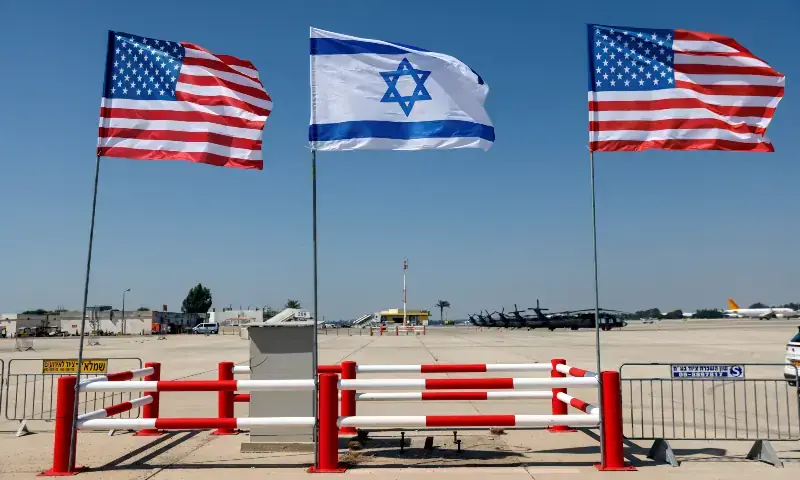
WASHINGTON: A provision tucked into the US House of Representatives’ version of the National Defence Authorisation Act (NDAA) for fiscal year 2027 could significantly deepen military cooperation between the United States and Israel, potentially creating Washington’s closest defence partnership with any foreign country.
The NDAA is the annual legislation through which Congress authorises defence spending and sets policy priorities for the Pentagon. Before becoming law, the bill must be approved by both the House of Representatives and the Senate, and then signed by the president.
At the centre of the current debate is Section 224, titled the “United States–Israel Defence Technology Cooperation Initiative,” which requires the US Secretary of Defence to “designate an executive agent responsible for synchronising cooperative efforts between the United States and Israel, including bilateral defence technology research, development, testing, evaluation, integration, and industrial cooperation.”
It outlines expanded collaboration in areas such as artificial intelligence, cyber warfare, autonomous systems, quantum technologies, and advanced weapons development. The provision also refers to potential “network integration” and “data fusion,” raising concerns among some analysts about the extent of operational interoperability between the two countries’ defence establishments.
Critics of closer cooperation argue that the proposed framework goes significantly further than existing arrangements — shifting cooperation from traditional aid mechanisms toward integrated research and co-production. They warn that the proposed changes in procurement structures could reduce public transparency and congressional oversight.
Under the current aid model, military assistance is typically approved through visible annual budgetary processes, whereas industrial and procurement partnerships operate through more complex contracting channels within the defence establishment.
These concerns come amid broader and evolving debates within US politics over the scale and nature of American support for Israel. While bipartisan backing for the US–Israel security relationship has historically been strong, recent years have seen more public questioning from lawmakers across the political spectrum regarding alignment between US foreign policy interests and Israeli military actions.
For example, Senator Chris Van Hollen, a Maryland Democrat, has argued publicly that unconditional support for Israeli governments may conflict with broader US strategic and humanitarian interests. “The Democratic Party has provided reflexive and unconditional support to Israeli governments, even as their actions have increasingly undermined American interests and values,” he wrote in The New York Times on Tuesday.
On the Republican side, Representative Thomas Massie and former Representative Marjorie Taylor Greene have both criticised the influence of pro-Israel lobbying groups — positions that some analysts and commentators suggest may have affected their standing within the party.
“Why is America having to give Israel $3.8 billion?” Greene asked, noting: “We’re $37 trillion in debt; Israel is less than $400 billion in debt.”
Whether Section 224 survives in its current form remains uncertain. Defence authorisation bills in Congress often undergo significant revision during negotiations between the House and Senate, and controversial or far-reaching provisions are frequently modified, narrowed, or removed before final passage.
Published in Dawn, June 1st, 2026