Karachi water crisis deepens as power outage hits Dhabeji Pumping Station
• No time frame given for restoring normal supply
• Residents say water shortages always worsen during important events and religious festivals in Karachi
KARACHI: Already struggling with a worsening water shortage during the three days of Eid, residents of the metropolis faced another uncertainty on Saturday after an emergency power shutdown at the Dhabeji Pumping Station disrupted the water supply to several parts of the city.
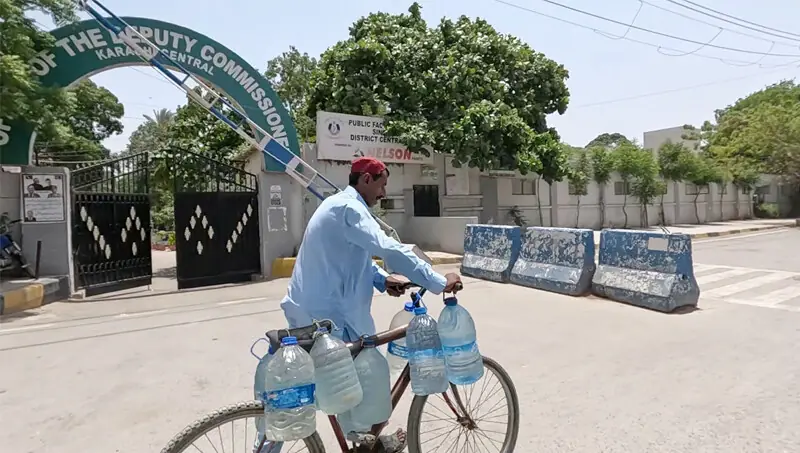
This has been the second month of an acute water crisis in Karachi that has left taps dry, created long queues for water bowsers and frayed tempers.
The fresh crisis was announced by Karachi Water and Sewerage Corporation (KWSC) in a statement on Saturday evening with the most alarming aspect being the utility was unable to provide any time frame for restoring the normal water supply leaving residents uncertain about how long the disruption would continue.
According to the KWSC statement, K-Electric informed the utility that a major fault had developed in Transformer No. 1 at the Dhabeji Grid Station, necessitating an emergency shutdown at 6:30pm.
“As a result of the power outage, 10 out of 21 pumping units at the Dhabeji Pumping Station were forced to shut down, significantly affecting the city’s water transmission system and disrupting water supply to various parts of Karachi,” it said.
“The K-Electric had initially indicated that the shutdown would last for approximately one hour. However, no definitive timeline for the complete restoration of power has yet been provided. The KWSC is closely monitoring the situation and remains in constant contact with K-Electric officials to ensure the earliest possible restoration of electricity and the resumption of normal water supply operations.”
The KWSC, it added, has urged residents to use water judiciously during the disruption and assured citizens that updates will be provided as more information becomes available regarding the restoration process.
At the recently passed Eid, many Karachiites spent the festive days struggling to secure water for their households.
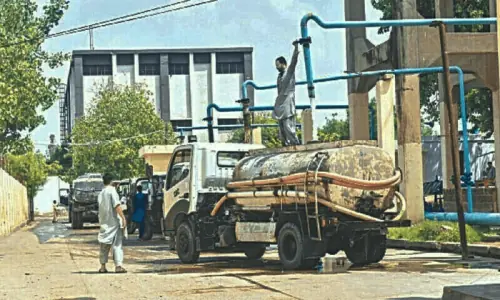
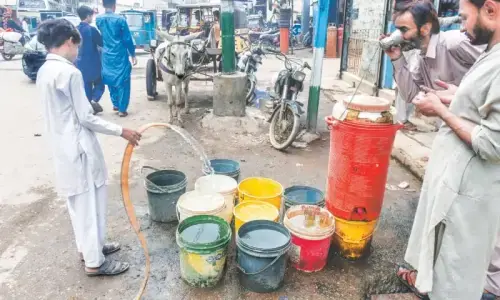
The city has now entered the second month of a severe water crisis that has affected large parts of the metropolis, leaving thousands of families dependent on water tankers and private suppliers.
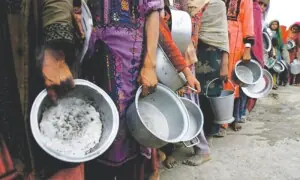
For many residents, obtaining water has become a daily challenge. Long queues for tankers, dry taps and rising water costs have added to the difficulties faced by households already burdened by skyrocketing inflation.
Residents say the situation is particularly frustrating because it is not the first time Karachi has faced a water crisis during a major religious occasion. Many complain that water shortages frequently worsen during Eid holidays, Ramazan, Muharram and other important events when demand for water increases significantly.
The ongoing crisis began in late March and persisted due to a combination of factors, including major pipeline leaks, bursts in transmission lines, power outages at pumping stations and technical faults affecting the city’s water supply system.
As a result, normal water distribution has remained disrupted in many areas for weeks.
There was no immediate response from K-Electric to the fresh claims made by the KWSC. However, with no timeline yet available for the restoration of normal water supply, it appears that the people of Karachi may have to endure further hardship in the days ahead.
“We have been facing a severe water shortage since late February,” said Shafiq Ahmed, resident of Liaquatabad.
“There are days when not a single drop comes through the taps, forcing us to buy expensive water tankers that many families can hardly afford. Every time we hear that the supply system has developed another fault, we wonder how much longer we will have to live like this.”
Published in Dawn, May 31st, 2026