Situationer: Continuation of ‘Urumqi process’ raises hopes for Pak-Afghan patch-up


 0
0

• Beijing’s envoy already laying groundwork to continue Islamabad-Kabul mediation efforts
• Pakistani circles ‘fed up’ by failure of bilateral efforts, pin their hopes on Chinese shepherding the process
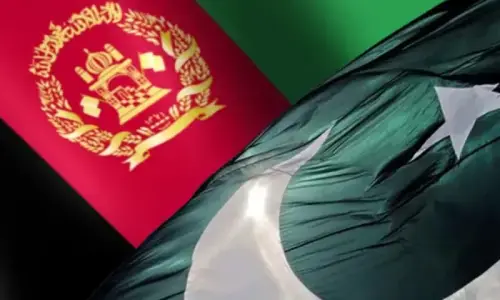
CHINA’S diplomatic mediation between Pakistan and Taliban-ruled Afghanistan is keeping hopes alive for a possible rapprochement.
After hosting their first meeting in Urumqi, Xinjiang, in April — aimed at bringing an end to the Islamabad-Kabul animosity — Beijing now intends to hold a second meeting to keep the process on track, according to people familiar with discussions.
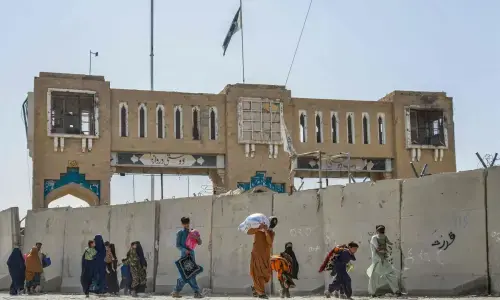
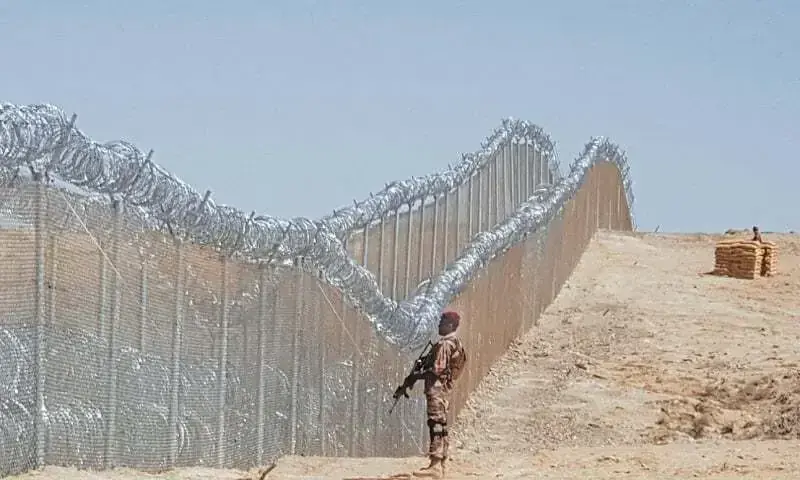
For the better part of the year, conflict between the two neighbours has badly affected trade, transit, cross-border movement of common people, and those living in the border regions.
Both sides seem to be inflexible on core issues, such as opening bilateral government channels, trade and movement of people.
While the signals from Kabul regarding the ‘Urumqi process’ have been somewhat positive, Pakistani circles have remained tight-lipped until recently – in expectation of some positive impact on the security situation in the country, especially the militancy-hit Khyber Pakhtunkhwa and Balochistan.
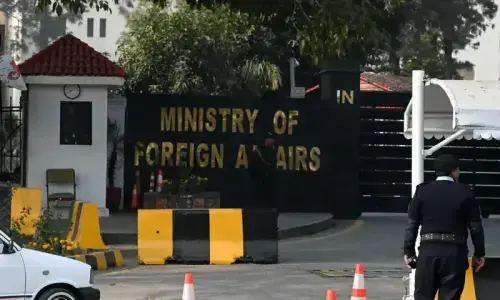
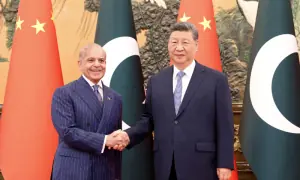
Pakistan officially broke its silence on the issue in the Joint Statement issued on Tuesday, as Prime Minister Shehbaz Sharif wrapped up his three-day visit to China.
“The Pakistani side spoke positively of the successful holding of the informal talks among China, Afghanistan and Pakistan in Urumqi, Xinjiang, China in April 2026, and welcomed the Chinese side to provide a dialogue platform for communication between Pakistan and Afghanistan,” the statement said.
Laying groundwork
China’s Special Envoy for Afghan Affairs Yue Xiaoyong has already been laying the groundwork for the second meeting, something he discussed during a visit to Kabul earlier this month.
“Both sides give positive assessment of the Urumqi process ready (sic) working together for peace, security and common [development],” Ambassador Yue wrote on X on May 13 following his meeting with Afghan Foreign Minister Amir Khan Muttaqi and other officials.
Muttaqi has, on a number of occasions, spoken about “progress” in the process. According to a statement issued after a meeting with the Chinese special envoy on May 11, he “emphasised that the success of the negotiation process (in Urumqi) depends on concrete measures, strengthening the atmosphere of trust, and keeping the level of tension low, and the Islamic Emirate has taken significant steps in these areas”.
The Afghan functionary did not specify what “significant steps” his government had taken to address Pakistan’s security concerns. However, it is believed that he may have been referring to reports that Afghan authorities had detained members of Pakistan-facing terrorist groups in areas – including Khost, Paktia, Paktika and Kunar – and shifted them away from the border regions.
However, these reports could not be independently verified, and Afghan government spokesperson Zabihullah Mujahid did not respond to a query about the reported action.
Guns have fallen relatively silent over the past couple of months in the restive border region, and some progress has come on the back of deals struck at the local level – facilitated by tribal elders in Bajaur-Mohmand-Kunar and Chitral-Nuristan – that have managed to expel militant elements from their areas.
These local arrangements highlight the key role tribal elders can play in bringing relations back on track.
Mansoor Ahmad Khan, Pakistan’s former ambassador in Kabul, says that both countries continue to look at their relations exclusively through the prism of security and geopolitics, while ignoring the most important dimensions – leveraging civilisational interaction and regional connectivity to gain the desired results.
Stated positions
Action against terrorists who use Afghan soil to attack Pakistan has been one of Islamabad’s main and long-standing demands, and Pakistani officials have been seeking their arrest during bilateral negotiations, as well as in the presence of mediators, according to those who have been part of the talks.
Speaking on condition of anonymity, a Pakistani official told Dawn the Afghan Taliban had privately shared some information, but it remains to be seen what they do with those who have reportedly been detained.
When asked what Pakistan wants the Afghan Taliban to do, the official summed it up thus: kill, arrest, disarm, hand-over or take Pakistani militants away from the border regions.
On their part, the Afghan Taliban have suggested that Pakistan negotiate with the armed groups, calling it an “internal matter” for Pakistan.
According to an Afghan Taliban official, the regime in Kabul does not want to open up a new front against Pakistan-facing militant groups, as they cannot afford a fresh conflict on their soil.
Although Pakistan has been seeking of a written commitment that the Afghans will not allow the outlawed Tehreek-i-Taliban Pakistan (TTP) or any other group to use their soil to stage attacks, such an assurance has yet to materialise.
“The Afghan Taliban had agreed in Urumqi to mention the TTP in a possible agreement, but refused to use the word ‘terrorists’ to describe it and other militant groups,” according to sources privy to the China-hosted talks.
From a bilateral to a multilateral track
The Urumqi process has an added significance, as Pakistan has all but given up on pursuing a bilateral track with Kabul, saying that all previous such efforts had failed.
In this backdrop, the Chinese efforts have assumed greater importance – not least because previous efforts by Qatar, Turkey and Saudi Arabia did not yield the desired results, either.
But Beijing’s involvement is being seen as a boon for Pakistan. Mushahid Hussain Sayed, a former senator and chairman of the Pakistan-China Institute, argues that Beijing’s role in the region is a factor for stability and a source of strength for Islamabad.
“Just as Pakistan is engaged in a sincere and sustained effort to promote peace between the US and Iran, so too China wants peace and rapprochement between Pakistan and Afghanistan, as this volatile and unstable region cannot be another battlefield. This meets with the interests of both peoples as well as the region as a whole,” Mr Sayed told Dawn.
In his view, China believes that promoting regional connectivity via the Belt & Road Initiative (BRI) & China-Pakistan Economic Corridor (CPEC), and having a common approach on counter terrorism, dialogue and diplomacy, is the best way forward to defuse tensions and resolve issues, so that the situation doesn’t spiral out of control.
According to Ambassador Khan, the former envoy to Kabul, Chinese mediation actually provides an opportunity to open bilateral channels of engagement in security/counter-terrorism, trade and people-to-people exchanges with a view to achieve mutual peace, progress and prosperity.
Published in Dawn, May 27th, 2026