How IRGC’s ‘permit’ threats may impact submarine cables in Hormuz
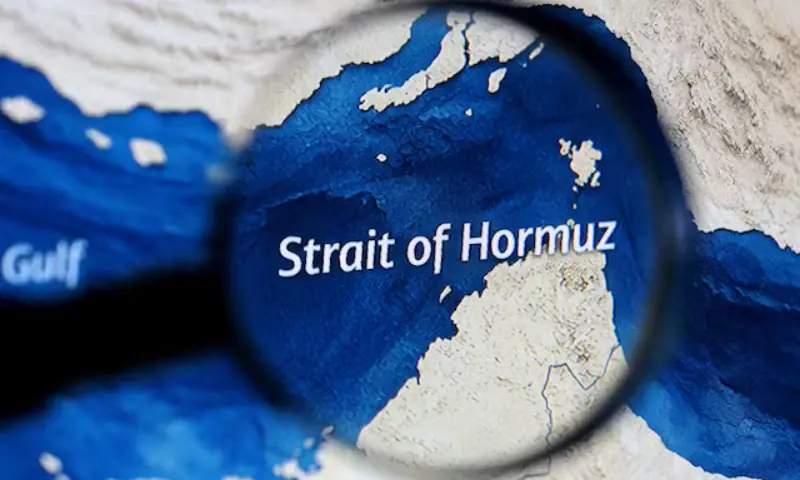
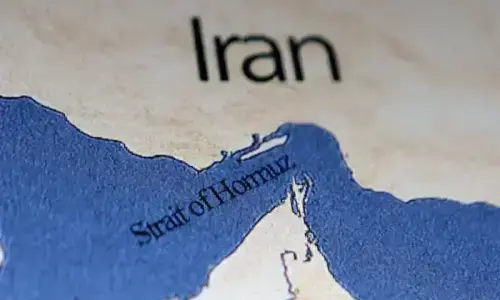
Iran’s Islamic Revolutionary Guard Corps threatened Monday to impose “permits” on submarine fibre-optic cables passing through the Strait of Hormuz.
Here is what you need to know about cable infrastructure in the region and how the threats could play out:
What cables run through Hormuz?
Major connections running through Hormuz include a branch of AAE-1 (Asia, Africa, Europe), which connects points from Hong Kong to Italy and France.
Meanwhile, the Falcon and Gulf Bridge cables connect countries in the Gulf — including Iran — with India and eastern Africa as far as Egypt.
Data running over the cables includes “all kinds of traffic, any data you can think of — videos, email, social media, financial transactions, government communication,” Alan Mauldin, research director at specialist data firm TeleGeography, told AFP.
The potential for global disruption is limited as data flowing between Asia and Europe on AAE-1 does not pass via the Gulf branch, Mauldin said.
What’s more, “all of the Gulf countries using submarine cables that traverse the Strait of Hormuz have multiple other connectivity options,” he added.
But Mauldin did note in a March blog that “the capacity of terrestrial networks may not be sufficient to handle the complete re-routing of traffic” if the Gulf’s subsea connections are cut off.
As host of AAE-1’s Gulf terminal, Qatar especially would be affected by any disruption to the link.
What threat could Iran pose to cables?
Hormuz is “a closed-in geographic area in a strait, with relatively shallow waters… it’s especially favourable for harassment operations using manned or unmanned systems,” said Eric Lavault, a former French naval officer.
Lavault pointed out that American forces have not been able to prevent Iran from launching operations from its long Gulf coast, with Tehran retaining “solid military potential”.
Iran could both attack the cables themselves and “prevent the cable firms from carrying out operations, either for maintenance or for laying new cables,” he said.
“If Iran damages them, they’ll have to be repaired,” Lavault added.
Cables around the world are regularly damaged — mostly by accidents, such as ships dragging their anchors. The International Cable Protection Committee tallied around 200 incidents a year, Mauldin wrote in March.
“A dedicated fleet of repair vessels is on standby,” he noted.
But these require permits to enter a country’s waters and must remain stationary on site for long periods — making them potentially vulnerable to attack.
Only one repair vessel owned by UAE-based e-Marine is currently in the Gulf, Mauldin pointed out, limiting capacity until the Strait of Hormuz is reopened.
Can Iran legally tax or forbid the cables?
It was not immediately clear from Iranian statements who it could target for demands to pay tolls or permits — whether cable layers, owners, operators or users.
In territorial terms, “given the long-standing issues with Iran, all cables were laid in Omani waters as they passed through the Strait of Hormuz,” Mauldin wrote in March.
But Tehran has claimed “absolute sovereignty over the bed and subsoil of its territorial sea”.
Iran’s threat “calls international law into question,” said Lavault, as the country is a signatory to the 1982 UN Convention on the Law of the Sea (UNCLOS) — “a bit like the rules of the road at sea”.
“In normal conditions, they don’t have the right to demand tolls” from passing ships — “and the same goes for cables”, he added.
UNCLOS allows laying cables and pipelines within countries’ exclusive economic zones, which extend up to 200 nautical miles (230 miles, 370 kilometres) from their coastlines.
“The coastal state normally has no right to object,” Lavault said.
But although Iran has signed UNCLOS, it never ratified the treaty — the same position as the United States.
If the treaty is called into question, “it would be a crack in another fundamental pillar of international law”, Lavault warned.