2
2

“To be wealthy and honoured in an unjust society is a disgrace” — Confucius
I OFTEN wonder that if I ever come to be awarded one of Pakistan’s civil honours (not that I deem myself worthy of one!), would I accept it? After all, many of my colleagues have done so and flaunt them with great pride. I am not sure I would.
My discomfort would be this: what does success mean in an unjust system? In today’s Pakistan, where social and economic injustice, political patronage and selective accountability shape public life, this question is not philosophical but deeply personal and political.
Wealth and honour are typically seen as rewards for hard work, perseverance or talent. Yet it forces us to examine the moral context in which such rewards are given. If a society is structured in ways that systematically disadvantage the many while privileging the few, then personal success within that system cannot be morally neutral.
In Pakistan, the narrative of meritocracy coexists with societal inequality. Access to quality education, healthcare, and employment opportunities is unevenly distributed, determined by socioeconomic status, geography, or connections. Elite institutions, nepotism and entrenched patronage create pathways that are accessible to a few but closed to others.
Success devoid of ethical grounding is not only hollow; it is dishonourable.
In such a system, achievement is rarely just the product of individual effort. It is often facilitated by inherited advantage, political connections or the ability to manipulate the system. When individuals rise within these structures and are celebrated as symbols of success, the broader question of fairness is conveniently sidelined. If the playing field is fundamentally unequal, then the honours and awards bestowed upon those who ‘succeed’ are deeply flawed.
When wealth and political influence are intertwined, it further complicates the moral landscape. Business elites in the country often have close ties with those in power, benefiting from favourable policies, contracts or regulatory relief. In return, they offer financial support, legitimacy or silence. This symbiotic relationship blurs the line between economic success and political complicity, giving rise to a class of individuals whose wealth is not merely economic capital but also a form of political currency. Their ‘honour’, which is manifested through awards, social status or public recognition, becomes part of a system that sustains inequality. The absence of accountability means that those who benefit from unjust systems do not simply go unchallenged but are, in fact, celebrated. Their success stories are amplified, their lifestyles admired, and their influence normalised.
This is not a sign of societal progress, but one of moral failure. This is one of the most insidious effects of an unjust system and how it shapes aspirations. In Pakistan, whether it is the normalisation of corruption, the acceptance of academic dishonesty or the reluctance to challenge unethical practices in public life, the moral cost of aspiration is high. Young people, in particular, internalise the idea that achieving such success is the ultimate goal, regardless of the means, creating a dangerous cycle. Instead of questioning the system, individuals adapt to it. Ethical compromises become normalised. Shortcuts are justified. Silence is preferred over dissent and the pursuit of success becomes detached from considerations of justice or integrity. Those who become wealthy and honoured by operating within or who benefit from flawed structures, become benchmarks of success for others. Success devoid of ethical grounding is not only hollow; it is dishonourable.
The widening gap between the privileged and the marginalised in Pakistan has led to moral distancing. For those who are economically well off, the daily struggles of the common man — poverty, unemployment, rising inflation and violence — become abstract or invisible. This allows individuals to live in their bubbles and enjoy their status without having to confront conditions that make such disparities possible. Inequality is seen as unfortunate, rather than as being unjust and immoral.
Yet, the moral burden does not disappear simply because it is ignored. To be wealthy in such a context is to be implicated, whether directly or indirectly, in the structures that produce inequality.
An unjust society often sustains itself through the control of narrative. In Pakistan, the few voices that challenge inequality, corruption or abuse of power are frequently subjected to legal, social and institutional pressure. Journalists, activists and academics who attempt to raise their voice are met with censorship, intimidation and marginalisation. This narrows the space for critical dialogue and accountability. Under these conditions, those who enjoy wealth and honour have a choice to either remain silent and benefit from the status quo, or use their position to advocate for change. Silence in the face of injustice becomes a form of endorsement.
What constitutes true honour in an unjust society? Confucian philosophy points toward integrity, fairness, and a commitment to the common good as the foundations of ethical living. In practical terms, this means redefining success, ie, valuing transparency over expediency, accountability over influence, and social responsibility over personal gain. It requires individuals — particularly those in positions of privilege — to critically examine how their success is achieved and what impact it has on others.
An unjust system is not sustained by a few individuals, but by a whole network of behaviours, incentives and norms. A collective effort is needed to change such a system. This would include strengthening institutions to ensure fairness and accountability, promoting equitable access to opportunities, and fostering a culture that values integrity over mere success. It would mean citizens holding leaders and elites accountable, and questioning narratives that glorify wealth without examining its origins.
It begins with recognising that the pursuit of wealth and honour cannot be divorced from the moral context in which they are obtained. To ignore this is to accept a diminished moral standard.
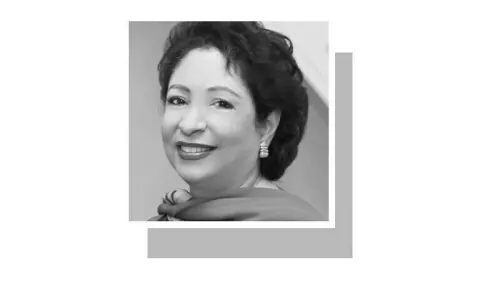
The writer is professor emeritus, psychiatry, Aga Khan University.
Published in Dawn, May 20th, 2026