PAC-II uncovers revenue leakages in Board of Revenue


 0
0


LAHORE: The Punjab Assembly’s Public Accounts Committee-II (PAC-II) has exposed severe financial leakages within the Board of Revenue, uncovering massive losses caused by uncollected withholding taxes, unpaid fines on non-banking property transactions and the illegal allotment of hundreds of government plots.
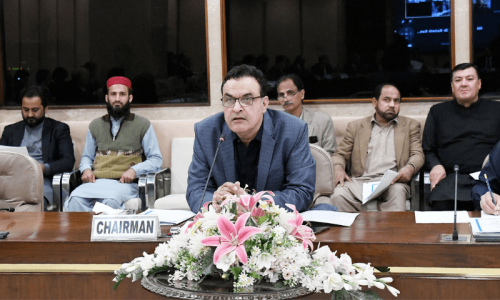
The revelations came during a committee meeting chaired by PAC-II Chairman Syed Ali Haider Gilani at the Punjab Assembly, which brought together senior officials from the Punjab Assembly, audit, finance, and revenue departments to conduct a rigorous review of the audit reports concerning the Board of Revenue.
The audit objections laid before the committee highlighted systemic failures in tax collection and land management across the province, starting with the failure to recover government fines from individuals who purchased properties using non-banking channels instead of documented financial tracks.
Furthermore, auditors flagged the complete non-collection of withholding tax on the buying and selling of immovable properties, which has resulted in substantial losses to the national exchequer due to the under-collection or total non-recovery of withholding taxes from property sellers during land transfers.
The scrutiny also laid bare severe irregularities in rural areas, including the deliberate under-valuation of rural lands that led to under-collected mutation fees, the unauthorised verification of land mutations without any fee submission at all, and the blatant illegal allotment of 689 residential plots under the Temporary Cultivation Scheme.
Taking a strict stance on these widespread discrepancies, Committee Chairman Syed Ali Haider Gilani directed the revenue department to fast-track the remaining recovery process on a priority basis to claw back the evaded national wealth.
The committee concluded the session by issuing binding directives to the attending bureaucrats, ordering them to take all necessary and immediate administrative measures to ensure timely and strict implementation of the committee’s recommendations.
Published in Dawn, May 19th, 2026