ISLAMABAD: Former senator Mushahid Hussain Syed has urged Pakistan to capitalise on the evolving geopolitical environment created by the US-Iran conflict and focus on economic recovery, regional connectivity and strategic partnerships, particularly with .
Mr Hussain also advocated the revival of the Iran-Pakistan gas pipeline project to ensure uninterrupted and affordable energy supplies for the country.
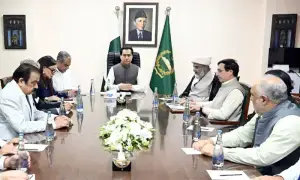
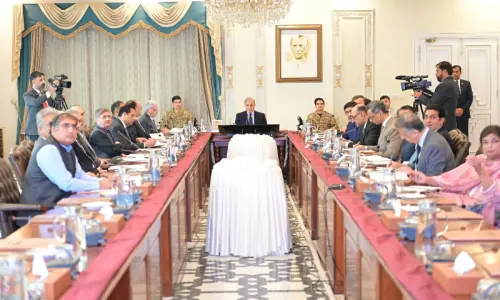
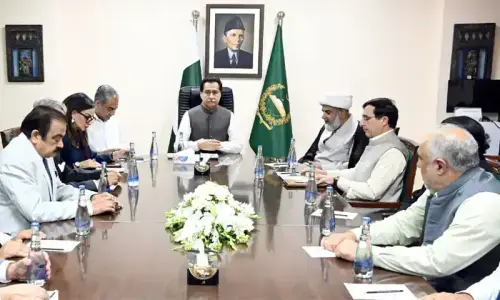
He was speaking at a roundtable titled “Dynamics of Iran Conflict: Implications and Choices”, organised by the on Monday.
He described the US-Iran conflict as the most significant geopolitical development since the , saying it had fundamentally reshaped global alignments and weakened Western strategic cohesion.
The war exposed divisions within , the Gulf Cooperation Council and Western alliances, while accelerating the emergence of new middle powers, he said.
According to Mr Hussain, Pakistan’s strategic relevance had increased due to its balanced diplomatic engagement with both and the .
He said Pakistan must overcome what he termed an “intellectual inferiority complex” and recognise its strategic importance in an increasingly multipolar world.
He added that the country should use the next three years to stabilise and rebuild its economy under favourable international circumstances.
Other speakers warned that the ongoing conflict had triggered geopolitical and economic shocks, requiring Pakistan to immediately reset its energy, fiscal and strategic planning frameworks to cope with emerging global uncertainties.
They stressed the need to accelerate the transition towards renewable energy, strengthen economic resilience, diversify imports and adopt targeted social protection measures to cushion the impact of inflation and rising energy prices.
SDPI Executive Director said the rapidly evolving Middle East crisis had altered global energy systems, investment flows, air travel patterns and defence dynamics.
“The world is now attempting to reduce dependency on imported oil,” he said, adding that the Gulf’s traditional status as a safe investment destination had also come under question.
Dr Suleri warned that the global energy crisis was far from over as inventories had already been depleted and further disruptions could trigger another major spike in oil prices.
“The only viable long-term solution is transition towards renewable energy,” he remarked.
Dr Ehsan Mehmood Khan, Senior Advisor Emeritus at SDPI, described the Iran war as the outcome of decades of interconnected geopolitical and ideological tensions in the Middle East rather than an isolated conflict.
He said the conflict had transformed the strategic security environment, adding that the United States and pursued objectives including denuclearisation of Iran, regime change and weakening Tehran’s economic infrastructure, while Iran sought regime survival, preservation of nuclear capability and territorial integrity.
Despite heavy losses and destruction, Iran had emerged more resilient than anticipated, he claimed, while the war had generated severe global economic shockwaves extending beyond the battlefield.
Referring to , the 1963 Pakistan-China border agreement and Pakistan’s role in facilitating US-China rapprochement in the 1970s, Dr Ehsan said these milestones reflected the strength of Pakistan’s diplomacy and statecraft.
He said Pakistan was performing effectively on the global stage, but now needed to demonstrate similar competence internally, particularly in economic management and governance.
SDPI Deputy Executive Director (Research) Dr Sajid Amin Javed warned that the conflict had evolved from a military confrontation into an energy, food and financial crisis with potentially long-lasting consequences for developing economies.
Published in Dawn, May 19th, 2026