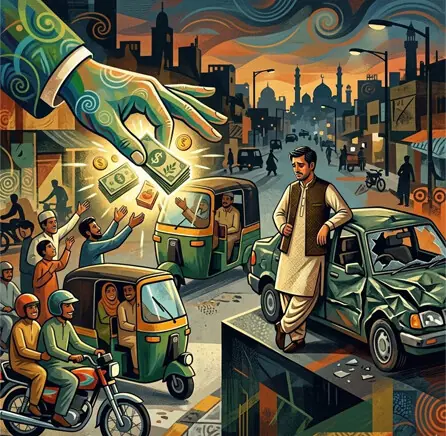
IT is praiseworthy that the government has taken strong notice of the severe economic crisis arising from the Iran conflict. Fuel rationing and targeted discounts on petrol and LPG for the underprivileged are commendable steps. However, while relief is being provided to owners of rickshaws and motorcycles, it must be ensured that such facilities are not misused.
The authorities should prevent hoarding and the resale of subsidised petrol and LPG at inflated prices to the public. Moreover, it is unjust to limit relief only to motorcycle owners, rickshaw drivers, public transport operators and farmers. What about the deserving white-collar taxpayers who contribute a significant portion of their income each month to keep the country’s economy running and to sustain government operations?
While the government plans to provide subsidies to certain segments of society, it must ensure that relief reaches only those who truly deserve it. Citizens availing subsidies should possess valid CNICs and driving licences. Additionally, low-income tax filers should be issued special identi-fication cards that provide benefits not only for fuel, but also for essential utilities, such as electricity, natural gas, water and groceries.
Car owners with vehicles that are 15 or more years old should also be considered for subsidies, becasue not all car-owners are financially well-off, and many of them are struggling under the severe burden of unprecedented inflation.
The government should really consider reintroducing the ration card system that existed in the 1970s, but in a modern digital form, particularly for registered taxpayers. This would help ensure that subsidies reach the deserving individuals rather than hoarders.
At the same time, the relevant autho-rities must tighten enforcement against tax evaders. A large number of businesses, such as meat and vegetable vendors, small food stalls, cafés, auto mechanics, estate agents and even some restaurants, either do not issue receipts or enjoy tax-free income despite generating substantial daily income. Expanding the taxation base through strict enforcement is essential.
Public transport should also be regulated more effectively. Rickshaws and taxis should operate on metered fares, and provide receipts to customers. Buses and coaches should reintroduce ticketing systems, with discounts for students, senior citizens and taxpayers.
Additionally, the government may consider reintroducing restrictions on frequent foreign travel, a policy that was in place from the 1960s to the 1990s. Under such a system, individuals could be required to purchase tickets from Pakistani airlines only once in two years, while opting for foreign carriers would involve paying an additional levy.
There may be many more such policy options, and I would like to believe that capable minds within the government would be working already on options. Ultimately, making fair, transparent, and well-targeted decisions will ensure that relief reaches the right people.
History shows that strong nations have rebuilt themselves through discipline and sound policymaking. There is no reason Pakistan cannot achieve the same target. What is required is the right direction, consistency and a strong political will.
Farrukh Safdar
Karachi
Published in Dawn, May 9th, 2026