Inflation surges 15.16pc on costly fuel
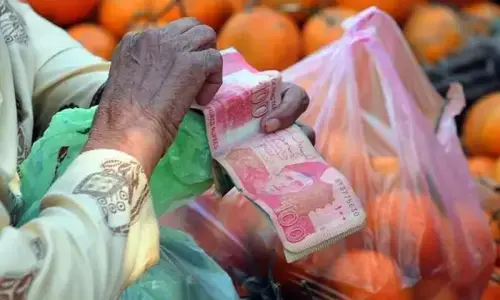
ISLAMABAD: Short-term inflation, measured by the Sensitive Price Index (SPI), surged by 15.16 per cent year on year in the week ending May 7, driven largely by higher retail prices of petroleum products and eatables, according to official data released on Friday.
The increase in SPI was a broad-based cost shock, reflecting persistent cost-of-living pressures. This was mainly driven by the sharpest annual increases in petrol (58.3pc), diesel (55.8pc), electricity charges (52.6pc), wheat flour (50.7pc) and LPG (48.8pc).
Moreover, short-term inflation remained elevated, driven by a surge in the prices of onions, mutton, beef and powdered milk. Some easing was observed in the prices of potatoes, pulses, sugar and eggs. However, energy-led inflation continues to weigh on household budgets and transport costs across the economy.
The SPI continued to rise for the 39th consecutive week, indicating persistent pressure on household budgets. On a week-on-week basis, however, the index increased by 0.79pc compared to the previous week, the Pakistan Bureau of Statistics said.
Sensitive Price Index jumps as petrol, diesel, electricity drive broad cost shock
This is an example of cost-push inflation, where energy prices increase first, followed by food costs. Consequently, average households face greater pressure as ongoing tensions in the Middle East contribute to rising fuel prices.
Weekly inflation had earlier reached a historic high of 48.35pc YoY in early May 2023. It subsequently moderated in the following years. The latest movement in sugar, edible oil, pulses, and meat prices suggests that volatility in essential food commodities continues to shape short-term inflation trends, with consumers facing recurring cycles of price spikes.
The items, whose prices increased the most over the previous week included chicken (12.82pc), diesel (5.10pc), wheat flour (3.42pc), petrol (1.66pc), curd (1.63pc), milk fresh (1.33pc), beef (0.65pc), tea prepared (0.53pc), mutton (0.50pc), potatoes (0.48pc), washing soap (0.12pc) and cigarettes (0.08pc).
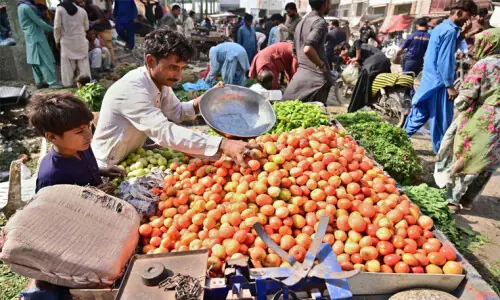
The items whose prices saw a decline week-on-week included tomatoes, which declined by (7.06pc), followed by garlic (1.19pc), eggs (1.22pc), LPG (1.08pc), pulse masoor (0.43pc), onions (0.38pc), pulse gram (0.36pc), rice Irri 6/9 (0.30pc) and gur (0.19pc).
However, on an annual basis, the items whose prices increased the most petrol (58.32pc), diesel (55.76pc), electricity charges for Q1 (52.58pc), wheat flour (50.65pc), LPG (48.82pc), onions (41.97pc), mutton (16.10pc), chillies powder (15.20pc), garlic (12.90pc), beef (12.65pc), powdered milk (10.53pc) and bananas (9.64pc).
In contrast, the prices of potatoes dropped 44.58pc, followed by pulse gram (20.29pc), sugar (13.76pc), salt powder (13.26pc), pulse masoor (11.74pc), eggs (7.88pc), chicken (1.80pc) and pulse moong (1.60pc).
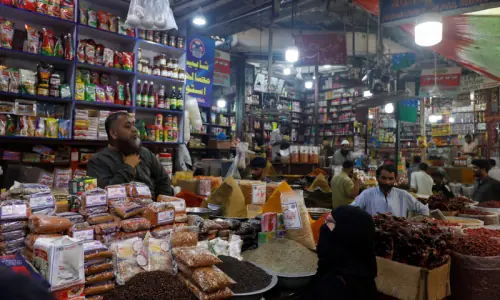
The index, comprising 51 items collected from 50 markets in 17 cities, is computed weekly to assess the prices of essential commodities and services at shorter intervals. Data showed that the prices of 22 items increased, 14 decreased, and 15 remained stable compared to the previous week.
Published in Dawn, May 9th, 2026