0
0

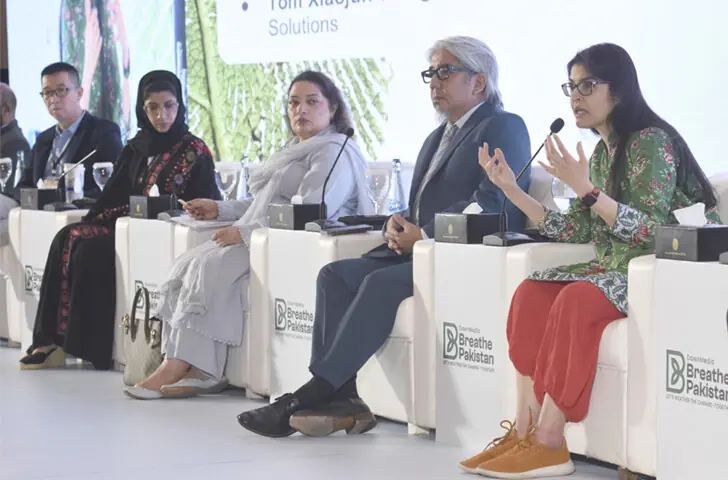
ISLAMABAD: Speakers at the Breathe Pakistan conference on Climate Change on Thursday called for stronger South-South cooperation and greater international support, including climate finance, technology transfer and capacity building, to effectively tackle growing climate challenges.
The observations were made during the second session of the Breathe Pakistan Climate Change Conference 2026 held at a local hotel.
The two-day conference brought together policymakers, experts and stakeholders from across sectors to examine intersecting challenges and chart a path forward.
Addressing the gathering, Mohamed Thoha, High Commissioner of Maldives, underscored the need for unity among developing nations.
Speakers urge climate finance, technology transfer and regional collaboration to tackle growing environmental challenges
“Climate crisis demands not only urgency, but solidarity,” he said, urging countries of the Global South to move beyond negotiations and focus on knowledge-sharing, technical cooperation and capacity building.
He noted that despite differences in geography, both Pakistan and the Maldives stood on the frontline of climate vulnerability. While Pakistan faced floods and extreme weather, the Maldives grappled with rising sea levels and coastal erosion that threatened its long-term survival.
“It particularly affects tourism, which is the bread and butter for us,” he said, adding that his country aimed to transition 33 per cent of its energy consumption to clean sources.
Rita Dhital, Ambassador of Nepal, described glacial melting as a shared vulnerability for countries like Nepal and Pakistan.
She warned that glacial lake outburst floods had repeatedly caused loss of life and damaged key sectors such as tourism, agriculture and hydropower.
Recalling major incidents since the 1970s, she said Nepal had adopted engineering measures to lower water levels in high-risk lakes alongside community-led and nature-based solutions.
“Global warming has a disproportionate impact on developing countries such as Nepal and Pakistan, despite their minimal contribution to global emissions,” she said.
She added that both nations faced shared risks from glacial melting, particularly glacial lake outburst floods that threatened lives, infrastructure and key sectors such as agriculture, tourism and hydropower.
From the private sector, Seema A Khan of Seed Advisory Group said the Global South presented significant opportunities where investment, policy and national development intersected.
She emphasised the potential of sovereign capital to create financial systems that benefited communities and strengthened resilience.
Meanwhile, Prime Minister’s Coordinator on Climate Change Romina Khurshid Alam expressed frustration over the lack of progress on the Loss and Damage Fund and called for immediate and coordinated action from governments and the private sector.
She stressed that climate change should be treated as a regional challenge requiring tailored solutions.
“We are not in a state of crisis, we are in a state of war with climate change,” she said, adding that developing nations were resilient and sought trade and partnership rather than aid.
Climate expert Renato Redentor Constantino, who is International Policy Adviser at the Climate Vulnerable Forum, said climate change was fundamentally a development crisis and stressed that the focus should be on building resilience rather than merely reducing emissions.
Water law, policy and negotiation expert Dr Erum Sattar, based in the United States, highlighted Pakistan’s complex position in transboundary water systems.
She suggested that the country could use its unique challenges to develop innovative and scalable solutions through what she termed “ethical leverage”.
Published in Dawn, May 8th, 2026