Iran looks to China for regional stability amid fragile truce


• Araghchi seeks Beijing’s backing for ‘post-war’ regional framework
• Chinese foreign minister pledges ‘greater role’ in easing Mideast tensions
• Top Saudi and Iranian diplomats hold talks by phone
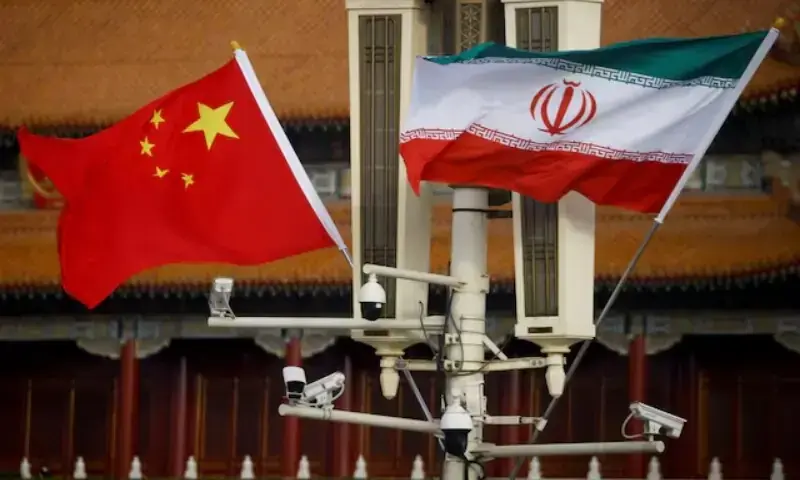
BEIJING: Iranian Foreign Minister Abbas Araghchi said on Wednesday that Tehran is seeking China’s support for a “new post-war” regional framework following its conflict with the United States, underscoring the deepening ties between the two nations as Beijing positions itself as a key Mideast peacemaker.
Reiterating Iran’s trust in China, Araghchi said his country “looks forward to” Beijing “supporting the establishment of a new post-war regional framework that can balance development and security”.
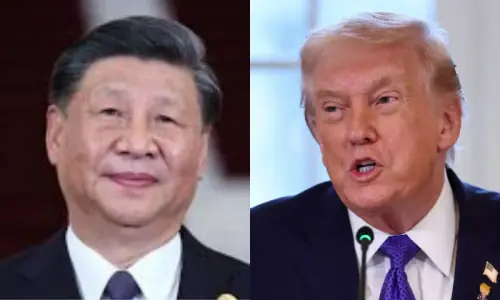
His visit comes just a week before US President Donald Trump is scheduled to meet Chinese President Xi Jinping in Beijing. In response to Iran’s request, Chinese Foreign Minister Wang Yi said his country would play a “greater role” in ending hostilities and restoring stability in the Middle East.
“China will work harder to ease tensions and end the fighting, continue to support the launch of peace talks and play a greater role in restoring peace and tranquility to the Middle East,” Wang told Araghchi in Beijing.
After the meeting, Iran’s foreign ministry said Araghchi briefed Wang on talks with the US and stressed a dual approach.
“Iran, just as it demonstrated strength in defending itself and remains fully prepared to confront any aggression, is also serious and steadfast in the field of diplomacy,” Araghchi said, according to the Iranian Students’ News Agency.
He added that Iran would only accept a “fair and comprehensive agreement”.
China’s foreign ministry said the talks occurred as “the current regional situation is at a critical juncture of transition from war to peace”.
“China considers that a complete cessation of fighting must be achieved without delay, that it is even more unacceptable to restart hostilities, and that continuing to negotiate remains essential,” Wang said in a ministry statement.
Beijing’s diplomacy is credited with playing an important role in the fragile ceasefire agreed between Washington and Tehran. Central to China’s concerns is the blockage of the Strait of Hormuz, a critical artery for its energy imports.
More than half of the crude oil China imports by sea transits through the strait, according to maritime analytics firm Kpler. While China’s fuel reserves have shielded it from immediate shortages, the conflict has driven up costs for oil-derived materials.
Wang said China hopes “the parties concerned will respond as quickly as possible to the urgent call of the international community” for a resumption of normal and safe maritime traffic.
The diplomatic push comes as Trump said the US would pause its new operation escorting commercial ships through the Hormuz Strait, citing a desire to reach a peace deal. The US has demanded tight controls on Tehran’s nuclear program, a key sticking point in crumbling negotiations.
Addressing the issue, Wang said China’s position balances international concerns with sovereign rights. “China welcomes Iran’s commitment not to develop nuclear weapons, while considering that Iran has the legitimate right to the peaceful use of nuclear energy,” he said.
Trump’s planned visit to Beijing on May 14-15, which the White House has announced but Beijing has not confirmed, follows a flurry of diplomatic activity.
Xi has recently met with leaders from the Gulf, Europe and Southeast Asia, seeking to position China as a stable partner amid the US-led conflict.
In a separate diplomatic development, Saudi Foreign Minister Prince Faisal bin Farhan discussed regional security and stability in a phone call with Araghchi, the Saudi foreign ministry said in a statement. The call highlights broadening regional efforts to de-escalate tensions.
Analysts suggest China is working to ensure the Trump-Xi summit proceeds smoothly, leveraging its influence to encourage a return to negotiations.
Published in Dawn, May 7th, 2026