0
0

RAWALPINDI: Senior PML-N leader and president Pakistan Ex-servicemen Society retired Lt Gen Abdul Qayyum on Monday said Pakistan is certainly a peace-loving country, but it also has the capability to crush any force that attacks its security.
He was speaking as chief guest at a veterans’ event held to mark one year since Marka-e-Haq and to show solidarity with the Pakistan Armed Forces.
The three services were represented at the event by retired Vice Admiral Abdul Aleem, retired Air Marshal Asim Suleman and retired Maj Gen Zahid Mahmood.
“Solidarity with the Pakistan Armed Forces and their complete support is part of every ex-serviceman’s faith. All segments of society — political, social, business, youth, the journalist community, scientists, engineers, and people from every school of thought — who took part in giving a befitting response to Indian aggression a year ago deserve congratulations,” retired Lt Gen Abdul Qayyumsaid.
Later, talking to reporters Senator retired Lt Gen Abdul Qayyum said history stood witness that wars offer no lasting solutions; they only result in widespread destruction, immense loss of human lives, and enduring scars that continue to destabilise societies for generations.
He said Pakistan, being a peace-loving nation, remained firmly committed to resolving disputes through meaningful dialogue and prudent diplomacy within the ambit of international law, while cautioning that this commitment to peace must not be misconstrued as weakness, as maintaining peace does not diminish the country’s preparedness to effectively respond to any external aggression.
Referring to recent regional tensions, he said India misjudged both the patriotism of the Pakistani people and the operational capability of its armed forces by violating international airspace.
According to him, the subsequent response not only repelled the aggression but also established what he described as a defining moment in South Asian strategic history. Drawing a broader comparison, he remarked that nations with strong internal resolve have historically withstood external pressures, citing examples from contemporary conflicts.
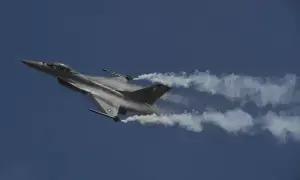
He further said Pakistan’s land and air forces demonstrated rapid operational effectiveness, neutralising key adversarial capabilities and compelling a ceasefire. He added that the country’s naval preparedness also played a deterrent role, preventing any escalation along maritime borders.
Describing the outcome as a significant strategic setback for the adversary, he said it underscored the importance of readiness, coordination and national unity in modern warfare.
Highlighting the factors behind this outcome, he credited the leadership of Chief of Defence Forces Field Marshal Asim Munir and Air Chief Marshal Zaheer Ahmed Baber Sidhu, alongside the contributions of Pakistan’s armed forces, cyber and IT professionals, scientific community, political leadership, and media. He said such collective national effort remained central to safeguarding sovereignty in an evolving threat environment.
Commenting on global geopolitics, he said the post-1991 unipolar moment following the collapse of the Soviet Union saw the United States emerge as a dominant power, but subsequent military interventions eroded its global standing. In contrast, he pointed to China’s rise as a major global actor driven by economic growth and policies of coexistence.
Concluding his remarks, he said adherence to international law remains essential for global stability, warning that violations could invite consequences similar to those witnessed in recent conflicts. He affirmed that Pakistan’s large community of veterans continues to stand firmly alongside its armed forces, reinforcing national resolve to counter any form of aggression.
Published in Dawn, May 5th, 2026