

THERE is no democracy without accountability of power — and how is accountability possible if one is punished for speaking up?
Such is today’s dilemma as press freedom goes through yet another tough phase, with lawfare, enforced disappearances, online campaigns, harassment, and harsh financial tactics employed against those attempting to express opinions deemed unfavourable to the power wielders.
The Constitution lists press freedom as a fundamental right in Article 19, which deals with freedom of speech; hence it establishes an intrinsic link between the two. An independent press has been traditionally cited as the ‘fourth pillar’ of the state in addition to the executive, legislature, and judiciary, effectively cementing the role of the press in holding accountable all three conventional pillars of a democratic state.
Further, an independent press informs the citizenry of events and issues, and provides analyses so that citizens can shape their own opinions. Hence, the right to access to information, especially relating to matters of public importance, is protected by the right to information under Article 19-A of the Constitution.
Social media has become a powerful avenue for the expression of views, empowering citizens across the country. With access to the internet and growing literacy, citizens are taking on the role of independent press outlets by participating in public conversations. Unfortunately, attacks on individual speech have increased simultaneously.
In the past few weeks, we have seen Pakistani authorities arrest a citizen for a satirical comment about the blockade of the capital for the US-Iran talks. This is tantamount to punishing one of the most potent cultural characteristics of the Pakistani internet user: humour.
Journalists have borne the brunt of the state’s wrath as the government started to take its mediation efforts in the US-Iran crisis seriously.
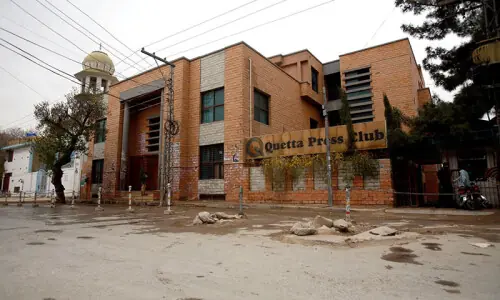
A concerted online campaign against Matiullah Jan led to him losing his job as TV talk show host for his ‘crime’ of inviting foreign journalists to the National Press Club and, ironically, apprising them of the state of press freedom in the country.
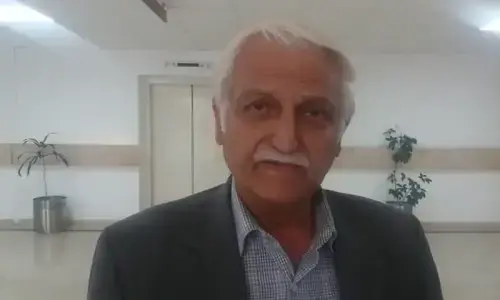
Journalist Fakhar-ur-Rehman, working for a Turkish news agency, was also arrested and brought to court in handcuffs before being granted bail. He was accused of sharing “false information” under Section 26-A of the Prevention of Electronic Crimes Act (Peca), which carries a punishment of up to three years.
Who determines what counts as false information, and whether jailing someone for sharing it is a proportionate punitive measure?
But who determines what counts as ‘false information’, and whether jailing someone for sharing it is a proportionate punitive measure?
Section 26-A of Peca clearly fails the proportionality test of Article 19 of the International Covenant on Civil and Political Rights (ICCPR). It also fails the legality and necessity test by introducing a law without stakeholder input or public debate, that leaves ‘false information’ undefined and criminalises free speech. In short, Peca is being used as instrument of lawfare.
In addition to the ‘false information’ section, the ‘glorification of an offence’ and ‘cyberterrorism’ sections of Peca have also been abused by the state, as seen in the 17-year sentence handed down to human rights lawyers Imaan Mazari-Hazir and Hadi Ali Chattha for tweets about human rights, counterterrorism policy, and the Constitution.
The 100th day of their incarceration falls on World Press Freedom Day, being observed today, with no signs of their appeals being listed in the higher judiciary so far — exposing yet another failure of due process in the post 26th- and 27th-Amendment judiciary.
There have been laws promulgated to protect journalists, such as the Protection of Journalists and Media Professionals Act of 2021. However, the commission formed in November 2025 under the Act has so far failed to play its due role of protecting media professionals and journalists, as evident in the firing, arrests, and disappearances of journalists in the months since the commission’s inception.
And then there is the most insidious form of censorship today: financial squeezing of media that is independent. The financial model of media conglomerates in Pakistan relies heavily on government advertisement as a source of revenue, which the state has been using to reward ‘friendly’ media houses and punish ‘hostile’ ones by withdrawing or not giving advertisements.
The state has also gone as far as to pressure private advertisers to withdraw advertisements from media houses that stay committed to independent journalism. In some cases, employees have not been paid for over three months with continuing pressure from state officials, who make the disbursement of advertisement payment contingent upon the exercise of censorship.
Pakistan’s commitments under the ICCPR, which it has ratified, and EU trade concessions under the GSP-Plus scheme, make it obligatory for the government to improve the state of human rights in the country — including freedom of expression and press freedom. So, improving human rights in the country is not just about fulfilling obligations; it is also a way of enhancing support for the export market and helping the business community in its work.
Where do the conduits between the citizens and state, ie, the political parties, stand on all of this? Silence and reluctant cheerleading of the repressive status quo on a ‘friendly’ media is their modus operandi after having espoused the virtues of freedom of expression and press freedom, when in the opposition and on the receiving end of state censorship.
At a time when the political opposition has been disqualified and jailed in political cases, the media is being judicially and financially squeezed into compliance. Swathes of land in the country, such as Balochistan and western KP, are cut off from the media ecosystem, and the chilling effect of authoritarian overreach is seen in self-censorship and the weakening of democracy, rule of law, and fundamental civil liberties.
The state — revelling in its role as mediator in a global war — should extend its generosity to its own citizenry and move towards confidence-building measures with the media, the political opposition, and in fact, all citizens. There can be no democracy or justice where the citizens and press are silenced.
The writer is director of Bolo Bhi, an advocacy forum for digital rights.
X: @UsamaKhilji
Published in Dawn, May 3rd, 2026