Bar councils oppose transfer of high court judges as ‘punitive measure’
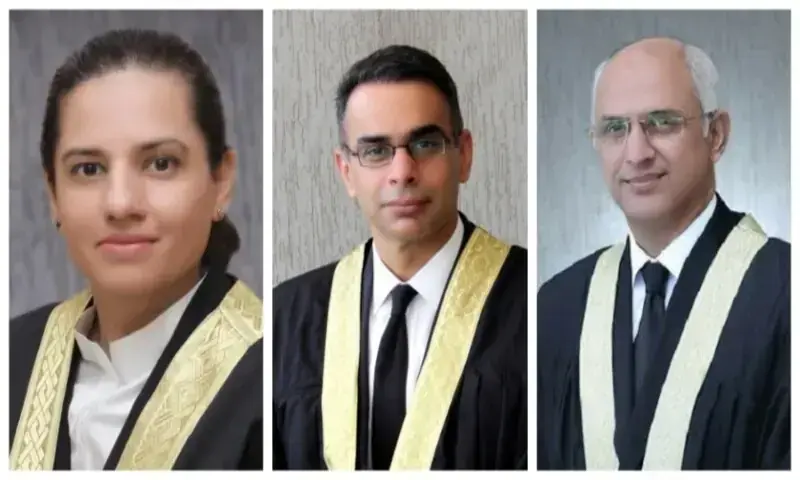

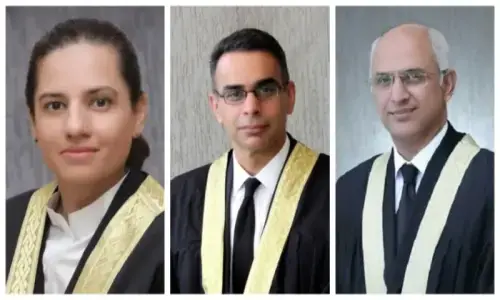
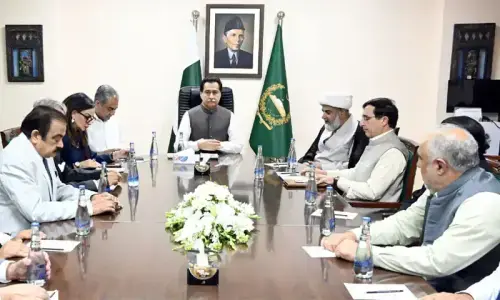
PESHAWAR: The Inter-Provincial Coordination Committee of the country’s all bar councils here on Saturday emphasised that judges shouldn’t be transferred from one high court to another as a “punitive measure” and that the transfers should happen on a rotational basis.
During a meeting, members of the committee said that the transfer of judges from the Islamabad High Court to other provinces should take place for a certain duration, while the relevant bar council should be included in the process.
They underscored that if a judge was transferred from the IHC, a replacement from the same region should be appointed to ensure equal provincial representation.
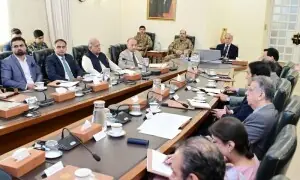
The meeting was chaired by chairman of the committee Ahmad Farooq Khattak and attended by representatives of Punjab, Sindh, Balochistan, Islamabad and Azad Jammu and Kashmir bar councils as well as Pakistan Bar Council member Naveed Akhter.
Noted among participants were KP Bar Council vice chairman Asfandyar Khan and chairman of its Executive Committee Malik Imad Azam, vice chairman of the Punjab Bar Council Khawaja Qaiser Butt, chairman of its Inter-Provincial Coordination Committee (IPCC) Chaudhry Umar Mahmood, member Barrister Imran Akram Bodla and secretary Rafaqat Ali, chairman of the executive committee of the Sindh Bar Council Ayaz Hussain Tanio, chairman of its IPCC Abdul Razzaq Mehr, vice chairman of the Balochistan Bar Council Najeebullah Kakar, chairman of its executive committee Ayaz Khan Mandokhel, chairman of its IPCC Nadeem Jahangir, Islamabad Bar Council vice chairman Chaudhry Asif Iqbal and chairman of its executive committee Mohammad Zafar Kokhar, vice chairman of the AJK Bar Council Haroon Riaz Mughal and chairman of its IPCC Raja Ishtiaq Khan.
Members of the KPBC Rafiq Mohmand, Fawad Ahmad Khan, Syed Hakeem Khan, Syed Shahid Mehmood and Babar Khan Yousafzai were also in attendance.
After detailed discussion, the meeting adopted multiple resolutions, making different demands from relevant quarters.
The meeting decided to place a ban on strikes by any of the bar associations in favour of judges and to take action against the association violating this decision.
The participants called upon the parliament to amend the Constitution and include lawyers in the accountability of the judiciary, so that their accountability could be made transparent. The participants believed that now, in order to save their own institution from accountability, the process had been made a joke.
It decided that for keeping an eye on the judiciary, the bar councils should activate its ‘Judicial Officers Surveillance Committees’ to ensure provision of cheap justice to people.
The meeting decided to hold meetings with parliamentarians and the federal law minister to convince them to make changes in the constitution and other relevant laws for fulfilling their demands.
The meeting also demanded that elevation to the superior courts should not be made from the judicial cadre and the law should not allow the re-appointment of retired judges on any other post.
They demanded the government amend the Legal Practitioners and Bar Councils Act 1973 so as to return the power of suspension of licenses of lawyers from the judiciary to the bar councils.
Through another resolution, the participants flayed all provincial governments for not implementing the Lawyers Welfare and Protection Act, 2023. Besides demanding the immediate implementation of the provisions of the law related to provinces, they called for the law’s extension to AJK and Gilgit-Baltistan as well.
The members complained that the judicial academies had not been imparting training to young lawyers, a violation of a Supreme Court judgement delivered on Sept 14, 2022.
They demanded the chief justice of Pakistan, who is also the chairman of the Law and Justice Commission, immediately arrange training for lawyers in judicial academies.
They also decided to contact the federal and provincial governments so as to ensure provision of stipends to lawyers during training.
Published in Dawn, May 3rd, 2026