Muted traffic in Hormuz strains Gulf economies


 0
0

• Seven ships pass vital waterway in a day, compared to pre-war average of 140
• Iranian lawmaker says military to manage maritime route as UN chief urges toll-free waterway
• UAE rebukes Gulf allies for ‘meek’ political and military response to Tehran strikes
• Germany’s Merz says US being humiliated by Iranian leadership
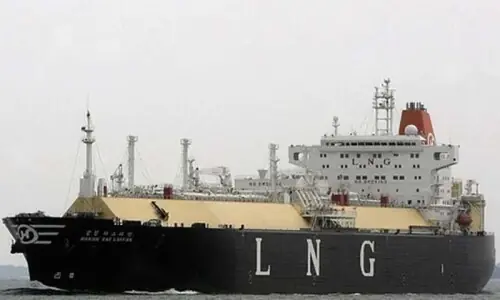
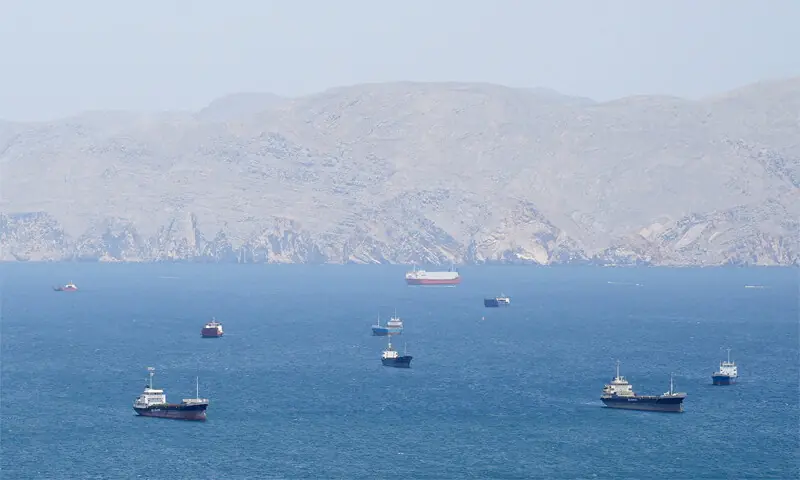
LONDON/TEHRAN: Amid the US-Iran conflict that led to the closure of the Strait of Hormuz, only seven ships, mostly dry bulk vessels, crossed the vital maritime route in one day compared to an average of 140 ships that used to pass through the strait before the US-Israeli strikes on Iran on Feb 28.
The vessels included ships leaving from Iraqi ports and one dry bulk vessel from an Iranian port, according to ship-tracking data from Kpler and separate satellite analysis from data analytics specialists SynMax.
“Iran has attacked and detained ships for not adhering to its required transit requirements, while the US has continued to enforce its blockade,” ship broker Clarksons said in a note on Monday.
The US Central Command has redirected 37 vessels since a blockade was imposed on Iran on April 13, the military said. Six Iranian tankers returned to Iranian ports and sailed back through Hormuz in recent days with some 10.5 million barrels of oil, according to satellite analysis from TankerTrackers.com. The US military has not provided a complete breakdown of the type of ships it has diverted or the precise location of the interceptions.
However, two tankers carrying around four million barrels of Iranian oil managed to sail past the blockade on April 24 bound for Asia, the data from TankerTrackers.com showed. But their fate was uncertain. Analysts said US forces have been diverting Iran-linked ships as far east as the Malacca Strait, so it is unclear whether those cargoes will reach buyers or be intercepted and redirected back to Iran.
‘Hostile vessels’ in Hormuz
Meanwhile, Iran asserted its ownership over Hormuz, with a top official saying that Iran’s armed forces would be the authority responsible for the Strait of Hormuz under the country’s proposed law for managing the waterway.
Ebrahim Azizi, head of the national security commission in Iran’s parliament, told state television that the armed forces were already in control of the strait and were seeking to prohibit the passage of “hostile vessels”. He also said the proposed law states that financial gains from the strait should be paid in the local rial currency.
The UN chief, however, asked both sides to open the energy route. “I appeal to the parties: open the strait. Let ships pass. No tolls. No discrimination. Let trade resume. Let the global economy breathe,” Antonio Guterres said, addressing a high-level UN Security Council debate on maritime security.
UAE lambastes neighbours
Meanwhile, a senior United Arab Emirates official criticised its Gulf allies over their response to Iranian retaliatory attacks in the region following the Israeli-US strikes that launched the Middle East war.
Presidential adviser Anwar Gargash said the Gulf states had supported each other logistically in the crisis, but he lambasted their political and military response.
“The GCC’s stance was the weakest historically, considering the nature of the attack and the threat it posed to everyone,” he said, referring to the six-member Gulf Cooperation Council.
Tehran fired hundreds of missiles and drones at the GCC nations — Bahrain, Kuwait, Oman, Qatar, Saudi Arabia and the UAE — after the United States and Israel launched attacks on Iran on February 28.
The UAE, which has been the most heavily targeted country, has adopted a more forceful tone towards Iran, while its neighbours appear more measured.
Likewise, German Chancellor Friedrich Merz rebuked Donald Trump for having no exit strategy, saying that Iran’s leadership was humiliating the US and getting officials to travel to Pakistan, and then leave without results.
“The Iranians are obviously very skilled at negotiating, or rather, very skilful at not negotiating, letting the Americans travel to Islamabad and then leave again without any result,” he said during remarks in the town of Marsberg.
Published in Dawn, April 28th, 2026